
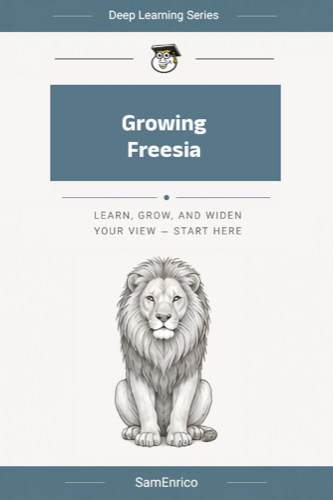
Non-FictionInformativeEducational
Growing Freesia
This publication, published by SamEnrico, covers G
This publication, published by SamEnrico, covers Growing Freesia
Formats
About this book
Free sample
Here is an in-depth summary of each chapter for the book Growing Freesia: The Freesia Grower’s Companion – From Bulb to Bloom (Sam Enrico Publications), based on the outline provided.Part I: The Foundation Chapter 1: Why Freesia? History and Botanical Significance This chapter opens with the freesia’s journey from the grasslands and rocky slopes of South Africa’s Cape Province to the formal gardens and orangeries of Victorian Europe. Readers learn how the plant was named after German physician Friedrich Heinrich Theodor Freese, and how its intoxicating fragrance (often described as a blend of jasmine, honey, and citrus) sparked a horticultural frenzy in the 19th century. The chapter traces the rise of commercial hybridizing in the Netherlands and the UK, leading to today’s broader color palette and extended vase life. It also positions the modern freesia as a major player in the cut-flower industry, valued for its elegance and perfume.
By the end, the reader understands that growing freesia is not just a gardening task but a participation in a rich botanical and cultural legacy.Chapter 2: Understanding Corms vs. Bulbs A clear, illustrated guide to the freesia’s underground storage organ: the corm. Unlike true bulbs (onions, tulips), a corm is a solid, swollen stem base with a fibrous tunic. This chapter dissects the anatomy—basal plate, growing point, tunics, and contractile roots—and explains the annual renewal cycle: the mother corm produces a flowering stem and new replacement corms (cormlets) above it, then shrivels. Key concepts include dormancy respiration rates, the importance of dry summer storage, and how to harvest and store cormlets to build your own stock over seasons.
Practical tables show ideal temperature and humidity ranges for storage (20–25°C, 60–70% RH). This chapter demystifies why freesias behave differently from daffodils or lilies, setting the stage for successful propagation.Chapter 3: Selecting Top-Performing Cultivars A cultivar directory split into three sections. First, single vs. double blooms: singles are more weather-resistant and fragrant, doubles look like miniature roses but may flop earlier. Second, species focus: Freesia alba (hardy, white with yellow throat, strongest perfume) vs.
Freesia refracta (taller, multicolored forms, slightly less cold-tolerant). Third, modern hybrid series: ‘Europa’ (classic white, standard for cut flowers), ‘Royal…
This is the end of the free sample. Get the eBook to keep going. Buy now
Contents
- Chapter 1
- Chapter 2
- Chapter 3
- Chapter 4
- Chapter 5
- Chapter 6
- Chapter 7
- Chapter 8
- Chapter 9
- Chapter 10
- Chapter 11
- Chapter 12
Details
- Author
- Skaggs Rupert
- Publisher
- SamEnrico
- Language
- English
- Genre
- Non-Fiction, Informative, Educational
- Released
- 2026-06-02
- Pages (approx.)
- 135
- Available as
- eBook, Audiobook

Read better in the ZLOADR app
Your eBooks on your phone or tablet. Sign in with your SamEnrico account and start reading.
More by Skaggs Rupert
 The Financial Support Asking GuideSkaggs Rupert$11.99
 Financial Stress Parenting GuideSkaggs Rupert$11.99
 The Governor's Impeachment StorySkaggs Rupert$11.99
 Empathy For Auditory VoicesSkaggs Rupert$11.99
 PTU Propylthiouracil GuideSkaggs Rupert$11.99
 Giardia Lamblia TestingSkaggs Rupert$11.99
 Crisis Team Assembly HandbookSkaggs Rupert$11.99
 Temperature And Sleep MemorySkaggs Rupert$11.99
 The Angel of the Andes: How a Nurse Defied War and AltitudeSkaggs Rupert$11.99
 The Phantom Compass: The Lost Voyages of Henry HudsonSkaggs Rupert$11.99
 The Golden Age of the Swahili Coast: Merchants, Scholars, and Architects of the Indian OceanSkaggs Rupert$11.99
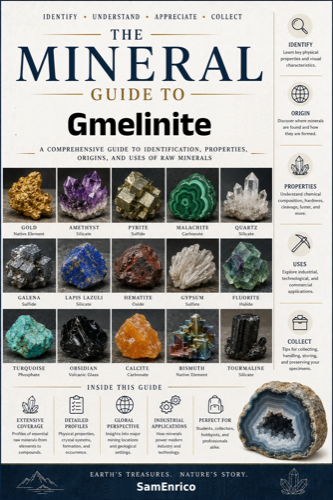 The Mineral Guide to GmeliniteSkaggs Rupert$11.99
You may also like
 Hong Kong Handover 1997Dunn Johnnie$11.99
 Zumba For Postnatal Recovery CourseNeal Christian$11.99
 Zumba for BeginnersLadner Nikia$11.99
 YouTube Comment Mining GuideHumes Pandora$12.99
 Worry Box MeditationCarlin Rudy$11.99
 Workplace Stress MeditationNguyen Lynn$11.99
 Workplace Stress and Sleep RepairHawley Ivory$11.99
 Workplace Perfectionism CureDelaney Jeffry$11.99
 Workplace Injustice Anger GuideWallen Isabelle$11.99
 Work Addiction and Burnout LinkGreenwood Ester$11.99
 Women in Yoga and WellnessBeattie Galina$11.99
 Women in Stand Up ComedyChun Evangeline$11.99