

Non-FictionInformativeEducational
Growing Dracaena eBook
This publication, published by SamEnrico, covers G
by Alonzo Rea
This publication, published by SamEnrico, covers Growing Dracaena
Formats
Free sample
Chapter 1: The Forgotten Giant...--You already own a Dracaena. You just might not know it yet.Look around your home—or more likely, your office lobby, your dentist's waiting room, or that corner of your living room where other plants have gone to die. See that tall, forgiving plant with the arching green leaves and the woody stem that refuses to give up despite months of neglect? That is a Dracaena. See that spiky, upright plant in the ceramic pot by the window that you water once a month and it somehow looks better than everything else?
That is also a Dracaena. And that clustered, dark green beauty in your coworker's cubicle that thrives under fluorescent lights while her pothos wilts? Dracaena again.The simple truth is this: Dracaenas are the most underrated, most forgiving, and most widely cultivated houseplants in the Western world, yet almost no one knows how to care for them correctly. Most people who own Dracaenas stumbled into the relationship by accident—a housewarming gift, a clearance rack rescue, an office plant that came with the desk. And most people, when asked what they own, will say "that corn plant thing" or "a dragon tree" or "a snake plant." They rarely say "Dracaena."This book exists to change that.The Great Renaming: What Botanists Just Did to Your Plant Collection In 2017, something happened in the botanical world that sent ripples through the horticultural industry, yet barely registered with the average plant owner.
Based on overwhelming DNA evidence, taxonomists officially reclassified the entire genus Sansevieria—all sixty-something species of snake plants, including the beloved Sansevieria trifasciata—into the genus Dracaena.Let me say that again in plain English: Your snake plant is now officially a Dracaena.For decades, snake plants and what most people call "Dracaenas" (the corn plants, dragon trees, and Janet Craigs) were treated as separate genera with separate care guides, separate books, and separate identities in the plant world. The snake plant was marketed as the indestructible succulent cousin. The Dracaena was marketed as the tropical, slightly fussier houseplant. But the DNA evidence tells a different story.The reclassification wasn't arbitrary. Botanists discovered that Sansevieria species share critical genetic markers with Dracaena species that they do not share with any other genus.
The thick, water-storing rhizomes—those orange-ish, ginger-like roots that make both groups so drought-tolerant—are not merely similar by coincidence. They are homologous structures, meaning they evolved from a common ancestor. The two groups also hybridize in nature, producing fertile offspring, which is the botanical gold standard for demonstrating relatedness.Why does this matter for you, the plant owner? It matters for three reasons.First, it means that the care logic you apply to one group applies broadly to the other. The watering schedules, soil preferences, light tolerances, and propagation techniques that work for a corn plant will work—with minor adjustments—for a snake plant.
Treating them as separate species with entirely different needs has led to decades of confused, contradictory advice.Second, it means that the snake plant—already famous for its resilience—is not an outlier. Its tolerance for low light, infrequent watering, and general neglect is not unique. Many Dracaenas share these traits to a lesser degree. The difference is not one of kind but of degree.Third, it means that the Dracaena genus is now one of the largest and most diverse groups of houseplants in cultivation, encompassing everything from tabletop rosettes to ceiling-scraping canes to trailing basket specimens. Learning to care for one Dracaena means learning to care for most of them.The NASA Myth: What Your Plant Actually Does for Your Air You have probably heard the claim.
It appears in blog posts, on plant tags, and in marketing materials for nearly every Dracaena sold: "This plant purifies the air in your home." Sometimes the claim is more specific: "Removes benzene, formaldehyde, and trichloroethylene." Sometimes it comes with a citation to "the famous NASA study."Here is the truth about that study, because you deserve honesty.In 1989, NASA and the Associated Landscape Contractors of America published a study titled "Interior Landscape Plants for Indoor Air Pollution Abatement." The study was legitimate, well-designed, and groundbreaking for its time. Researchers placed plants in sealed chambers, injected volatile organic compounds (VOCs) like benzene and formaldehyde, and measured how much the plants removed over 24 hours. Dracaenas performed well. Some varieties removed up to 80% of certain VOCs in the sealed chamber.Here is what the study did NOT prove: that a single Dracaena in your living room meaningfully improves your indoor air quality.The difference between a sealed laboratory chamber and your home is the difference between a bathtub and the Atlantic Ocean. In the NASA study, plants were packed tightly into small chambers—often one plant per cubic meter of space.
To achieve the same plant-to-air ratio in a typical 1,000-square-foot living room, you would need between 50 and 100 large Dracaenas. And even then, the effect would be limited because your home is not sealed. Air exchanges with the outdoors constantly through windows, doors, HVAC systems, and cracks in the walls.This does not mean that Dracaenas are worthless for air quality. They do remove VOCs. They do release oxygen.
They do increase humidity through transpiration, which benefits your skin, sinuses, and respiratory health. And there is robust evidence that the presence of plants reduces stress, lowers blood pressure, and improves cognitive function—effects that have nothing to do with air purification.The honest takeaway is this: your Dracaena is not an air-scrubbing machine. It is a living thing that improves your environment in subtle, meaningful ways that science is only beginning to understand. It will not replace an air purifier, but it will make your space feel more alive. And that is valuable.The Aesthetic Range: From Spiky Drama to Architectural Elegance Before we dive into the specifics of care, let me show you what this genus is capable of.
Dracaenas are not a one-note group. They range from the spiky, almost punk-rock silhouette of Dracaena marginata to the broad, tropical lushness of Dracaena fragrans to the sculptural, minimalist lines of Dracaena trifasciata (your snake plant).Here is a preview of the species we will explore in depth throughout this book:The Corn Plant (Dracaena fragrans) – The most common Dracaena in North American homes. It features a thick, woody cane topped with clusters of broad, arching green leaves often striped with yellow or lime. It can reach the ceiling if given time and space, but it remains happy in a corner for years. It earned its common name because its leaves, when healthy, resemble corn stalks.The Dragon Tree (Dracaena marginata) – The spiky one.
Thin, winding stems support tufts of narrow, sword-shaped leaves edged in red or pink. It looks like something from a Dr. Seuss illustration. It is also one of the most forgiving houseplants in existence, tolerating low light, dry air, and inconsistent watering with remarkable good humor.The Song of India (Dracaena reflexa) – Less common but worth seeking out. Its leaves grow in dense whorls around upright stems, creating a bushy, layered appearance.
The variegated form, with bright yellow leaf margins, adds a splash of color to any room.The Snake Plant (Dracaena trifasciata)…
This is the end of the free sample. Get the eBook to keep going. Buy now
About this book
Details
- Author
- Alonzo Rea
- Publisher
- SamEnrico
- Language
- English
- Genre
- Non-Fiction, Informative, Educational
- Released
- 2026-06-03
- Pages (approx.)
- 135
- Available as
- eBook, Audiobook

Read better in the ZLOADR app
Your eBooks on your phone or tablet. Sign in with your SamEnrico account and start reading.
More by Alonzo Rea
 Caretaking From ChildhoodAlonzo Rea$11.99
 Professor Communication GuideAlonzo Rea$11.99
 Mindfulness Meditation Body Scan TutorialAlonzo Rea$11.99
 Meditation for Perfectionism AnxietyAlonzo Rea$11.99
 Number Shape Peg WorkbookAlonzo Rea$11.99
 Body Scan for Somatic ExperiencingAlonzo Rea$11.99
 Parent Caregiver AnxietyAlonzo Rea$11.99
 Metta For People PleasersAlonzo Rea$11.99
 Dual Career Couple MigrationAlonzo Rea$11.99
 The Silk Road Escape: How a Convict Outsmarted the SystemAlonzo Rea$11.99
 The Quantum Whisperer: How a Teen Genius Cracked the Code of the CosmosAlonzo Rea$11.99
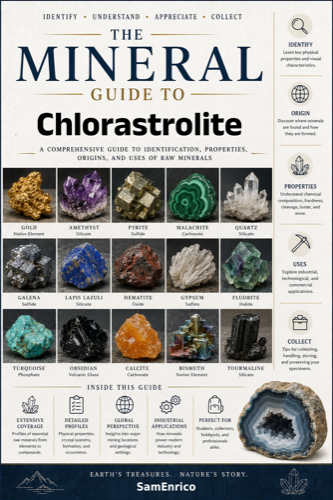 The Mineral Guide to ChlorastroliteAlonzo Rea$11.99
You may also like
 Hong Kong Handover 1997Dunn Johnnie$11.99
 Zumba For Postnatal Recovery CourseNeal Christian$11.99
 Zumba for BeginnersLadner Nikia$11.99
 YouTube Comment Mining GuideHumes Pandora$12.99
 Worry Box MeditationCarlin Rudy$11.99
 Workplace Stress MeditationNguyen Lynn$11.99
 Workplace Stress and Sleep RepairHawley Ivory$11.99
 Workplace Perfectionism CureDelaney Jeffry$11.99
 Workplace Injustice Anger GuideWallen Isabelle$11.99
 Work Addiction and Burnout LinkGreenwood Ester$11.99
 Women in Yoga and WellnessBeattie Galina$11.99
 Women in Stand Up ComedyChun Evangeline$11.99