
Non-FictionInformativeEducational
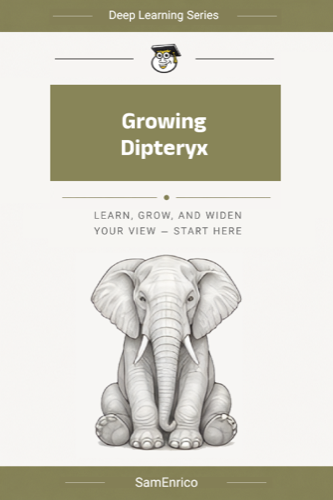
Growing Dipteryx eBook
This publication, published by SamEnrico, covers G
This publication, published by SamEnrico, covers Growing Dipteryx
Formats
Free sample
Chapter 1: The Seven-Generation Tree...–- In the humid twilight of the Amazon basin, where the canopy closes like a green cathedral vault and the air hums with the static of a million insects, there stands a tree that has learned to wait. While faster species sprint toward the light, burning through their life cycles in decades, this one takes its time—decades to reach the canopy, centuries to fully mature, and a single generation to understand. Its seeds lie dormant in the leaf litter for months, sometimes longer, as if hesitating at the threshold of existence. Its seedlings push taproots deep into the earth before daring to show their first true leaves. Its wood grows so dense that it sinks in water, so rich in natural oils that termites turn away, so resistant to rot that boards laid down by indigenous builders centuries ago still hold their place.
This is Dipteryx—the tree that asks not for your patience, but for your legacy.The world knows it by many names. To the perfumers of Grasse, it is the source of tonka bean, that wrinkled black seed whose white crystals of coumarin smell like vanilla spun with almond and clove. To the decking industry, it is Cumaru or Brazilian Teak, a hardwood so dense and durable that it outlasts ipe in foot-traffic tests. To the ecologists of the Amazon, it is an emergent keystone species, towering thirty meters above the forest floor, its purple flowers feeding bees and its pods feeding rodents that scatter its seeds like living currency. But to the grower who chooses to plant it, Dipteryx becomes something else entirely: a mirror.
Because cultivating this genus is not a hobby, nor a quick cash crop, nor a weekend project in permaculture. It is a declaration that you are willing to think in decades, to invest in a harvest you may never fully see, and to pass the baton of stewardship to the next generation.This book is not a casual guide to growing an exotic plant. It is a manual for the serious tropical farmer, the agroforestry designer, the land steward with a forty-year horizon. It will take you from the very first decision—which species to plant, which seed to source, which hectare of soil to commit—through the slow, deliberate process of germination, nursery care, field establishment, and finally to the dual harvests of tonka beans and Cumaru timber. Along the way, it will confront you with hard truths: that Dipteryx fails in temperate climates, that it demands patience of a kind most modern agriculture has abandoned, and that the economics of this tree work best when you think not in seasons but in generations.But for those who accept the challenge, the rewards are extraordinary.
A single mature Dipteryx odorata can produce fifty to two hundred kilograms of tonka beans annually, each kilogram fetching twenty to fifty dollars on the international market. A stand of Dipteryx oleifera, thinned over thirty years, can yield Cumaru lumber valued at five hundred to fifteen hundred dollars per cubic meter. And the tree itself, as a living asset, sequesters carbon, prevents erosion, shades companion crops, and enriches the soil with its leaf litter. It is, in the truest sense, a seven-generation investment: one that rewards not only the planter but the planter's grandchildren and their grandchildren after them.Why This Tree, Why Now The late twentieth century saw the rise of the "superfood" and the "superwood" as global commodities. Acai, maca, moringa—each had its moment in the spotlight, driven by marketing campaigns and Instagram influencers.
Cumaru timber enjoyed a similar boom, with Brazilian Teak decking becoming a status symbol for luxury homes in North America and Europe. But Dipteryx has always resisted the boom-and-bust cycle of fads, and for a simple reason: it cannot be rushed. You cannot plant a Dipteryx seedling in the spring and harvest tonka beans the following autumn. You cannot clear-cut a stand of Cumaru and expect the market to rebound next quarter. The tree enforces a slower rhythm, a more deliberate relationship between human and forest.And yet, precisely because of this slowness, Dipteryx is more relevant today than ever.
The climate crisis has exposed the fragility of fast-growing monocultures—pine plantations that burn, eucalyptus that deplete water tables, oil palm that destroys biodiversity. Investors and landowners are increasingly seeking perennial crops that build soil carbon, withstand drought, and provide multiple revenue streams without degrading the land. Dipteryx fits this brief perfectly. Its deep taproot (explored in full detail in Chapter 2) makes it drought-tolerant for survival, if not always for production. Its dense, oily heartwood resists fire better than most tropical hardwoods.
Its canopy structure allows for understory agroforestry, meaning a single hectare can produce tonka beans, timber, cacao, coffee, and vanilla simultaneously. And because the tree lives for centuries, it represents a permanent investment in the land—a living asset that appreciates in value as it grows.The Taxonomy of Value: Three Species, Three Strategies Before you plant a single seed, you must understand what you are planting. The genus Dipteryx contains approximately twelve species distributed across Central and South America, but only three are of commercial significance to the grower. Each offers a different balance of timber quality, tonka bean production, and ecological adaptability. Choosing the wrong species for your site and goals is the single most expensive mistake a grower can make, more costly than poor soil or inadequate irrigation, because the decision is locked in for decades.Dipteryx odorata—the common tonka bean tree, known in Brazil as cumaru docheiro—is the species most prized for its seeds.
Its beans contain the highest concentrations of coumarin, the crystalline compound that gives tonka its characteristic vanilla-almond fragrance. A well-managed D. odorata grove can produce beans for perfume, culinary, and pharmaceutical applications, with the oleoresin extracting to two hundred to five hundred dollars per kilogram. However, the timber of D. odorata is slightly less dense than its relatives, with a Janka hardness of approximately 3,000 pounds-force (compared to ipe at 3,500).
It is still an excellent decking and flooring wood, but it is not the top choice for timber-only operations. Geographically, D. odorata is native to the central and eastern Amazon basin—Brazil, Colombia, Peru, Bolivia, and parts of the Guianas. It prefers low altitudes below five hundred meters and does not tolerate even brief frosts.Dipteryx oleifera is the timber specialist. Known as cumaru amarelo or yellow cumaru, this species produces heartwood that is harder, denser, and more uniformly colored than D.
odorata. Its Janka hardness exceeds 3,600 pounds-force, making it suitable for heavy-traffic decking, railroad ties, and industrial flooring. The beans of D. oleifera contain coumarin as well, but in lower concentrations—typically fifty to seventy percent of the coumarin content of D. odorata.
For growers whose primary market is timber, with tonka beans as a secondary income stream, D. oleifera is the superior choice. Its natural range extends from Nicaragua through Costa Rica, Panama, and into northwestern Colombia and Venezuela. It tolerates slightly higher altitudes than D. odorata, up to one thousand meters, but still requires tropical temperatures and high humidity.Dipteryx panamensis sits between the two.
Its timber quality is comparable to D. oleifera, and its bean coumarin content approaches that of D. odorata. However, D.…
This is the end of the free sample. Get the eBook to keep going. Buy now
About this book
Details
- Author
- Gallagher Hermine
- Publisher
- SamEnrico
- Language
- English
- Genre
- Non-Fiction, Informative, Educational
- Released
- 2026-06-03
- Pages (approx.)
- 141
- Available as
- eBook, Audiobook

Read better in the ZLOADR app
Your eBooks on your phone or tablet. Sign in with your SamEnrico account and start reading.
More by Gallagher Hermine
 Bundling Economics GuideGallagher Hermine$11.99
 Research Proposal for NSF Graduate FellowshipGallagher Hermine$11.99
 Older Adult Phobia AdaptedGallagher Hermine$11.99
 College Transition Stress GuideGallagher Hermine$11.99
 CrossFit WOD HypnosisGallagher Hermine$11.99
 Crane Operator Stress ManagementGallagher Hermine$11.99
 Scripting for ConfidenceGallagher Hermine$11.99
 Voyageurs Water MysteriesGallagher Hermine$11.99
 The Plague Walls of Venice: Architecture Against DiseaseGallagher Hermine$11.99
 Gold, Lies, and the Ghost of Seoul: The 1988 Olympic Doping Cover-UpGallagher Hermine$11.99
 US Business Credit FAQs AnsweredGallagher Hermine$12.99
 Cooperative Mobile Money IntegrationGallagher Hermine$12.99
You may also like
 Hong Kong Handover 1997Dunn Johnnie$11.99
 Zumba For Postnatal Recovery CourseNeal Christian$11.99
 Zumba for BeginnersLadner Nikia$11.99
 YouTube Comment Mining GuideHumes Pandora$12.99
 Worry Box MeditationCarlin Rudy$11.99
 Workplace Stress MeditationNguyen Lynn$11.99
 Workplace Stress and Sleep RepairHawley Ivory$11.99
 Workplace Perfectionism CureDelaney Jeffry$11.99
 Workplace Injustice Anger GuideWallen Isabelle$11.99
 Work Addiction and Burnout LinkGreenwood Ester$11.99
 Women in Yoga and WellnessBeattie Galina$11.99
 Women in Stand Up ComedyChun Evangeline$11.99