
Non-FictionInformativeEducational
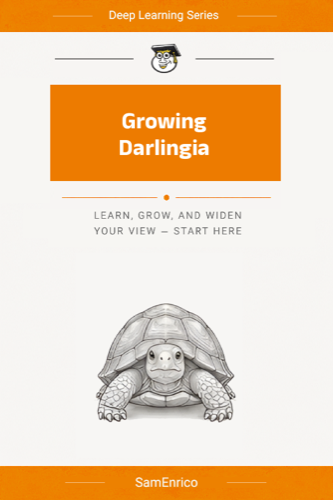
Growing Darlingia eBook
This publication, published by SamEnrico, covers G
This publication, published by SamEnrico, covers Growing Darlingia
Formats
Free sample
Chapter 1: The Lost Genus...–- It begins, as so many obsessions do, with a single photograph. A dog-eared page in a 1987 issue of Australian Horticulture, tucked between an advertisement for rotary hoes and a classified for rare bulbs. The image was small, black and white, but what it showed was unmistakable: a leaf the size of a small child, deeply lobed like a dinosaur's footprint, and behind it, a flower spike that seemed to defy the laws of botanical proportion. The caption read simply: Darlingia darlingiana – Brown Silky Oak, Atherton Tablelands. Rare in cultivation.
I had been growing plants for fifteen years. I had never heard of it.The photograph haunted me for a decade. It sat in a folder on my desk, then moved with me across two houses, then migrated to a digital scan saved in a folder titled "Someday." I would pull it out at dinner parties to show fellow gardeners, and every single time, the response was identical: a long pause, a furrowed brow, and then, "What is that?" No one knew. Not the curator at the Royal Botanic Gardens Sydney. Not the old-timers at the Australian Native Plants Society.
Not even the rare plant dealers who seemed to have everything else – Wollemia pines, the blackest petunias, the ghost orchid that had tricked botanists for a century. Darlingia was a ghost inside a ghost, a tree so spectacular and so unknown that it existed primarily as a rumour.This book is the story of how I finally found it, grew it, and – after six years of waiting – watched it flower. But more than that, this book is an invitation. The genus Darlingia (pronounced dar-LING-ee-ah) is not difficult to grow once you understand its rules. The problem is that almost no one has written those rules down.
The information exists in fragments: a paragraph here in a botanical key, a passing mention there in a rainforest ecology paper, a whispered recommendation from a grower in Cairns who learned from his grandfather. This chapter is where we assemble those fragments into something whole.Before we dig into soil chemistry and germination timelines, we must first understand what we are growing. And to understand Darlingia, we must travel back in time – not just to the forests of North Queensland, but to the supercontinent of Gondwana, where the story of this remarkable genus truly begins.The Ancient Lineage Imagine, if you will, the world eighty million years ago. Australia is still attached to Antarctica. The southern continent is covered in wet, temperate rainforest – a green blanket stretching from what is now Sydney to the South Pole.
In this world, the Proteaceae family is already ancient, already diverse, already producing the kind of botanical weirdness that makes plant collectors salivate. Banksia is there, but not as we know it. Grevillea is there, but smaller, less flamboyant. And somewhere in the wet tropics of the eastern Australian coast, a lineage is splitting off that will eventually become Darlingia.The genus was formally described in 1865 by the botanist Ferdinand von Mueller, that tireless German-Australian explorer who seems to have named half the continent's flora. He named it after John Darling, a little-remembered figure who may have been a collector or a patron – the records are frustratingly vague.
What is not vague is the tree itself. Von Mueller had seen specimens collected from the rainforests surrounding Rockingham Bay (near modern-day Cairns), and he recognized immediately that he was looking at something extraordinary. The leaves were unlike any Proteaceae he had ever examined: deeply lobed, almost palmate, with a texture that reminded him of the North American oaks. Hence the common name: Brown Silky Oak. (Though as we will see in later chapters, the wood's resemblance to oak is purely visual; botanically, it is a distant cousin at best.)But here is where the story gets interesting.
For the next century, Darlingia remained a botanical curiosity, pressed and dried in herbarium cabinets, occasionally collected by adventurous naturalists, but almost never grown. Why? Because the seeds are large and perishable. Because the juvenile leaves look nothing like the adult leaves – a phenomenon called heteroblasty that confused early growers who thought they had been sold the wrong plant. Because the tree wants acidic soil and hates phosphorus, two requirements that put it outside the comfort zone of most 19th-century gardeners.
And because, frankly, it was hard to reach. The Atherton Tablelands were not exactly a garden destination in 1880.Today, we have no excuse. The science is clear. The techniques are proven. And the tree itself – growing in a handful of botanic gardens and even fewer private collections – is a testament to what happens when patience meets knowledge.The Two Sisters: darlingiana and ferruginea Before we go any further, we need to get one thing straight.
When most people say "Darlingia," they are usually referring to Darlingia darlingiana, the Rose Silky Oak. But there is a second species, Darlingia ferruginea, the Rusty Silky Oak, and the differences between them matter profoundly for the gardener.Let me introduce them properly.Darlingia darlingiana – Let us call her the Lowland Lady. She grows in the coastal lowlands and foothills of North Queensland, from about sea level up to 600 metres. Her leaves are large – truly enormous in the juvenile phase, reaching up to 70 centimetres in length – but as she matures, they become smaller, simpler, and more oblong. The underside of the leaf is smooth (botanists say "glabrous"), which is the easiest way to distinguish her from her sister.
Her flowers are cream to pale yellow, held in dramatic spikes that can reach 30 centimetres. The scent, as we will discuss in Chapter 2, is... memorable. Not everyone likes it. But no one forgets it.Darlingia ferruginea – Let us call her the Mountain Mystic.
She is found at higher elevations, from 650 to 1300 metres on the Atherton Tablelands. (Note the overlap zone around 600-700 metres, where the two species occasionally hybridise – a topic we will return to in Chapter 10.) Her leaves are covered on the underside with dense, rust-coloured hairs – "ferruginous" in botanical Latin, from ferrugo, meaning iron rust. These hairs give her a softer, almost velvety texture. Her flowers are similar in size and shape to her sister's, but often slightly darker, leaning toward butter-yellow. And crucially for southern gardeners, she is more tolerant of cool nights and light frosts.That last point deserves emphasis.
If you are reading this book in Melbourne, or Hobart, or even the cooler parts of Sydney, you will almost certainly want Darlingia ferruginea. She is not frost-proof – nothing from the tropical rainforest is truly frost-proof – but she can handle a light freeze down to about -2°C if given protection. Darlingia darlingiana, by contrast, is a frost wimp. A single hard freeze will kill her to the ground, and she rarely recovers.We will spend much of Chapter 10 comparing these two species in detail, but for now, this is the key takeaway: before you buy a seed or a plant, know which one you are getting. The nurseries do not always label them correctly.
The seeds look identical. The juvenile leaves look identical. But the adult plants have very different climate tolerances, and nothing is sadder than watching a…
This is the end of the free sample. Get the eBook to keep going. Buy now
About this book
Details
- Author
- Berger Yoshie
- Publisher
- SamEnrico
- Language
- English
- Genre
- Non-Fiction, Informative, Educational
- Released
- 2026-05-08
- Pages (approx.)
- 152
- Available as
- eBook, Audiobook

Read better in the ZLOADR app
Your eBooks on your phone or tablet. Sign in with your SamEnrico account and start reading.
More by Berger Yoshie
 The Restaurant HostageBerger Yoshie$11.99
 Fear of Darkness Sleep GuideBerger Yoshie$11.99
 Massage Parlor Addiction ExitBerger Yoshie$11.99
 Exercise for Academic StressBerger Yoshie$11.99
 The Fear Body MappingBerger Yoshie$11.99
 Emergency Room Doctor Stress GuideBerger Yoshie$11.99
 Gaming Addiction Self AssessmentBerger Yoshie$11.99
 Bankruptcy Litigation FundingBerger Yoshie$11.99
 The Dragon and the Khan: The Fall of the Southern SongBerger Yoshie$11.99
 Xipe Totec: The Flayed God’s Skin of RenewalBerger Yoshie$11.99
 How to Start a Asbestos Felting Business (Beginners Guide)Berger Yoshie$11.99
 University of British ColumbiaBerger Yoshie$12.99
You may also like
 Hong Kong Handover 1997Dunn Johnnie$11.99
 Zumba For Postnatal Recovery CourseNeal Christian$11.99
 Zumba for BeginnersLadner Nikia$11.99
 YouTube Comment Mining GuideHumes Pandora$12.99
 Worry Box MeditationCarlin Rudy$11.99
 Workplace Stress MeditationNguyen Lynn$11.99
 Workplace Stress and Sleep RepairHawley Ivory$11.99
 Workplace Perfectionism CureDelaney Jeffry$11.99
 Workplace Injustice Anger GuideWallen Isabelle$11.99
 Work Addiction and Burnout LinkGreenwood Ester$11.99
 Women in Yoga and WellnessBeattie Galina$11.99
 Women in Stand Up ComedyChun Evangeline$11.99