

Non-FictionInformativeEducational
Growing Dahlia eBook
This publication, published by SamEnrico, covers G
This publication, published by SamEnrico, covers Growing Dahlia
Formats
Free sample
Chapter 1: The Queen's Secret...--–- Every great love affair begins with a mystery, and the dahlia is no exception. In the highlands of Mexico and Guatemala, where these flowers first opened their petals to the sun, the ancient Aztecs called them acocotli—"water cane"—and valued them not for their beauty but for their hollow stems, which they used to carry water, and their massive edible tubers, which they harvested like potatoes. The flowers themselves were almost an afterthought. How different from today, when a single dinnerplate dahlia can stop traffic, when brides pay hundreds of dollars for bouquets of 'Café au Lait', when gardeners set their alarms for midnight tuber sales and trade cuttings like precious gems across continents.The dahlia’s journey from obscurity to obsession is a story of mistaken identity, royal patronage, and a botanical puzzle that took two centuries to solve. It is also your story, because the moment you decide to grow dahlias, you join a lineage that stretches back through Victorian plant hunters, Japanese hybridizers, Pacific Northwest flower farmers, and the ancient peoples who first noticed that a certain wildflower had a secret hidden underground.This chapter is not merely an introduction.
It is your invitation to understand why dahlias captivate, why they reward patience with explosions of color, and why the seemingly simple act of placing a knobby brown tuber into soil connects you to one of the most diverse and dramatic plant families on earth. Before you dig, before you pinch, before you cut your first bloom for a vase, you must first understand what makes the dahlia the queen of the garden—and why she demands a bit of your attention before she will reveal her full glory.The Hidden History: From Aztec Fields to European Palaces The story begins in the mountains of central Mexico and Guatemala, where dahlias grew wild in a range of forms far narrower than what we know today. The Aztecs, who built a vast empire in the centuries before Spanish arrival, cultivated dahlias alongside maize, beans, and squash. They used the tubers as a food source, boiled or roasted, and the hollow stems as pipes for carrying water. The flowers themselves, mostly single-petaled and open-centered in shades of red, pink, and purple, attracted pollinators—which the Aztecs understood as a sign of the plant’s vitality.When Spanish conquistadors arrived in the 1520s, they documented the local flora with varying degrees of interest.
A physician named Francisco Hernández was sent by King Philip II in 1570 to study the medicinal plants of New Spain. He described two types of dahlia—which he called Acocotli and Cocoxochitl—in meticulous Latin texts accompanied by watercolor illustrations. These manuscripts gathered dust in Spanish archives for nearly two centuries, their secrets locked away while Europe remained ignorant of the flower that would one day captivate its gardeners.The dahlia’s true arrival in Europe occurred in 1789, when the Spanish Royal Botanical Expedition to New Spain dispatched plant material back to Madrid. Among the seeds and dried specimens were dahlia tubers, which were sent to Antonio José Cavanilles, a Spanish botanist who would become the flower’s first scientific champion. Cavanilles grew them, marveled at them, and named the genus Dahlia in honor of Anders Dahl, a Swedish botanist and student of Carl Linnaeus.But here is where confusion enters the story.
Cavanilles described three species: Dahlia pinnata, Dahlia coccinea, and Dahlia rosea. He assumed—incorrectly—that the tubers were not edible. Later botanists would reclassify, rename, and debate the species for generations, all while gardeners in Europe and England began a quiet revolution. They were not content with the modest single flowers of the original imports. They wanted bigger blooms, stranger shapes, colors that had never existed in nature.
And so they began to breed.By the early 1800s, dahlia mania had spread across Europe. The Empress Joséphine, wife of Napoleon, grew dahlias at her palace of Malmaison, where she assembled one of the most famous gardens of the era. Her collection numbered in the hundreds, and she was so possessive that she reportedly forbade other French gardeners from growing them—a legend that speaks less to historical fact and more to the intensity of the obsession that dahlias could provoke.Through the 19th century, hybridizers in Germany, France, and England developed the first double-flowered forms, then the cactus types, then the decorative and pompon forms that would form the backbone of modern classification. The dahlia arrived in the United States in the 1830s, and by the time the American Dahlia Society was founded in 1915, thousands of named varieties existed. Today, the International Dahlia Register lists over 57,000 cultivars, with hundreds more added each year.Why this explosion of variety?
Because dahlias are, in a word, promiscuous. Their genetics are a nightmare and a delight. Unlike many flowers that breed true from seed, dahlias are octoploids—meaning they have eight sets of chromosomes, compared to the two sets found in humans. This complexity means that every seed is a genetic lottery, producing a flower that may resemble neither parent. For the gardener, this means that every dahlia you grow is part of an unbroken chain of human curiosity and botanical chance, stretching back over two hundred years of passionate tinkering.The Anatomy of a Dahlia: Learning the Language of the Plant Before you can grow dahlias successfully, you must understand what you are looking at.
The dahlia plant is not a single thing but a system of interconnected parts, each with its own function and its own vulnerability. Learning their names is not pedantry—it is the difference between a thriving plant and a disappointing pile of mush.Let us begin underground. The tuber is the swollen, fleshy root that looks like a sweet potato. Its job is storage. Throughout the growing season, the plant sends carbohydrates down from its leaves into the tubers, which swell in preparation for the next year.
A healthy tuber is firm, plump, and heavy for its size. A shriveled, soft, or hollow tuber is dead or dying. Importantly, the tuber is not the root—it is a modified root, and unlike a potato (which is a modified stem), the dahlia tuber has no eyes of its own. The eyes are located elsewhere, on the crown.The crown is the knobby, woody-looking structure at the top of the tuber clump, where last year’s stems attached. This is the most important part of the plant because it contains the eyes—the dormant buds from which new growth emerges.
An eye looks like a small bump, pinkish-white or greenish, often located in the crevices where stems once grew. A tuber without a crown and without eyes will never grow, no matter how beautiful and plump it appears. This is the single most common mistake new growers make: they plant a lovely tuber that lacks a crown and then wait forever for nothing.The stem grows upward from the crown, and here is a crucial fact: dahlia stems are hollow and surprisingly brittle. They snap easily in wind, under the weight of heavy blooms, and when you handle them carelessly. This is why staking and…
This is the end of the free sample. Get the eBook to keep going. Buy now
About this book
Details
- Author
- Stoddard Armand
- Publisher
- SamEnrico
- Language
- English
- Genre
- Non-Fiction, Informative, Educational
- Released
- 2026-06-02
- Pages (approx.)
- 134
- Available as
- eBook, Audiobook

Read better in the ZLOADR app
Your eBooks on your phone or tablet. Sign in with your SamEnrico account and start reading.
More by Stoddard Armand
 Legal Consequences Navigation GuideStoddard Armand$11.99
 Gambling Among SeniorsStoddard Armand$11.99
 Broken Apart Then Whole Again MemoirStoddard Armand$11.99
 High School Pressure CookerStoddard Armand$11.99
 The Hotel Worker CaptiveStoddard Armand$11.99
 The Worth Beyond Wrinkle PrimerStoddard Armand$11.99
 Meditation For OCD IntrusionsStoddard Armand$11.99
 Early Retirement for WorkaholicsStoddard Armand$11.99
 The Last Scroll of the Library of AlexandriaStoddard Armand$11.99
 The Blood and the Blade: The Birth of Modern SurgeryStoddard Armand$11.99
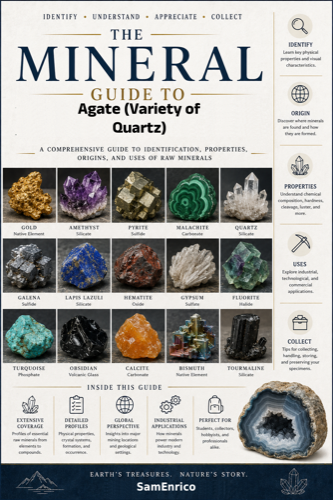 The Mineral Guide to Agate (Variety of Quartz)Stoddard Armand$11.99
 Problem Solution Fit WorkbookStoddard Armand$12.99
You may also like
 Hong Kong Handover 1997Dunn Johnnie$11.99
 Zumba For Postnatal Recovery CourseNeal Christian$11.99
 Zumba for BeginnersLadner Nikia$11.99
 YouTube Comment Mining GuideHumes Pandora$12.99
 Worry Box MeditationCarlin Rudy$11.99
 Workplace Stress MeditationNguyen Lynn$11.99
 Workplace Stress and Sleep RepairHawley Ivory$11.99
 Workplace Perfectionism CureDelaney Jeffry$11.99
 Workplace Injustice Anger GuideWallen Isabelle$11.99
 Work Addiction and Burnout LinkGreenwood Ester$11.99
 Women in Yoga and WellnessBeattie Galina$11.99
 Women in Stand Up ComedyChun Evangeline$11.99