
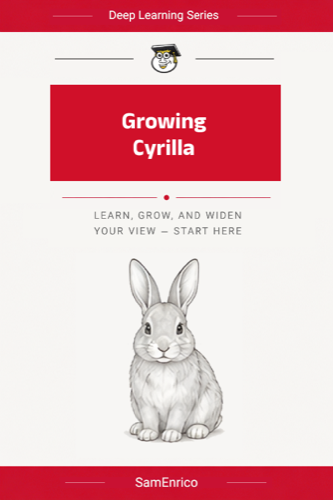
Non-FictionInformativeEducational
Growing Cyrilla eBook
This publication, published by SamEnrico, covers G
by Lamb Ross
This publication, published by SamEnrico, covers Growing Cyrilla
Formats
Free sample
Chapter 1: The Swamp’s Secret--I first met Cyrilla racemiflora in a place most gardeners would call a nightmare. It was July in the Okefenokee Swamp, which means the air had the consistency of soup, the mosquitoes were large enough to cast shadows, and every step I took threatened to sink me into tea-colored water that smelled of decay and ancient peat. I was there to photograph rare orchids for a magazine assignment, not to fall in love with a shrub. But love, as it turns out, has terrible timing.The orchid I was hunting—a small, pale thing called the swamp pink—refused to cooperate. It bloomed late that year, or perhaps I was early, or perhaps the gods of botanical photography simply wanted to teach me patience.
Whatever the reason, I spent three days wading through sawgrass and ducking under cypress knees, finding nothing but frustration and an ever-growing collection of chigger bites. On the fourth morning, soaked to the waist and cursing my choice of profession, I stumbled into a clearing that stopped me cold.Not because of orchids. Because of what I initially dismissed as a weed.The plant stood twelve feet tall, maybe fifteen, its multiple trunks rising from a dense thicket at the water’s edge. Its bark peeled away in thin, reddish-brown strips, like a tree slowly undressing itself for winter despite the July heat. The branches zigzagged upward in a pattern that seemed almost angry, almost defiant, as if the plant had grown in a constant argument with gravity.
And from every branch tip, cascading downward like frozen fireworks, hung long white racemes of tiny flowers, each bloom no bigger than my thumbnail but gathered by the hundreds into drifts of cream-colored foam. The air around the plant hummed—literally hummed—with the sound of bees. Hundreds of them. Thousands, maybe. I had never seen such concentrated pollinator activity in my life, not even in cultivated gardens designed specifically to attract butterflies.I stood there for a long time, camera hanging uselessly at my side, watching the bees work.
They moved with the focused urgency of creatures who had found something precious and did not intend to share the news. I recognized honeybees, of course, and bumblebees, but also smaller, darker bees I could not name—native species, I would later learn, that had evolved alongside this plant for millennia. The flowers gave off a fragrance too subtle for me to catch from where I stood, but when I stepped closer, leaning over the water’s edge to bring my face level with the lowest racemes, I smelled it: sweet, almost cloying, with a hint of spice beneath the sugar. Not the sharp perfume of rose or the heavy intoxication of jasmine. Something earthier.
Something that belonged to swamps and slow rivers and places where the ground never fully dries.I photographed the plant, of course. I would have been a fool not to. But even as I framed the shots—close-ups of the flowers, wide angles showing the thicket’s form, detail shots of that extraordinary exfoliating bark—I felt a strange sense of shame. I had been a professional gardener and garden writer for fifteen years. I had a master’s degree in horticulture.
I could name two hundred species of ornamental shrubs without breaking a sweat, from Abelia to Zenobia. And I had no idea what this plant was.Back home in Virginia, I dug through my library. I consulted Dirr’s Manual of Woody Landscape Plants, the bible of the profession. Nothing. I searched my digital archives of horticultural journals.
Nothing. I posted grainy smartphone photos to online plant identification forums and waited, humbled, as amateurs with sharper eyes than mine provided the answer within hours: Cyrilla racemiflora. Swamp Cyrilla. Titi. Leatherwood.The names led me down rabbit holes.
“Titi” (pronounced TIE-tie, not tee-tee, as I learned after embarrassing myself in a conversation with a Georgia beekeeper) comes from a Native American word, though its exact origins have been lost to time. “Leatherwood” described the bark I had admired—tough, flexible, historically used for cordage and fishing lines. “Swamp Cyrilla” was straightforward enough, though it undersold the plant’s versatility. And “Cyrilla” itself honored Domenico Cirillo, an eighteenth-century Italian physician and botanist who was executed for refusing to swear loyalty to a tyrant—a story I will return to later, because it matters more than you might think.What surprised me most, as I read, was not the plant’s obscurity. It was how little had been written about it.
A handful of academic papers, mostly from the 1960s and 1970s, documenting its range and its remarkable flood tolerance. A few mentions in regional field guides. An occasional blog post from a native plant enthusiast singing its praises to an audience of dozens. That was it. Here was a plant that could survive standing water for six months at a time, that produced spectacular flowers and brilliant fall color, that fed wildlife through the leanest winter months, that asked almost nothing from the gardener beyond acid soil and an occasional moment of attention—and the horticultural world had largely ignored it.The more I learned, the more obsessed I became.
I tracked down a nursery that sold Cyrilla—a difficult task in itself, requiring phone calls to five different states and a willingness to drive six hours round-trip for a one-gallon pot containing what looked like a stick with a few leaves attached. I planted that stick in the wettest corner of my own garden, a low spot that flooded every spring and killed everything I had ever put there. I watered it, mulched it, and waited to see what would happen.What happened changed my career.Within three years, that stick had become a twelve-foot-tall thicket of arching stems, covered every June in more flowers than I could count. The flood that used to drown my garden? The Cyrilla thrived in it, sending up new shoots from submerged roots as if the water were fertilizer.
The bees arrived first, then the butterflies, then the birds—particularly goldfinches, which appeared every February to pick at the persistent seed capsules when snow covered everything else. My neighbors, who had initially asked why I was planting “swamp weeds” in my yard, started asking where they could buy one. The local beekeeper knocked on my door to ask if he could move some hives closer to my property.And I started writing.What you hold in your hands is the book I wish had existed fifteen years ago. It is not a scientific monograph, though I have done my best to ensure accuracy. It is not a coffee table book, though I have included photographs to show you what Cyrilla can do in four seasons.
It is, instead, a practical guide written by a gardener for gardeners—one who has made every mistake you might make and has the crushed seedlings to prove it. I have killed Cyrilla by planting it in alkaline soil. I have killed Cyrilla by overwatering (yes, you can overwater a swamp plant). I have killed Cyrilla by underwatering, by pruning at the wrong time, by forgetting to mulch…
This is the end of the free sample. Get the eBook to keep going. Buy now
About this book
Details
- Author
- Lamb Ross
- Publisher
- SamEnrico
- Language
- English
- Genre
- Non-Fiction, Informative, Educational
- Released
- 2026-06-02
- Pages (approx.)
- 137
- Available as
- eBook, Audiobook

Read better in the ZLOADR app
Your eBooks on your phone or tablet. Sign in with your SamEnrico account and start reading.
More by Lamb Ross
 My 600 Lb JourneyLamb Ross$11.99
 MMO Addiction RecoveryLamb Ross$11.99
 Cynophobia Dog Fear ReliefLamb Ross$11.99
 The Bank Vault HostageLamb Ross$11.99
 Sex Addiction and Intimacy AnorexiaLamb Ross$11.99
 Finding Purpose After Retirement GuideLamb Ross$11.99
 Bedtime Meditation For CalmLamb Ross$11.99
 Physical Health Work ImpactLamb Ross$11.99
 Anubis: The Weigher of SoulsLamb Ross$11.99
 Ticketmaster and the Third-Party TrapLamb Ross$11.99
 The Mineral Guide to AubertiteLamb Ross$11.99
 How to Start a Hobby in Gardening and PlantsLamb Ross$11.99
You may also like
 Hong Kong Handover 1997Dunn Johnnie$11.99
 Zumba For Postnatal Recovery CourseNeal Christian$11.99
 Zumba for BeginnersLadner Nikia$11.99
 YouTube Comment Mining GuideHumes Pandora$12.99
 Worry Box MeditationCarlin Rudy$11.99
 Workplace Stress MeditationNguyen Lynn$11.99
 Workplace Stress and Sleep RepairHawley Ivory$11.99
 Workplace Perfectionism CureDelaney Jeffry$11.99
 Workplace Injustice Anger GuideWallen Isabelle$11.99
 Work Addiction and Burnout LinkGreenwood Ester$11.99
 Women in Yoga and WellnessBeattie Galina$11.99
 Women in Stand Up ComedyChun Evangeline$11.99