
Non-FictionInformativeEducational
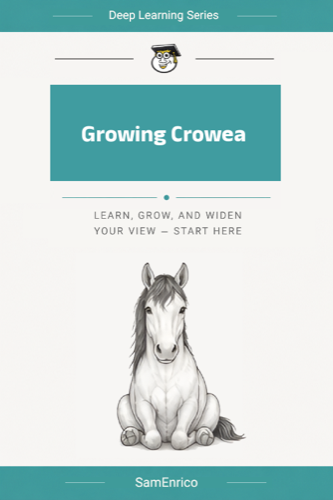
Growing Crowea eBook
This publication, published by SamEnrico, covers G
by Ginn Cathi
This publication, published by SamEnrico, covers Growing Crowea
Formats
Free sample
Chapter 1: Beyond Scraggy Natives...--It begins, for most gardeners, with a quiet disappointment.You have seen them, perhaps, in a friend's garden or at a botanical display – those neat, rounded shrubs covered in hundreds of star-shaped, waxy flowers that seem to glow from within. The foliage is glossy, the form is compact, and the overall impression is one of effortless perfection. "I want that," you think. And so you visit the nursery, purchase a healthy specimen in a plastic pot, bring it home with dreams of floral abundance, plant it with care, water it with devotion, and then... nothing.
Or worse, something. The leaves turn yellow and drop. The stems become leggy and sparse. The flowers, if any appear at all, are few and far between. Within a year, you are staring at a sad, half-dead shrub that bears no resemblance to the vision that seduced you.If this story sounds familiar, you are in excellent company.
The journey of the Crowea gardener is paved with good intentions and, all too often, premature compost contributions. The problem is not your skill as a gardener. The problem is that most of what we think we know about growing plants – the rules we learned from our grandparents, the instructions on the back of fertilizer bottles, the conventional wisdom passed down at garden clubs – was written for English roses, French marigolds, and Mediterranean herbs. None of those rules apply to Crowea.This book exists because one genus of Australian native plants deserves better than guesswork and folklore. Crowea – named, as we shall explore, after a man who never grew one – is not difficult.
It is simply different. And once you understand how it is different, and more importantly why, you will not only succeed with Crowea but discover a gateway into the entire world of Australian native gardening that will transform how you think about soil, water, pruning, and the very nature of a garden itself.The Prejudice We Must First Dismantle Before we can discuss the specifics of growing Crowea – the soil composition, the watering schedule, the pruning techniques that will follow in later chapters – we must address an invisible barrier that prevents more Australians from falling in love with their own flora. It is a prejudice so deeply embedded in our gardening culture that most of us do not even recognize it as a prejudice. We simply accept it as fact.The prejudice is this: Australian native plants are inherently less beautiful, less refined, and less rewarding than exotic imports from Europe, Asia, and the Americas.Let us be explicit about where this prejudice comes from. For two centuries, the dominant aesthetic in Australian gardening has been borrowed.
The English cottage garden, with its lush green lawns, its rambling roses, its delphiniums and hollyhocks – this was the ideal against which all gardens were measured. And by that measure, Australia's native flora fell short. The leaves were too small, too sparse, too grey. The flowers, when they appeared, were too brief, too subtle, or too strange. The growth habits were irregular and untidy.
"Scraggy" is the word you will hear used, often with a sigh of resignation.The irony, of course, is that this aesthetic was developed in a climate of reliable rainfall, deep fertile soils, and mild summers. Transplant it to the ancient, nutrient-poor, drought-prone soils of Australia, and the result is a garden that fights nature at every turn. The roses need constant watering, the lawns go brown in summer, the delphiniums collapse at the first heatwave. And the gardener, exhausted by the effort of keeping alien plants alive in an unforgiving climate, concludes that gardening itself is hard work. It is not.
Only gardening against your climate is hard work.Crowea represents a different path. It is a plant that has spent millions of years evolving in the very conditions that frustrate exotic garden favorites. It does not need rich soil – indeed, rich soil will kill it. It does not need constant watering – indeed, constant watering will rot its roots. It does not need heavy feeding – indeed, heavy feeding will burn its delicate root system.
What Crowea needs is to be understood on its own terms. And those terms, once learned, are remarkably simple to satisfy.What Exactly Is a Crowea?Let us begin with the botanical basics, not as an academic exercise but as a practical foundation for everything that follows. Understanding where Crowea fits in the plant kingdom will explain why it behaves as it does in your garden.Crowea is a genus of flowering plants in the family Rutaceae. If that family name sounds familiar, it should: Rutaceae includes citrus – oranges, lemons, limes, and their kin. The connection is not immediately obvious to the naked eye; a Crowea flower looks nothing like a lemon blossom.
But the family relationship reveals itself in the oil glands. Crush a Crowea leaf between your fingers, and you will detect a fragrance that varies by species – sometimes aniseed, sometimes citrus, sometimes a complex spice that defies simple description. Those aromatic oils are produced in tiny translucent glands visible when you hold a leaf up to the light. Citrus leaves have the same glands. The difference is that citrus glands produce oils we find culinary; Crowea glands produce oils that, for now, are purely ornamental.Within the Rutaceae family, Crowea belongs to a tribe called Boronieae, named after its most famous (or infamous) genus: Boronia.
And here we encounter a distinction that matters enormously to the home gardener. Boronias are famously, almost notoriously, difficult to cultivate outside their precise natural habitats. They demand specific soil p H, exacting moisture levels, and protection from both heat and cold. Many an experienced gardener has wept over a Boronia that flourished for six months and then died for reasons that defied diagnosis.Crowea, by contrast, is the resilient cousin. It shares the Boronia's beautiful, waxy flowers – indeed, the two are often confused by casual observers – but it lacks the Boronia's fragility.
Where Boronia requires pampering, Crowea asks only for understanding. Where Boronia sulks at the slightest deviation from its ideal conditions, Crowea adapts, within reason, to a range of garden settings. This is why I call Crowea the "gateway plant" to Australian native gardening. It delivers the visual payoff of the finicky Boronia – the star-shaped flowers, the glossy foliage, the extended blooming season – without the heartbreak.A second relative worth mentioning is Eriostemon, commonly known as waxflower. (The common name "waxflower" is applied to several different genera, a confusion we will untangle in Chapter 2.) Eriostemon flowers are similar to Crowea but tend to be smaller and less showy, and the foliage is typically less glossy.
More importantly, Eriostemon is generally less tolerant of humidity and heavier soils than Crowea. If you have tried and failed with Eriostemon, do not assume Crowea will fail similarly. They are cousins, not twins.The Man Behind the Name Every plant genus has a story behind its name, and Crowea's story is worth telling because it illuminates something important about how European botanists encountered – and often misunderstood – Australian flora.The genus was named in honor of James Crowe (1750-1807), an English botanist and plant collector who never set foot…
This is the end of the free sample. Get the eBook to keep going. Buy now
About this book
Details
- Author
- Ginn Cathi
- Publisher
- SamEnrico
- Language
- English
- Genre
- Non-Fiction, Informative, Educational
- Released
- 2026-05-07
- Pages (approx.)
- 147
- Available as
- eBook, Audiobook

Read better in the ZLOADR app
Your eBooks on your phone or tablet. Sign in with your SamEnrico account and start reading.
More by Ginn Cathi
 Chiropractor Patient Load StressGinn Cathi$11.99
 Disrespect Trigger GuideGinn Cathi$11.99
 Aging Planning HandbookGinn Cathi$11.99
 Healing From Eating Disorders Body Image GuideGinn Cathi$11.99
 Aaron Levie BoxGinn Cathi$11.99
 Pinnacles DisappearancesGinn Cathi$11.99
 Antarctic Traverse SoloGinn Cathi$11.99
 Beginner Meditation For KidsGinn Cathi$11.99
 The Martian Surgeon: Dr. Christian Barnard’s Heart Transplant RevolutionGinn Cathi$11.99
 The Iron Discipline: Frederick the Great and the Birth of the Prussian War MachineGinn Cathi$11.99
 The Mineral Guide to AluminiumGinn Cathi$11.99
 How to Start a Crop Drying and Disinfecting for Primary Market Business (Beginners Guide)Ginn Cathi$11.99
You may also like
 Hong Kong Handover 1997Dunn Johnnie$11.99
 Zumba For Postnatal Recovery CourseNeal Christian$11.99
 Zumba for BeginnersLadner Nikia$11.99
 YouTube Comment Mining GuideHumes Pandora$12.99
 Worry Box MeditationCarlin Rudy$11.99
 Workplace Stress MeditationNguyen Lynn$11.99
 Workplace Stress and Sleep RepairHawley Ivory$11.99
 Workplace Perfectionism CureDelaney Jeffry$11.99
 Workplace Injustice Anger GuideWallen Isabelle$11.99
 Work Addiction and Burnout LinkGreenwood Ester$11.99
 Women in Yoga and WellnessBeattie Galina$11.99
 Women in Stand Up ComedyChun Evangeline$11.99