
Non-FictionInformativeEducational
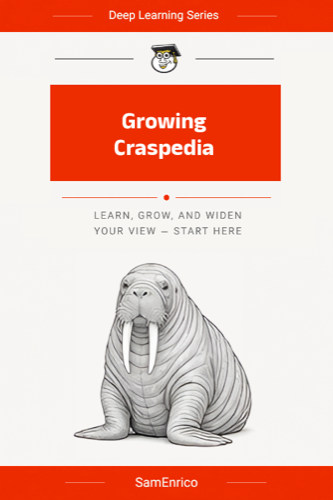
Growing Craspedia eBook
This publication, published by SamEnrico, covers G
This publication, published by SamEnrico, covers Growing Craspedia
Formats
Free sample
Chapter 1: The Golden Secret...–- Every few years, a flower emerges from obscurity to capture the imagination of gardeners, florists, and entrepreneurs alike. In the 1980s, it was the peony. In the early 2000s, the garden rose. In the 2010s, dahlias exploded across Instagram feeds and farmers’ market tables. But right now, in this moment, a quiet revolution is taking place in cut-flower fields and backyard gardens from Oregon to Ohio, from Tasmania to Tuscany.
The flower at the center of this revolution is not fussy. It does not require staking every other day. It does not demand complicated vernalization schedules or midnight frost protection. It is, by all accounts, a plant that seems almost indifferent to the gardener’s anxiety. And yet, stem for stem, square foot for square foot, it is emerging as one of the most profitable, most photogenic, and most satisfying flowers you can grow.The flower is Craspedia.
You may know it by its whimsical common names: Billy Balls, Billy Buttons, or Drumsticks. The names are apt. Each stem terminates in a perfect, sun-yellow sphere roughly the size of a golf ball, perched atop a slender, leafless stalk that rises with military precision from a low rosette of silvery-green foliage. There is nothing else in the garden quite like it. When you first see a field of Craspedia in full bloom, the effect is almost surreal—hundreds of little golden orbs floating above the soil, as if someone had glued tennis balls to drinking straws and stuck them in the ground.
But behind that whimsical appearance lies a serious plant, one that has been quietly building a reputation among flower farmers as a reliable, high-value, low-input crop.This book is the result of years of trial and error, conversations with commercial growers in three countries, and a deep dive into the research produced by breeders like Danziger and cultivation guides from Johnny’s Selected Seeds and Farmer Bailey. It is written for the home gardener who wants to grow something extraordinary, the hobby farmer looking to add a profitable cut flower to their rotation, and the aspiring entrepreneur who sees opportunity in a crop that most people have never heard of but instantly fall in love with the moment they see it. By the time you finish this chapter, you will understand not only what Craspedia is, but why it matters. And by the time you finish this book, you will have every tool you need to grow it successfully, harvest it at its peak, dry it for everlasting arrangements, and sell it for a price that will make you wonder why you ever bothered with less profitable flowers.The Moment of Discovery Let me tell you how I first encountered Craspedia. I was walking through the flower section at a farmers’ market in Portland, Oregon, on a gray June morning.
The usual suspects were on display: sunflowers shouting from buckets, zinnias in every color except blue, dahlias so perfect they looked artificial. And then, in the corner of a vendor’s table, I saw something I had never seen before. A small mason jar held perhaps two dozen stems, each topped with a fuzzy yellow ball the size of a cherry tomato. They looked like something Dr. Seuss might have invented.
I picked one up. The stem was firm but not woody. The ball was dense and springy to the touch, like a foam practice golf ball. The color was not the pale yellow of a daffodil or the hot yellow of a marigold. It was a deep, buttery, almost golden yellow, the color of late afternoon sunlight.
I asked the vendor what it was. “Craspedia,” she said. “Billy Balls. They’re my best seller.” I asked how much she charged. “Three dollars a stem,” she said.
“And I sell out every week.”Three dollars a stem. For a flower I had never heard of. That math stayed with me. I bought a handful, took them home, and put them in a vase on my kitchen table. They lasted three weeks.
Three weeks. The sunflowers next to them had collapsed after seven days. The zinnias had dropped their petals after ten. But those Craspedia just sat there, perfectly round, perfectly yellow, as if time had stopped. I was hooked.That was seven years ago.
Since then, I have grown Craspedia in raised beds, in plastic nursery pots, in heavy clay soil amended with sand, and in sandy loam that drained almost too fast. I have started seeds indoors under grow lights and direct-sown them in the garden. I have pinched plants and left them alone, staked them and let them flop, harvested at the wrong time and watched the flowers rot in the vase, and harvested at exactly the right time and watched them last for a month. I have dried hundreds of stems by hanging them upside down in a dark closet, and I have watched in frustration as stems left in a sunny window faded from gold to beige in a matter of weeks. I have sold Craspedia at farm stands, given it away to friends who became obsessed, and traded tips with commercial growers who grow ten thousand stems at a time.What I have learned can be distilled into a single sentence: Craspedia is one of the most forgiving, most productive, and most profitable flowers you can grow, provided you understand a small handful of non-negotiable rules.
This book is those rules, organized into a system that anyone can follow.What Exactly Is Craspedia?Before we go any further, let us establish a common language. Craspedia is a genus of flowering plants in the daisy family, Asteraceae. The species most commonly grown for cut flowers is Craspedia globosa, though you may also encounter Craspedia uniflora or various hybrid crosses. The plant is native to Australia and New Zealand, where it grows in open, rocky, often nutrient-poor soils at a range of elevations. In its natural habitat, it has adapted to survive long dry periods followed by heavy rains, poor soil that would starve most garden plants, and intense sunlight that would scorch more delicate species.
These adaptations are precisely what make it so easy to grow in cultivation, once you understand them.The plant forms a basal rosette of leaves—meaning all the leaves emerge from the base of the plant, close to the ground, rather than from a branching stem. From this rosette, one or more flowering stalks emerge, depending on whether and how you pinch the plant (a topic we will explore in depth in Chapter 6). These stalks are leafless, round in cross-section, and typically reach 24 to 30 inches in height, though under ideal conditions they can surpass 36 inches. Each stalk terminates in a single compound flower head known as a capitulum, the same botanical structure found in sunflowers and daisies. What appears to be a single yellow ball is actually a dense cluster of hundreds of tiny individual florets, each one a complete flower.
This is why the head feels firm and springy; you are squeezing a crowd of miniature flowers packed tightly together.The color of Craspedia ranges from pale lemon yellow to deep golden yellow, depending on…
This is the end of the free sample. Get the eBook to keep going. Buy now
About this book
Details
- Author
- Conyers Mitzi
- Publisher
- SamEnrico
- Language
- English
- Genre
- Non-Fiction, Informative, Educational
- Released
- 2026-05-11
- Pages (approx.)
- 151
- Available as
- eBook, Audiobook

Read better in the ZLOADR app
Your eBooks on your phone or tablet. Sign in with your SamEnrico account and start reading.
More by Conyers Mitzi
 Body Image Resilience Against Media MythsConyers Mitzi$11.99
 Ben Silbermann PinterestConyers Mitzi$11.99
 Nobel Prize Poverty Research GuideConyers Mitzi$11.99
 Elder Financial Abuse SignsConyers Mitzi$11.99
 Vehicle Through Sahara SandsConyers Mitzi$11.99
 Petrified Forest VanishedConyers Mitzi$11.99
 Glasses Push as DisagreementConyers Mitzi$11.99
 Beginner Mindfulness Of UrgesConyers Mitzi$11.99
 The Quantum Leap That Split RealityConyers Mitzi$11.99
 Anansi's Golden Web: Lessons from the Spider TricksterConyers Mitzi$11.99
 The Mineral Guide to AlarsiteConyers Mitzi$11.99
 How to Become a Brine Maker IConyers Mitzi$11.99
You may also like
 Hong Kong Handover 1997Dunn Johnnie$11.99
 Zumba For Postnatal Recovery CourseNeal Christian$11.99
 Zumba for BeginnersLadner Nikia$11.99
 YouTube Comment Mining GuideHumes Pandora$12.99
 Worry Box MeditationCarlin Rudy$11.99
 Workplace Stress MeditationNguyen Lynn$11.99
 Workplace Stress and Sleep RepairHawley Ivory$11.99
 Workplace Perfectionism CureDelaney Jeffry$11.99
 Workplace Injustice Anger GuideWallen Isabelle$11.99
 Work Addiction and Burnout LinkGreenwood Ester$11.99
 Women in Yoga and WellnessBeattie Galina$11.99
 Women in Stand Up ComedyChun Evangeline$11.99