

Growing Corypha
This publication, published by SamEnrico, covers G
by Jose Terra
This publication, published by SamEnrico, covers Growing Corypha
Formats
About this book
Free sample
Chapter 1: The Suicide Bloom--The first time I saw a photograph of a Talipot palm in full flower, I thought it was a hoax. The image showed a tree that looked like a telephone pole exploding into a chandelier the size of a small house, its million cream-colored blossoms erupting from a single spike that rose from the crown like a botanical skyscraper. I was twenty-three, working in a cramped office at a botanical garden, and I assumed someone had photoshopped a normal palm and attached a Christmas tree to the top. Then I looked closer at the caption: Corypha umbraculifera, flowering for the first and only time, age approximately fifty-seven years. Will be dead within twelve months.That last sentence stopped me cold.
Fifty-seven years of growing. Fifty-seven years of surviving cyclones, droughts, nutrient deficiencies, and the slow accumulation of wood and leaf and root. And for what? A single, spectacular, suicidal explosion of reproduction, followed by collapse. It struck me as the most absurd, wasteful, and magnificent strategy in the plant kingdom.
I had to know more. I had to grow one.This book is for everyone who has felt that same pull. The Corypha genus—containing the largest flowering structures of any living organism on Earth—is not for the casual gardener, the impatient landscaper, or anyone seeking immediate gratification. It is for the legacy builder, the meditative observer, the person who understands that some of the most profound acts of cultivation are those whose rewards you will never personally witness. This chapter introduces you to the paradox at the heart of growing Corypha: why we invest decades in a plant that dies after flowering, and why that investment is not a flaw but a feature.The Paradox of Monocarpic Gardening Monocarpy—the reproductive strategy of flowering once, setting seed, and dying—is rare among palms.
Of the approximately 2,600 palm species on Earth, only a handful are monocarpic. The most famous is the Madagascar Tahina spectabilis, discovered only in 2008, which produces a massive inflorescence and then collapses. But Corypha holds the crown. The Talipot palm's inflorescence…
This is the end of the free sample. Get the eBook to keep going. Buy now
Contents
- Chapter 1
- Chapter 2
- Chapter 3
- Chapter 4
- Chapter 5
- Chapter 6
- Chapter 7
- Chapter 8
- Chapter 9
- Chapter 10
- Chapter 11
- Chapter 12
Details
- Author
- Jose Terra
- Publisher
- SamEnrico
- Language
- English
- Genre
- Non-Fiction, Informative, Educational
- Released
- 2026-06-02
- Pages (approx.)
- 118
- Available as
- eBook, Audiobook

Read better in the ZLOADR app
Your eBooks on your phone or tablet. Sign in with your SamEnrico account and start reading.
More by Jose Terra
 Cuyahoga Valley MysteriesJose Terra$11.99
 The Chemistry Nobel Green FluorescenceJose Terra$11.99
 Loving Your Body Self Esteem GuideJose Terra$11.99
 Nobel Prize Stem Cell PioneersJose Terra$11.99
 Elder Fraud PreventionJose Terra$11.99
 Pocketed Hands as WithdrawalJose Terra$11.99
 Freelancer Client BankruptcyJose Terra$11.99
 Beginner Mindfulness QuotesJose Terra$11.99
 The Honeyed Deception: How Ancient Egypt’s Sweet Trade Fueled a Pharaoh’s DownfallJose Terra$11.99
 The Clockwork Genius: Benjamin Banneker and the Birth of American PrecisionJose Terra$11.99
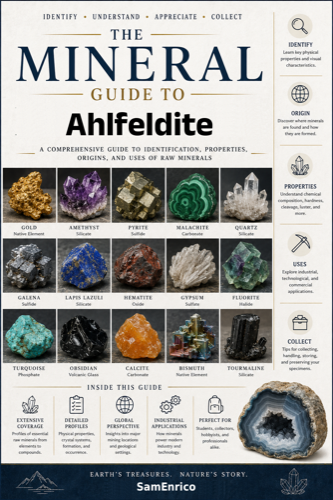 The Mineral Guide to AhlfelditeJose Terra$11.99
 Full Stack Web Development FoundationsJose Terra$11.99