
Non-FictionInformativeEducational
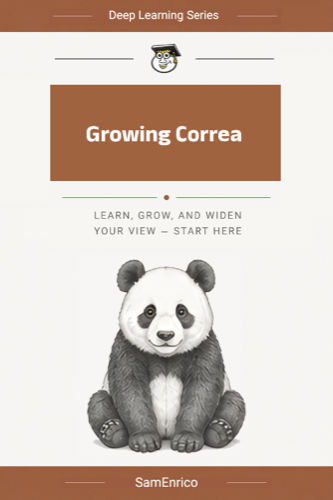
Growing Correa eBook
This publication, published by SamEnrico, covers G
This publication, published by SamEnrico, covers Growing Correa
Formats
Free sample
Chapter 1: The February Reckoning--–- February is the month when gardeners confront their failures. In the Northern Hemisphere, the holidays are a distant memory, spring feels impossibly far away, and the garden has settled into a grim resignation. The birdbath is frozen or empty. The ornamental grasses have collapsed into wet tangles. The hellebores, if you planted them, are barely nodding above the mulch.
Every window frames the same view: brown, grey, and the particular shade of defeated green that evergreens wear when they know they are only there because no one has bothered to cut them down.In the Southern Hemisphere, February arrives differently but no less brutally. It is high summer, and the garden is either baked to a crisp or shaggy with overgrowth. The roses have finished their first flush and look exhausted. The vegetable patch is either producing more zucchini than you can give away or has surrendered to heat stress. And somewhere in the back of your mind, you are already dreading May, when the last of the autumn colour falls and the long grey tunnel of winter begins.February is the month of reckoning because it strips away our gardening delusions.
In spring, every garden is hopeful. In summer, every garden is generous. In autumn, every garden is beautiful. But in February – deep winter in the north, dog days in the south – the garden shows you what it truly is. And for most gardeners, what it shows is not enough.This book exists because I spent too many Februaries standing at my own window, feeling that particular disappointment.
I had done everything the books and the garden centres told me to do. I had planted witch hazel and winter jasmine and camellias and hellebores. I had mulched and pruned and fed and watered. And still, my winter garden was a study in subsistence, not beauty. The plants were alive, mostly.
But they were not alive the way a summer garden is alive. They were not alive the way a garden should be alive.Then I discovered Correa. Not in a glossy magazine or a celebrated garden. I discovered it on a windswept hillside in the Otway Ranges of southern Australia, where I had gone to escape my own disappointing garden. It was July – the depths of the Australian winter – and I had expected the bush to be dormant.
Instead, I walked into a riot of red and green. Correa reflexa was everywhere, growing as a prostrate groundcover on the exposed slopes, as an erect shrub in the sheltered gullies, and in every form between. The flowers were tubular, pendant, and impossibly vivid – fire-engine red with pale green tips that made them look like tiny Christmas ornaments scattered across the landscape.I knelt beside one of them, and a honeyeater landed two metres away, entirely unafraid. It inserted its curved beak into a flower, extracted nectar, and moved to the next. The bush hummed with life – not the frantic life of a summer meadow, but a quieter, more determined life, the life of creatures that have learned to thrive when everything else has retreated.That was my February reckoning, even though it was July.
I realised that I had been thinking about winter gardening all wrong. I had been looking for plants that would merely survive the winter – that would hold on, endure, wait for spring. But Correa does not survive winter. Correa owns winter. Winter is its moment.
Winter is when it shows off.This chapter is called The February Reckoning because it is the moment when you decide whether to keep accepting the dead season as inevitable, or whether to do something about it. By the time you finish this book, you will know how to transform your winter garden from a study in endurance into a celebration of the cold. And it all starts with a single genus of Australian shrubs that most gardeners have never heard of – and that will change everything once they do.The Lie We Have All Swallowed Let me be direct: the gardening industry has failed you. Not maliciously, not deliberately, but systematically. For decades, the plants available for winter gardens have been chosen for two qualities: they do not die in the cold, and they look acceptable in a nursery pot in October.
That is the entire selection criteria.Consider the standard offerings of any garden centre in November (Northern Hemisphere) or May (Southern Hemisphere). You will find a few evergreen shrubs – boxwood, holly, yew – that offer structure but no flowers. You will find a handful of winter bloomers – witch hazel, winter jasmine, camellia sasanqua – that require specific conditions (acid soil, perfect drainage, protection from wind) and offer a relatively short bloom window. You will find hellebores, which are lovely but low-growing and nod their flowers downward. You will find ornamental cabbages, which are just cabbages.
And you will find shelves of chemical products designed to force your reluctant plants into marginally better performance.What you will not find is a plant that does all of the following: blooms continuously for four to six months, survives frost and snow and freezing rain, requires no special soil or feeding, tolerates drought and neglect once established, attracts and feeds winter-active pollinators and birds, offers evergreen foliage that looks good year-round, and fits into gardens of any size from a balcony pot to a country acreage.That plant exists. It is called Correa. And the reason you have not heard of it is not because it is difficult or rare or disappointing. It is because the gardening industry is built around the plants that grow quickly, propagate easily, and sell in high volume – not necessarily the plants that perform best in your garden over the long term.Correa grows slowly from seed. It does not tolerate the overwatering that nursery potting mix encourages.
It can look unremarkable in a plastic pot on a sales bench, because its true beauty is revealed only when it is planted in the ground and allowed to mature. These are not qualities that make a plant a bestseller at the big box stores. But they are qualities that make a plant a treasure in your garden.What Correa Actually Is (And What It Is Not)The genus Correa contains eleven recognised species of evergreen shrubs, all native to Australia. The plants are named after José Correia da Serra, a Portuguese botanist who was a contemporary of Joseph Banks – the same Banks who sailed with Captain Cook and brought thousands of Australian plant specimens back to England. Correa has been known to Western science for more than two centuries.
It has simply been ignored.The common name, Australian Fuchsia, is both the plant’s greatest marketing asset and its greatest liability. The asset is obvious: the flowers do resemble fuchsias, with their tubular, pendant form and their vivid colours. If you like fuchsias – and millions of gardeners do – you will like the look of Correa.The liability is that the name “fuchsia” comes with a whole set of cultural assumptions about care. True fuchsias (genus Fuchsia, family Onagraceae) are shade-loving, moisture-hungry, frost-tender plants that require rich soil, constant watering, and protection from both heat and cold.…
This is the end of the free sample. Get the eBook to keep going. Buy now
About this book
Details
- Author
- Rickard Rheba
- Publisher
- SamEnrico
- Language
- English
- Genre
- Non-Fiction, Informative, Educational
- Released
- 2026-06-02
- Pages (approx.)
- 137
- Available as
- eBook, Audiobook

Read better in the ZLOADR app
Your eBooks on your phone or tablet. Sign in with your SamEnrico account and start reading.
More by Rickard Rheba
 The Chemistry Nobel PalladiumRickard Rheba$11.99
 The Spending Moratorium GuideRickard Rheba$11.99
 Nobel Laureates In Penicillin DiscoveryRickard Rheba$11.99
 Medicare Planning GuideRickard Rheba$11.99
 Jewelry Touch as PacifyingRickard Rheba$11.99
 Wrangell St Elias DisappearancesRickard Rheba$11.99
 Sick Day Honesty GuideRickard Rheba$11.99
 Mindfulness For ImpatienceRickard Rheba$11.99
 The Invisible Hand: Secrets of the Royal SocietyRickard Rheba$11.99
 Silk Road Shadows: The Untold War on the Opium TradeRickard Rheba$11.99
 How to Produce Bubble Tea IngredientsRickard Rheba$11.99
 Chemical Thermodynamics JEE GuideRickard Rheba$12.99
You may also like
 Hong Kong Handover 1997Dunn Johnnie$11.99
 Zumba For Postnatal Recovery CourseNeal Christian$11.99
 Zumba for BeginnersLadner Nikia$11.99
 YouTube Comment Mining GuideHumes Pandora$12.99
 Worry Box MeditationCarlin Rudy$11.99
 Workplace Stress MeditationNguyen Lynn$11.99
 Workplace Stress and Sleep RepairHawley Ivory$11.99
 Workplace Perfectionism CureDelaney Jeffry$11.99
 Workplace Injustice Anger GuideWallen Isabelle$11.99
 Work Addiction and Burnout LinkGreenwood Ester$11.99
 Women in Yoga and WellnessBeattie Galina$11.99
 Women in Stand Up ComedyChun Evangeline$11.99