
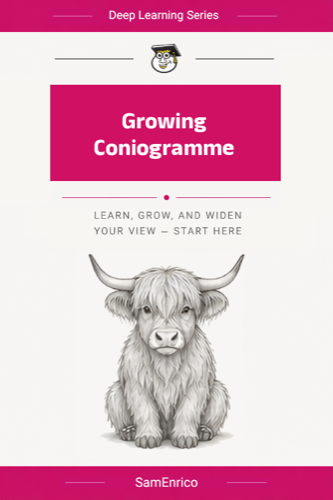
Non-FictionInformativeEducational
Growing Coniogramme eBook
This publication, published by SamEnrico, covers G
This publication, published by SamEnrico, covers Growing Coniogramme
Formats
Free sample
Chapter 1: Beyond Bamboo’s Shadow...--The first time a Bamboo Fern dies in your care, it is almost certainly because you treated it like a houseplant. The second time, it is because you treated it like a fern. The third time – if you are stubborn enough to try again – you finally realize that Coniogramme is neither. It is something else entirely: a botanical ghost from the misty ravines of East Asia, a plant that has spent millions of years perfecting the art of thriving in conditions that would suffocate or starve almost everything else in your garden. And yet, most gardeners have never heard of it.
This book exists to change that.I wrote Growing Coniogramme because I killed six of them before I understood what I was doing wrong. The first one – a beautiful Coniogramme emeiensis 'Magnifica' with glossy, broad leaves that genuinely resembled miniature bamboo – sat on my south-facing windowsill. I watered it every Tuesday, the way I watered my pothos and my spider plants. Within three weeks, its leaves turned brown at the edges. Within six weeks, it was a crisp.
I assumed I had bought a sick plant. The second one I placed in my bathroom, thinking the humidity would help. It did, but I also placed it directly in the path of the morning sun streaming through an east-facing window. The leaves didn't crisp this time – they bleached. Pale, papery patches appeared like scars.
I learned later that this was sun scorch, and it is irreversible. The third, fourth, and fifth died from root rot, underwatering during a two-week vacation, and a mysterious combination of errors I still cannot fully reconstruct. The sixth lived. And then it thrived. And then it produced divisions that filled my entire shade garden.What changed?
Not the plant. I did. I stopped treating Coniogramme like a generic fern and started treating it like the specific, demanding, beautiful creature it is. This book is the distillation of everything I learned from those first six deaths – and from studying the top ten horticultural references on fern cultivation, woodland gardening, and exotic houseplants. I have synthesized academic fern ecology (the boring but essential science of where these plants come from), practical gardening manuals (the hands-on wisdom of people who have kept these plants alive for decades), and modern houseplant guides (the Instagram-friendly advice that actually works in a living room) into a single, actionable resource.
You do not need a greenhouse. You do not need a degree in botany. You need only what you already have: curiosity, patience, and this book.Before we dive into the soil recipes and the propagation techniques and the design philosophies, we have to answer one fundamental question: What is Coniogramme, and why should you care?The Genus That Time Forgot Coniogramme belongs to the Pteridaceae family – the same family as the common brake ferns (Pteris) and the highly popular silver dollar ferns (Pellaea). But within this family, Coniogramme is the odd cousin. Most ferns, when you picture them in your mind, have soft, lacy, highly dissected fronds.
Think of the delicate, feathery leaves of a maidenhair fern (Adiantum) or the frilly, almost cartoonish fronds of a Boston fern (Nephrolepis exaltata). Coniogramme does not look like that. At all. Its fronds are broad, undivided or only slightly lobed, with parallel veins running from the central stem to the leaf margin. In other words, it looks like bamboo.
This is not a coincidence. Coniogramme evolved in the same East Asian forests as bamboo, and it converged on a similar leaf shape because that shape works. Broad leaves capture more of the dappled light that filters through a forest canopy. Parallel veins move water efficiently through the leaf without requiring the complex network that lacy ferns need. And the tough, leathery texture of the frond resists the physical damage of falling branches, passing animals, and the general chaos of a forest floor.But here is the crucial distinction that will save your plant's life: Coniogramme is not bamboo.
I cannot emphasize this enough. True bamboos (family Poaceae) are grasses. They have hollow, woody stems (culms), they spread aggressively via rhizomes that can crack foundations and overtake entire yards, and they require full sun to thrive. Coniogramme has solid, non-woody stems (stipes), it spreads slowly and politely (more on that in Chapter 2), and it requires shade. Every time you look at your Bamboo Fern and think, "This would look great in that sunny corner," you are applying bamboo logic to a fern.
Stop. Apply fern logic instead. And fern logic begins with the native habitat.The Misty Ravines of East Asia Close your eyes for a moment. You are standing in a temperate rainforest somewhere in the mountains of southern China, or perhaps on the volcanic slopes of Yakushima Island in Japan, or in the cloud forests of northern Taiwan. The air is cool – not cold, but the kind of cool that settles into your bones after an hour of walking.
The ground beneath your feet is springy, composed of decades of fallen leaves, rotting wood, and fungal mycelium that has broken it all down into a spongy, dark brown loam. Above you, a canopy of broadleaf evergreens – oaks, maples, camellias – filters the sunlight into shifting patches of gold and shadow. And in the understory, growing in drifts along the banks of a small, rocky stream, you see them: Coniogramme. Their fronds rise from the forest floor like green banners, each leaflet broad and glossy, catching the light at a dozen different angles. The stream beside them is not rushing; it is trickling, seeping, keeping the air perpetually misty.
You can feel the moisture on your skin. You can smell the earth – clean, organic, alive.This is where Coniogramme belongs. This is the environment it has spent millions of years adapting to. And every time you bring a Bamboo Fern into your home or garden, you are asking it to leave this paradise and survive in a place that is almost certainly drier, sunnier, and less organic than anything its ancestors knew.Let me translate that ravine into practical terms. The light in that forest is not "low light" – it is dappled light.
There is a common myth that ferns thrive in deep, dark corners where nothing else grows. That is true for some ferns (like the Christmas fern, Polystichum acrostichoides), but it is not true for Coniogramme. In its native habitat, the fern receives three to six hours of indirect, filtered sunlight every day. This light is not direct – it never touches the fronds without passing through leaves first – but it is present. It is bright enough to read a book by, if you were sitting on that forest floor.
We will spend all of Chapter 6 on light management because this is the single most misunderstood aspect of Coniogramme care, but for now, remember this: dappled, not dark.The humidity in that ravine is consistently high – often 70% to 90% relative humidity. For comparison, the average heated home in winter sits at 20% to 30% relative humidity. The average air-conditioned home in summer sits at 30% to 40%. You are asking a plant evolved for a rainforest to…
This is the end of the free sample. Get the eBook to keep going. Buy now
About this book
Details
- Author
- Babcock Elliott
- Publisher
- SamEnrico
- Language
- English
- Genre
- Non-Fiction, Informative, Educational
- Released
- 2026-06-02
- Pages (approx.)
- 154
- Available as
- eBook, Audiobook

Read better in the ZLOADR app
Your eBooks on your phone or tablet. Sign in with your SamEnrico account and start reading.
More by Babcock Elliott
 Nelson Peltz TrianBabcock Elliott$11.99
 The Three Question Spend TestBabcock Elliott$11.99
 The Nobel Laureate FailuresBabcock Elliott$11.99
 Missing in National Parks GuideBabcock Elliott$11.99
 Marie Curie Nobel Legacy BiographyBabcock Elliott$11.99
 Self Talk for GriefBabcock Elliott$11.99
 Neck Pulse and Blood PressureBabcock Elliott$11.99
 Beginner Mindfulness Of SoundBabcock Elliott$11.99
 Titian’s Alchemy: Painting Light in the Venetian RenaissanceBabcock Elliott$11.99
 The Watergate Files: A Tape That Shook the WorldBabcock Elliott$11.99
 Galahad's Forbidden Grail: The Knight Who Refused the QuestBabcock Elliott$11.99
 How to Produce Body SprayBabcock Elliott$11.99
You may also like
 Hong Kong Handover 1997Dunn Johnnie$11.99
 Zumba For Postnatal Recovery CourseNeal Christian$11.99
 Zumba for BeginnersLadner Nikia$11.99
 YouTube Comment Mining GuideHumes Pandora$12.99
 Worry Box MeditationCarlin Rudy$11.99
 Workplace Stress MeditationNguyen Lynn$11.99
 Workplace Stress and Sleep RepairHawley Ivory$11.99
 Workplace Perfectionism CureDelaney Jeffry$11.99
 Workplace Injustice Anger GuideWallen Isabelle$11.99
 Work Addiction and Burnout LinkGreenwood Ester$11.99
 Women in Yoga and WellnessBeattie Galina$11.99
 Women in Stand Up ComedyChun Evangeline$11.99