
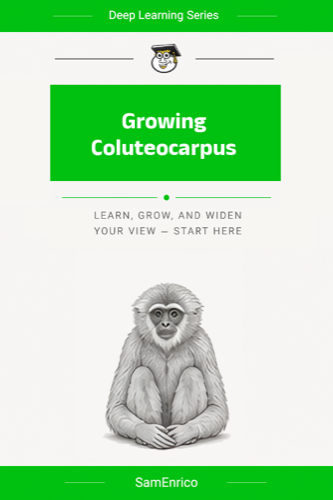
Non-FictionInformativeEducational
Growing Coluteocarpus eBook
This publication, published by SamEnrico, covers G
by Miles Arthur
This publication, published by SamEnrico, covers Growing Coluteocarpus
Formats
Free sample
Chapter 1: The Accidental Obsession...-- It began, as most dangerous obsessions do, with a single photograph. Not a particularly good photograph, mind you. The resolution was muddy, the lighting was flat, and the plant in question occupied maybe a tenth of the frame. The rest was grey scree, shadowed limestone, and a sky that looked like concrete. But in that tiny sliver of image, caught somewhere between a rock cleft and a patch of lingering snow, was something that stopped me completely.
A cushion of silver-green leaves, tight as a woven basket, and rising from it on slender stems, a constellation of papery, translucent pods. They caught the light like tiny Japanese lanterns, each one a balloon of tissue-thin membrane stretched over hidden seeds. I had never seen anything like it. I didn't know what it was. And I knew, with the kind of certainty that precedes poor financial decisions and neglected family obligations, that I had to grow it.The photograph came from a forgotten corner of an alpine plant forum, posted by a user named "Caucasus Hiker" who had last logged in seven years earlier.
The caption was brief: "Coluteocarpus vesicaria, Greater Caucasus, 2700m." No cultivation notes, no seed source, no response to the half-dozen desperate comments below asking for more information. Just the image and the ghost of a name. I copied that name into a search engine and fell down a rabbit hole that would consume the next three years of my life.What I found first was confusion. The botanical literature was sparse, contradictory, and often wrong. Some sources called it a "calcicole" that would die without limestone.
Others claimed it grew equally well on serpentine and granite scree. Some described it as a "summer dormant" species requiring bone-dry conditions from June to September. Others said it remained evergreen throughout the growing season. Most simply didn't mention it at all. Coluteocarpus, I quickly learned, belongs to that shadow category of plants that exist in the wild, appear in specialist seed exchanges, but have somehow escaped the attention of mainstream horticulture.
No glossy coffee-table books featured it. No garden center had ever sold one. The only people who had heard of it were the kind of growers who used words like "caudex" in casual conversation and considered a 2% germination rate a ringing success.The Taxonomy Trap Before I go further, let me save you the hours of confused searching that I endured. Coluteocarpus vesicaria is a member of the Brassicaceae family, making it a cousin of cabbage, mustard, and that ubiquitous garden weed, shepherds purse. The genus contains only two recognized subspecies: C.
vesicaria subsp. vesicaria, which is the more widely distributed form found from the Caucasus through Turkey to the Alps, and C. vesicaria subsp. boissieri, a more compact, high-altitude variant restricted to the eastern Taurus Mountains. The key differences are subtle but meaningful for the collector.
Subsp. vesicaria produces slightly larger pods on longer stems, with leaves that are broader and more grey-green. Subsp. boissieri hugs the ground more tightly, its cushion often no more than two centimeters tall, with narrower, almost needle-like leaves and smaller, more numerous pods that cluster together like a handful of peas.You will also encounter the name Astragalus coluteocarpus in older literature or mislabeled seed lists. Ignore it entirely.
That is a different plant altogether, a legume with similar-looking pods and absolutely nothing else in common. I made the mistake of ordering seeds under that name in my first year and spent six months nurturing what turned out to be a common vetch relative. The leaves were wrong, the growth habit was wrong, and when it finally flowered, the blooms were purple instead of white. A whole season wasted on a naming error.The Geography of Desire Understanding why Coluteocarpus behaves the way it does in cultivation requires understanding where it comes from. The plant's range stretches from the Greater Caucasus of Georgia and Russia, through the mountains of northeastern Turkey, and west to the European Alps.
It occupies elevations from six hundred meters to well over three thousand. This vertical span is unusual for a species with such specific appearance. Most alpine plants are tightly restricted to narrow elevation bands. Coluteocarpus, by contrast, appears to be a botanical opportunist, colonizing whatever well-drained scree it can find from the subalpine zone to the high alpine.This adaptability is both good news and bad news for the gardener. The good news is that the plant has a wide tolerance range for temperature and moisture.
The bad news is that different populations have evolved different preferences. A seed collected from a low-elevation Turkish site at six hundred meters carries different genetic programming than a seed collected from a three-thousand-meter peak in the central Caucasus. The lowland plant may be comfortable with warmer summers and shorter winters. The high-alpine plant requires intense cold and will languish without it. I learned this the expensive way, purchasing seeds from a commercial supplier that listed only "Coluteocarpus vesicaria – Caucasus" as the source.
The plants that germinated grew well for two years and then died in their third summer, cooked by heat they were never evolved to handle. When I finally tracked down the original collector, he admitted the seed had come from a site above twenty-eight hundred meters. The plants were hardwired for cold, and my Zone 7 garden had killed them.The First Failure Let me tell you about my first attempt, because it contains all the lessons that the books don't teach you. I had finally located a source of seed from a reputable alpine specialist. The packet arrived in February, containing perhaps thirty tiny, dark brown seeds, each one no larger than a grain of sand.
I had read everything I could find, which was not much, and I had prepared my materials with what I believed was scientific rigor.I filled a shallow terracotta pan with a mix of equal parts grit, sand, and commercial potting soil. I surface-sowed the seeds, pressing them gently into the surface without covering them. I watered from below, placed the pan in a plastic bag to maintain humidity, and moved it to the refrigerator for cold stratification. This, I believed, was the correct protocol. I had followed the instructions from a online forum post written by someone who claimed to have grown the plant from seed.Three months later, I removed the pan from the refrigerator.
The seeds looked exactly as they had on day one. No mold, no swelling, no signs of life. I moved the pan to a bright windowsill at fifteen degrees Celsius and waited. And waited. After six weeks, three seeds had germinated.
After eight weeks, those three had damped off, collapsing at the soil line overnight. Zero survivors. The entire season, lost.I tried again the following year, this time with a different protocol drawn from a scientific paper I had to pay thirty dollars to access. I performed dry after-ripening at seventeen degrees for ninety days before cold stratification. I cleaned the seeds by removing the pericarp, a tedious process using tweezers under a magnifying lamp.
I used a sterile mix of eighty percent grit to twenty percent coir, microwaved for ten minutes to kill fungal…
This is the end of the free sample. Get the eBook to keep going. Buy now
About this book
Details
- Author
- Miles Arthur
- Publisher
- SamEnrico
- Language
- English
- Genre
- Non-Fiction, Informative, Educational
- Released
- 2026-05-09
- Pages (approx.)
- 136
- Available as
- eBook, Audiobook

Read better in the ZLOADR app
Your eBooks on your phone or tablet. Sign in with your SamEnrico account and start reading.
More by Miles Arthur
 Baseline Behavior EstablishmentMiles Arthur$11.99
 Spending Blackout PeriodsMiles Arthur$11.99
 Paul Tudor JonesMiles Arthur$11.99
 The Self Talk AuditMiles Arthur$11.99
 Metta for LawyersMiles Arthur$11.99
 The Hodgkin Vitamin B12Miles Arthur$11.99
 Georgian Abkhazia EscapeMiles Arthur$11.99
 Anapanasati for ChoresMiles Arthur$11.99
 The Sun King's Vision: Versailles and the Birth of Modern GovernanceMiles Arthur$11.99
 The Last Empress: The Fall of Zita of Bourbon-ParmaMiles Arthur$11.99
 The Titan: How Elon Musk Built a Space EmpireMiles Arthur$11.99
 Introduction to Blockchain Technology and Web3Miles Arthur$11.99
You may also like
 Hong Kong Handover 1997Dunn Johnnie$11.99
 Zumba For Postnatal Recovery CourseNeal Christian$11.99
 Zumba for BeginnersLadner Nikia$11.99
 YouTube Comment Mining GuideHumes Pandora$12.99
 Worry Box MeditationCarlin Rudy$11.99
 Workplace Stress MeditationNguyen Lynn$11.99
 Workplace Stress and Sleep RepairHawley Ivory$11.99
 Workplace Perfectionism CureDelaney Jeffry$11.99
 Workplace Injustice Anger GuideWallen Isabelle$11.99
 Work Addiction and Burnout LinkGreenwood Ester$11.99
 Women in Yoga and WellnessBeattie Galina$11.99
 Women in Stand Up ComedyChun Evangeline$11.99