
Non-FictionInformativeEducational
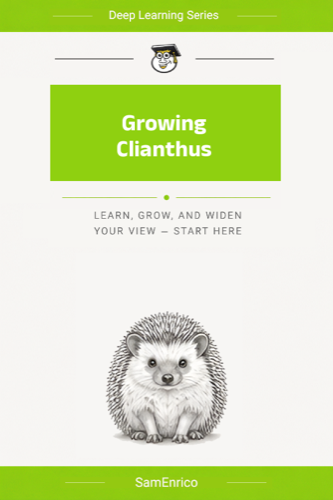
Growing Clianthus
This publication, published by SamEnrico, covers G
by Toledo Sudie
This publication, published by SamEnrico, covers Growing Clianthus
Formats
About this book
Free sample
Chapter 1: The Lobster’s Lament...--The first time I killed a Clianthus, I thought I had done something wrong. The second time, I blamed the nursery. The third time, I blamed the weather. By the seventh corpse—a sorry collection of brown stems and desiccated leaves—I finally understood the truth: I had been treating this plant like every other shrub in my garden, and that was precisely the problem.Clianthus, you see, does not want to be loved in the ordinary way. It does not want rich soil, frequent watering, or the gentle hand of a doting gardener.
What it wants—what it demands—is a cliff. A windswept, sun-blasted, impossibly well-drained slice of rock where only the boldest roots dare to venture. And if you cannot give it a cliff, you must learn to simulate one.This chapter is not a dry botanical description. It is an origin story—the tale of how a flower became the most spectacularly difficult plant you will ever love. By the time you finish reading, you will understand why Clianthus behaves the way it does, where it came from, and why growing it in your garden is not merely a hobby but an act of conservation.
You will also understand why I killed seven of them before I got it right, and why you will not need to make the same mistakes.The Accidental Discovery of a Botanical Treasure In 1769, when Captain James Cook’s Endeavour rounded the northern coast of New Zealand’s North Island, the ship’s botanist, Joseph Banks, recorded a plant that would haunt collectors for centuries. Banks wrote of a “beautiful flowering shrub” with “claws of the deepest red, hanging like jewels from a grey-green bush.” He had stumbled upon Clianthus puniceus growing on the limestone cliffs of the East Cape, where it cascaded toward the sea like a waterfall of scarlet.What Banks did not know—could not have known—was that this plant was already a relic. Even then, its habitat was shrinking. The Maori had cultivated it for generations, using the flowers in ceremonial garlands and recognizing its preference for…
This is the end of the free sample. Get the eBook to keep going. Buy now
Contents
- Chapter 1
- Chapter 2
- Chapter 3
- Chapter 4
- Chapter 5
- Chapter 6
- Chapter 7
- Chapter 8
- Chapter 9
- Chapter 10
- Chapter 11
- Chapter 12
Details
- Author
- Toledo Sudie
- Publisher
- SamEnrico
- Language
- English
- Genre
- Non-Fiction, Informative, Educational
- Released
- 2026-06-02
- Pages (approx.)
- 146
- Available as
- eBook, Audiobook

Read better in the ZLOADR app
Your eBooks on your phone or tablet. Sign in with your SamEnrico account and start reading.
More by Toledo Sudie
 Self Hypnosis For Triathlon TransitionToledo Sudie$11.99
 Drug Dependency Twelve Step AdaptationToledo Sudie$11.99
 Dream Psychology PrimerToledo Sudie$11.99
 Caregiving WorkbookToledo Sudie$11.99
 Building Relationship With InvestorsToledo Sudie$11.99
 Richard Pryor WartsToledo Sudie$11.99
 Anapanasati for GriefToledo Sudie$11.99
 The Disability Income StressToledo Sudie$11.99
 Vomiting Emetophobia MeditationToledo Sudie$11.99
 The Timbuktu Scholars: Architects of Knowledge in the Golden Age of MaliToledo Sudie$11.99
 The Last Voyage of the Demeter: The Ship That Drove Men MadToledo Sudie$11.99
 How to Produce a Bicycle FrameToledo Sudie$11.99
You may also like
 Hong Kong Handover 1997Dunn Johnnie$11.99
 Zumba For Postnatal Recovery CourseNeal Christian$11.99
 Zumba for BeginnersLadner Nikia$11.99
 YouTube Comment Mining GuideHumes Pandora$12.99
 Worry Box MeditationCarlin Rudy$11.99
 Workplace Stress MeditationNguyen Lynn$11.99
 Workplace Stress and Sleep RepairHawley Ivory$11.99
 Workplace Perfectionism CureDelaney Jeffry$11.99
 Workplace Injustice Anger GuideWallen Isabelle$11.99
 Work Addiction and Burnout LinkGreenwood Ester$11.99
 Women in Yoga and WellnessBeattie Galina$11.99
 Women in Stand Up ComedyChun Evangeline$11.99