
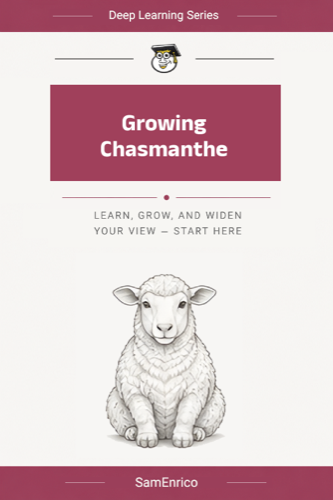
Non-FictionInformativeEducational
Growing Chasmanthe eBook
This publication, published by SamEnrico, covers G
This publication, published by SamEnrico, covers Growing Chasmanthe
Formats
Free sample
Chapter 1: The Cape's Secret...--The first mistake most gardeners make with Chasmanthe is treating it like a tulip. The second mistake is treating it like a gladiolus. The third—and most fatal—mistake is treating it like any other bulb that arrives in a cardboard box with a picture of a perfect flower on the front. Chasmanthe does not read gardening manuals written for European or North American temperate zones. It reads the ancient rhythms of a place most of its admirers will never visit: the Western Cape of South Africa, a botanical wonderland that operates on a schedule entirely its own.To grow Chasmanthe successfully—to coax from its unassuming corm those dramatic, one-sided spikes of orange, red, and yellow that pause passersby in their tracks—you must first abandon everything you think you know about when bulbs grow, when they sleep, and what they need to thrive.
This is not a plant that follows the rules of spring. It writes its own.The Floral Kingdom You Have Never Heard Of Imagine a place where winter brings rain, not snow. Where summer bakes the earth to a hardness that cracks underfoot. Where the wind comes off the southern ocean carrying salt and the promise of more rain, and where the soil is so thin and rocky that a shovel would shatter against it. This is the Western Cape of South Africa, home to the Cape Floral Kingdom—the smallest but most biodiverse of the world's six floral kingdoms.Yes, six.
Most gardeners can name only one or two. There is the Boreal Kingdom that covers most of Europe, Asia, and North America with its familiar oaks, maples, and pines. There is the Paleotropical Kingdom of Africa and Asia, the Neotropical Kingdom of Central and South America, the Australian Kingdom, and the Antarctic Kingdom. And then there is the Cape Floral Kingdom, tucked into a mere 90,000 square kilometers at the southern tip of Africa—an area smaller than the state of Indiana. Within this tiny sliver of the globe, nearly 9,000 plant species grow, almost 70 percent of them found nowhere else on earth.Chasmanthe is one of those endemics.
It belongs to a group of plants that botanists call "geophytes"—a word that sounds like a geological study but simply means "earth plants." Geophytes survive underground. They retreat when conditions turn harsh, storing water and energy in swollen stems, roots, or leaves until the environment invites them back. The bulb in your garden is a geophyte. The potato in your pantry is one, too. But Chasmanthe's particular strategy—its survival contract with the Cape—differs from almost everything grown in northern hemisphere gardens.The Mediterranean Climate That Isn't Mediterranean If you have traveled to southern Spain, coastal Italy, or Greece, you have experienced a Mediterranean climate: mild, wet winters followed by hot, dry summers.
The Cape of South Africa shares this pattern, but with a ferocity that European gardens rarely demand of their plants. Barcelona receives about 640 millimeters of rain annually, spread relatively evenly through its wet season. Cape Town receives roughly the same, but nearly 70 percent of it falls between May and August—the Southern Hemisphere's winter. The summer months of December through February are almost completely dry. Rainless weeks stretch into rainless months.
The sun beats down on exposed slopes with an intensity that would crisp a lettuce in hours.Chasmanthe evolved in this rhythm. It did not adapt to it. It was shaped by it, generation after generation, as surely as a fish was shaped by water. The corm—that unremarkable, knobby structure you will plant in autumn—holds within its cells a genetic memory of the Cape's seasons. It knows that winter is the time for growth because winter brings water.
It knows that summer is the time for sleep because summer brings death by desiccation.This is the opposite of what most gardeners expect. We are trained to think of spring as the season of emergence. We plant tulips and daffodils in autumn, they sleep through the cold, and they burst forth when the ground warms. Chasmanthe does not want cold. It wants cool.
It does not wait for spring. It grows through winter. And when your daffodils are fading in late spring, Chasmanthe is already thinking about bed.The Geology of Survival: Why Dirt Is Not Just Dirt Let us speak frankly about soil, because this is where most Chasmanthe corms go to die. The Cape Floral Kingdom sits atop geology that would make a Midwest gardener weep. The underlying rock is primarily Table Mountain Sandstone—a hard, quartzitic stone that weathers slowly into sandy, acidic soils with almost no clay content.
Where granite outcrops occur, they decompose into gritty, mineral-rich sands that drain so quickly you can pour water on them and watch it disappear in seconds. Alluvial soils along river courses add organic matter, but never enough to become waterlogged.The key word here is "drainage." But not just any drainage. Chasmanthe requires what I call "vertically challenged drainage"—a soil structure that moves water straight down, rapidly, without pooling or lateral spread. Water that sits for more than a few hours is water that begins the process of rot. Chasmanthe corms are not adapted to wet feet.
They cannot develop the tolerance that many bulbs have for brief periods of saturation. Their native soils simply never demanded that adaptation.This means that the rich, dark loam you have spent twenty years perfecting in your vegetable garden is absolutely wrong for Chasmanthe. That heavy clay that makes your roses thrive will kill your corms before they ever bloom. What Chasmanthe wants—what it desperately needs—is soil that other plants reject. Sandy, gritty, almost impoverished soil.
The kind of earth you might find on a construction site after the topsoil has been scraped away. The kind that makes you wonder how anything could possibly grow in it.And yet, in that very inhospitality, Chasmanthe thrives.The Iridaceae Family: Distinguished Company Before we go further, let us place Chasmanthe in its botanical context. The iris family, Iridaceae, contains some of the world's most beloved garden plants. Irises themselves, with their sword-like foliage and intricate flowers. Gladiolus, the classic cut flower.
Crocus, the harbinger of spring. Freesia, whose fragrance fills florist shops. And then there are the South African members of the family: Watsonia, Sparaxis, Babiana, and the subject of this book, Chasmanthe.Within Iridaceae, Chasmanthe belongs to the subfamily Crocoideae and the tribe Ixieae—a group that includes its close relatives Crocosmia and Tritonia. If you have grown Crocosmia (often called montbretia), you already understand some of Chasmanthe's preferences. But you must also understand the critical difference.
Crocosmia is a summer-grower. It pushes up through warming soil, flowers in high summer, and goes dormant in winter. Chasmanthe inverts that schedule entirely. It grows through the cool season and sleeps through the heat.This inversion is not a quirk. It is an evolutionary strategy for surviving the Cape's dry summers.
By growing in winter, Chasmanthe takes advantage of the only reliable moisture. By going dormant in summer, it avoids the season that would kill a less adapted plant. The corm becomes a bunker, a time…
This is the end of the free sample. Get the eBook to keep going. Buy now
About this book
Details
- Author
- Hendrix Miquel
- Publisher
- SamEnrico
- Language
- English
- Genre
- Non-Fiction, Informative, Educational
- Released
- 2026-05-18
- Pages (approx.)
- 136
- Available as
- eBook, Audiobook

Read better in the ZLOADR app
Your eBooks on your phone or tablet. Sign in with your SamEnrico account and start reading.
More by Hendrix Miquel
 Key Player Departure Project Rescue GuideHendrix Miquel$11.99
 Cannabis Use Disorder and BipolarHendrix Miquel$11.99
 Chronic Fatigue Meditation GuideHendrix Miquel$11.99
 Binge Eating For Teachers GuideHendrix Miquel$11.99
 Pre Presentation AffirmationsHendrix Miquel$11.99
 Menopause Sleep RhythmHendrix Miquel$11.99
 The Sobriety Circle WorkbookHendrix Miquel$11.99
 Spouse Death and FaithHendrix Miquel$11.99
 Tying and Bundling Fines LogHendrix Miquel$11.99
 The Unstoppable: When Sports Records Defied the ImpossibleHendrix Miquel$11.99
 Blade of the Falling Moon: The Last Ronin of AizuHendrix Miquel$11.99
 Lagos Pop-Up POS GuideHendrix Miquel$12.99
You may also like
 Hong Kong Handover 1997Dunn Johnnie$11.99
 Zumba For Postnatal Recovery CourseNeal Christian$11.99
 Zumba for BeginnersLadner Nikia$11.99
 YouTube Comment Mining GuideHumes Pandora$12.99
 Worry Box MeditationCarlin Rudy$11.99
 Workplace Stress MeditationNguyen Lynn$11.99
 Workplace Stress and Sleep RepairHawley Ivory$11.99
 Workplace Perfectionism CureDelaney Jeffry$11.99
 Workplace Injustice Anger GuideWallen Isabelle$11.99
 Work Addiction and Burnout LinkGreenwood Ester$11.99
 Women in Yoga and WellnessBeattie Galina$11.99
 Women in Stand Up ComedyChun Evangeline$11.99