
Non-FictionInformativeEducational
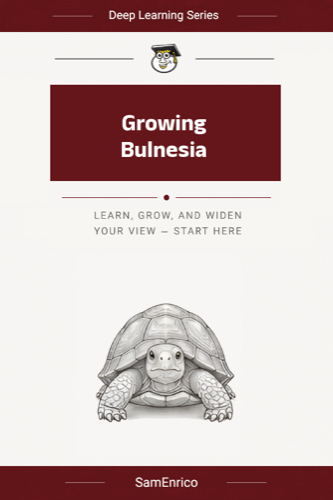
Growing Bulnesia eBook
This publication, published by SamEnrico, covers G
by Tirado Tiara
This publication, published by SamEnrico, covers Growing Bulnesia
Formats
Free sample
Chapter 1: The Holy Wood...--In the remote, thorn-scrubbed plains of the Gran Chaco, where summer temperatures soar past 110 degrees Fahrenheit and the soil is so salty that it crystallizes into a white crust, there grows a tree that has been called the "wood of life" for centuries. Its heart is so dense that it sinks in water like a stone. Its oils smell of vanilla and smoke, and its timber is so self-lubricating that it was once used for the propeller shaft bearings of nuclear submarines. Yet, despite these superlative qualities, this remarkable genus—Bulnesia—remains almost unknown to the average gardener, woodworker, or even to many professional horticulturists.This book exists to change that.Welcome to Growing Bulnesia: The Complete Guide to Verawood, Palo Santo, and the Holy Trees of the Gran Chaco. If you are holding this volume, you are likely one of three kinds of people.
You might be the rare plant collector, searching for the next botanical obsession to add to your arboretum, drawn by the legend of a tree that produces green wood that turns chocolate brown under the sun. You might be the sustainability-focused gardener, alarmed by the skyrocketing demand for "Palo Santo" smudge sticks and aware that wild harvesting is stripping the Gran Chaco of one of its most valuable native species. Or you might be the woodworking artisan, seeking a domestic or garden-grown source of the densest, most durable timber on the continent—a wood that laughs at termites, ignores rot, and takes a polish like a gemstone.You have come to the right place. This book will teach you everything the top ten horticultural manuals teach, and more. We will cover the ancient lore, the botany, the frustrating secrets of germination (the single greatest barrier to entry), the art of pruning a thorny monster, the patience required to wait two decades for harvestable timber, and the ethical imperative of growing your own supply.
By the time you finish this volume, you will not only know how to grow Bulnesia—you will understand why you must.But first, we must untangle a knot of confusion. Because if there is one thing that stops more aspiring growers than difficult seeds, it is the simple question: What exactly am I growing?The Great Confusion: Verawood, Palo Santo, and Lignum Vitae Walk into any exotic wood store or browse any online spiritual goods shop, and you will encounter a bewildering array of names: Verawood, Palo Santo, Paraguay Lignum Vitae, True Lignum Vitae, and sometimes just "Holy Wood." Are they the same? Are they different? Can you burn one for spiritual cleansing and turn the other into a mallet head? The answer is both simple and subtle.There are three trees at the heart of this confusion, and they are all members of the same botanical family: Zygophyllaceae, the creosote bush family.
These are not relatives of your common oaks or maples. They are tough, slow-growing, resinous plants adapted to harsh, dry, or saline environments. The three we care about are Bulnesia arborea, Bulnesia sarmientoi, and Guaiacum officinale.Let us meet them.Bulnesia arborea – The Ornamental Verawood Bulnesia arborea is the showstopper of the genus. Native to the dry forests of Colombia and Venezuela, this tree grows to a manageable 30 to 50 feet in cultivation, with a spreading, multi-trunked canopy that often grows wider than it is tall. It is evergreen in frost-free climates, meaning it never drops all its leaves at once.
Those leaves are compound, with four to eight pairs of small, oval leaflets that give the canopy a fine-textured, almost feathery appearance.But the real show begins in late spring. Bulnesia arborea erupts in clusters of bright yellow flowers, each bloom about two to three inches across, with five petals that seem to glow against the dark green foliage. The flowers are not just pretty—they are productive, attracting bees and other pollinators in droves. If you are looking for a flowering specimen tree for a subtropical or tropical garden, Verawood holds its own against the more common tabebuia or cassia.The wood of B. arborea is dense—very dense.
Its Janka hardness rating (a measure of the force required to embed a steel ball into the wood) is approximately 3,700 to 4,000 pounds-force (lbf). For comparison, white oak is about 1,350 lbf, and hickory is about 1,820 lbf. This means Verawood is roughly twice as hard as hickory. It is not quite as hard as its cousin B. sarmientoi or true lignum vitae, but it is still among the densest woods you can grow in a home landscape.
The heartwood is a striking olive-green when freshly cut, a color caused by high concentrations of guaiacyl lignin and other phenolic compounds. Under ultraviolet light—sunlight, in other words—it slowly oxidizes to a rich, warm chocolate brown over several weeks or months. Woodworkers prize the green phase for inlays and accents; the brown phase is preferred for traditional furniture and tool handles.Bulnesia sarmientoi – The Aromatic Palo Santo If B. arborea is the ornamental diva, B. sarmientoi is the mysterious shaman.
Native to the Gran Chaco region of Argentina, Paraguay, and Bolivia—a vast, semi-arid lowland plain that stretches across the heart of South America—this tree is a study in contradictions. It is deciduous, meaning it drops its leaves in the dry season or when cold weather arrives. It grows painfully slowly, often less than a foot per year. It is armed with paired, curving thorns at each node, making it a formidable presence in the landscape. And its trunk is single and upright, not spreading like its cousin.But oh, the wood.
The heartwood of B. sarmientoi is even denser than that of B. arborea, approaching 4,500 lbf on the Janka scale. It is so dense that it sinks in water; a one-foot cube weighs over 75 pounds. The color is a deeper, more intense olive-green that turns to a dark, almost mahogany brown with UV exposure.
And then there is the smell. When you cut or sand B. sarmientoi, it releases a powerful, sweet, complex aroma—notes of vanilla, sandalwood, and campfire smoke all at once. This aroma comes from guaiacol and other phenolic compounds stored in the heartwood.It is this aroma that has made B. sarmientoi famous—or infamous—in recent years.
Under the Spanish name "Palo Santo" (meaning "holy wood"), the tree has become a staple of the global spiritual and wellness market. Dried sticks of the wood are burned like incense, with the smoke used for smudging, energy cleansing, and meditation. The demand has exploded over the past two decades, and with it, the pressure on wild populations. Most of the "Palo Santo" sold in North America and Europe is wild-harvested from the Gran Chaco, often illegally. While some vendors claim to collect only "fallen branches" or "dead wood," conservationists and local authorities report widespread felling of living trees to meet demand.This is where you come in.
Growing your own Bulnesia sarmientoi—or even B. arborea, which produces a similar but milder aroma—is one of the most direct and meaningful acts of conservation a gardener can undertake. More on that in Chapter 12.Guaiacum officinale – The True Lignum Vitae The third tree in…
This is the end of the free sample. Get the eBook to keep going. Buy now
About this book
Details
- Author
- Tirado Tiara
- Publisher
- SamEnrico
- Language
- English
- Genre
- Non-Fiction, Informative, Educational
- Released
- 2026-06-03
- Pages (approx.)
- 146
- Available as
- eBook, Audiobook

Read better in the ZLOADR app
Your eBooks on your phone or tablet. Sign in with your SamEnrico account and start reading.
More by Tirado Tiara
 Valorant Competitive ModerationTirado Tiara$11.99
 The Guilt Restitution GuideTirado Tiara$11.99
 Oral Appliance TherapyTirado Tiara$11.99
 Therapist Client NonverbalTirado Tiara$11.99
 Avulsion Wound ManagementTirado Tiara$11.99
 Remote Work Onboarding GuideTirado Tiara$11.99
 Atomic Habits For ForgivenessTirado Tiara$11.99
 Peg Word Rhyming SystemTirado Tiara$11.99
 The Poisoned Remedies: Mexico's Deadly Quackery Scandal (1880s)Tirado Tiara$11.99
 Shadows of Silence: The Radical Mime Revolution of Australia’s Stalker TheatreTirado Tiara$11.99
 How to Produce 100% Modal FabricTirado Tiara$11.99
 EBITDA Formula Cheat SheetTirado Tiara$12.99
You may also like
 Hong Kong Handover 1997Dunn Johnnie$11.99
 Zumba For Postnatal Recovery CourseNeal Christian$11.99
 Zumba for BeginnersLadner Nikia$11.99
 YouTube Comment Mining GuideHumes Pandora$12.99
 Worry Box MeditationCarlin Rudy$11.99
 Workplace Stress MeditationNguyen Lynn$11.99
 Workplace Stress and Sleep RepairHawley Ivory$11.99
 Workplace Perfectionism CureDelaney Jeffry$11.99
 Workplace Injustice Anger GuideWallen Isabelle$11.99
 Work Addiction and Burnout LinkGreenwood Ester$11.99
 Women in Yoga and WellnessBeattie Galina$11.99
 Women in Stand Up ComedyChun Evangeline$11.99