
Non-FictionInformativeEducational
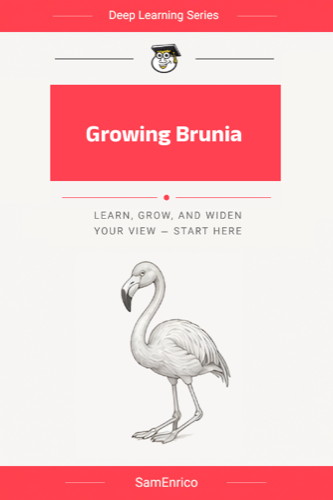
Growing Brunia eBook
This publication, published by SamEnrico, covers G
This publication, published by SamEnrico, covers Growing Brunia
Formats
Free sample
Chapter 1: The Plant That Hugs Back...--The first time I sold a Brunia stem, I almost apologized for it.It was a Tuesday morning at the farmers’ market, grey and drizzly, the kind of day that makes cut flowers look sad before they’ve even been arranged. My stall was tidy enough—buckets of dahlias in candy colors, zinnias like cheerful little planets, eucalyptus in soft silver-green. And there, in a corner bucket, stood five stems of something that looked like a mistake.They were grey. Bumpy. Round-headed in a way that suggested either a botanical marvel or a science experiment gone wrong.
The stems were thick and woody, nothing like the delicate necks of the roses a few stalls over. A customer paused, frowned at the bucket, and asked, “What on earth are those?”I opened my mouth to explain—to describe the fynbos biome, the fire-adapted seeds, the South African origins—but before I could say a word, she reached out and touched one. Her fingers brushed across the bumpy surface, and her face changed. Not polite interest. Not curiosity.
Delight.“It feels like velvet,” she said. “Like a little silver brain.” She laughed. “I’ll take all five.”She paid forty-two dollars for five stems of the ugliest flower I had ever grown. And then she hugged me.That was the moment I understood that Brunia is not a flower you sell. It is a flower you introduce.
Once someone touches it, once they see how it catches the light, how it lasts for weeks without wilting, how it dries into something that looks like an heirloom—they are hooked.This book is for everyone who wants to be on the other side of that moment.Where Brunia Comes From (And Why It Matters)The Western Cape of South Africa is not a friendly place for most plants. It has poor soil, salty winds, summer droughts, and winter rains that can turn dry riverbeds into raging torrents overnight. Fire sweeps through the landscape every decade or two, burning everything to the ground. And yet, from this chaos, one of the most diverse plant communities on earth emerges: the Fynbos.Fynbos (pronounced FAYN-boss, from the Afrikaans words for “fine-leaved bush”) is a shrubland that contains nearly nine thousand plant species, most of which grow nowhere else on the planet. It is the botanical equivalent of an island—isolated by climate and soil, shaped by fire into something strange and wonderful.Brunia is one of its strangest children.To understand how to grow Brunia, you must first understand where it comes from.
This is not gardening advice dressed up as travel writing. It is practical knowledge. Every mistake I made in my first three years of growing Brunia—and I made many—came from forgetting where this plant was born.I watered it like a rose. I fed it like a tomato. I coddled it like a seedling in a nursery catalog.
And Brunia punished me for my kindness. The leaves turned yellow. The roots rotted. The stems grew floppy and sad. I had loved the plant to death.The fynbos does not coddle.
It burns. It starves. It drowns and dries in the same season. And the plants that survive there do so because they have adapted to thrive on neglect.That is the first and most important lesson of this book: Brunia does not want your help. It wants you to get out of its way.The Four Faces of Brunia: Which One Should You Grow?Not all Brunia are created equal.
In the years since I began growing this plant, I have learned that species selection is the single most important decision a new grower will make. Choose wrong, and you will fight the plant every step of the way. Choose right, and it will reward you with years of abundant, beautiful stems.After consulting with commercial growers in South Africa, California, Australia, and New Zealand—and after killing more than a few plants myself—I have identified four species that matter for the cut flower grower.Brunia albiflora: The Beginner’s Best Friend If you grow only one Brunia, grow this one.Brunia albiflora is the classic “Silver Brunia” that you see in floral design magazines. Its foliage is grey-green, soft to the touch, and covered in fine hairs that catch the light like frost on a winter morning. The flower heads are round, about the size of a grape, and covered in silvery-white bracts that open to reveal tiny flowers inside.Why is it the best for beginners?
Because it forgives.I have seen albiflora survive overwatering, underwatering, poor soil, and the kind of beginner mistakes that would kill a less hardy plant. It grows in USDA zones 9 through 11 without protection. It tolerates light frost. It produces stems reliably from year three onward. And when you eventually move on to more challenging species, the skills you learned from albiflora will serve you well.Commercial value: Moderate to high.
Premium stems (70cm+) sell for 3−4eachinwholesalemarkets.Lowergradesbring3-4 each in wholesale markets. Lower grades bring 3−4eachinwholesalemarkets.Lowergradesbring1.50-2.50. Demand is consistent year-round because florists use it for both fresh and dried arrangements.Best for: First-time growers, mixed cut flower farms, anyone in zones 9-10.Brunia stokoei: The Jewel (Handle With Care)Brunia stokoei is the plant that will break your heart if you are not careful.Known as Rooistompie (roughly “red stump” in Afrikaans, for its reddish stems and compact growth habit), this species produces the most breathtaking flower heads of any Brunia. The bracts are deep crimson, almost burgundy in low light, and they hold their color for weeks after cutting. Florists pay premium prices for stokoei stems—$5-6 is not uncommon for Grade 1 quality.But there is a reason it costs more.
Stokoei is finicky.It requires perfect drainage. It hates humidity. It reacts poorly to heavy pruning, often dying back from the cut point instead of branching. And it is more susceptible to Phytophthora root rot than any other species I have grown.I do not recommend stokoei for first-time growers. Grow albiflora for two years.
Learn the rhythms. Kill a few plants that cost you nothing. Then, when you have confidence, add stokoei to your field.Commercial value: High. Expect $4-6 per premium stem. Demand is strong but seasonal (late spring to early summer in the Southern Hemisphere, late autumn to early winter in the Northern Hemisphere).Best for: Experienced growers, flower farmers with impeccable drainage, anyone in zones 9-10 with dry summers.Brunia laevis: The Slow and Steady Brunia laevis is the quiet overachiever of the Brunia family.Its leaves are smoother than other species—less hairy, more like traditional foliage.
The flower heads are smaller and denser, almost like buttons. It grows more slowly than albiflora, taking an extra year to reach harvestable size, but it rewards patience with stems that are surprisingly strong and long-lasting.Where laevis truly shines is in container growing. Its compact habit and slower growth make it ideal for potted production, which is useful for growers in colder climates who need to move plants into greenhouses during winter. I have also seen laevis succeed in zone…
This is the end of the free sample. Get the eBook to keep going. Buy now
About this book
Details
- Author
- Desantis Dominique
- Publisher
- SamEnrico
- Language
- English
- Genre
- Non-Fiction, Informative, Educational
- Released
- 2026-05-11
- Pages (approx.)
- 118
- Available as
- eBook, Audiobook

Read better in the ZLOADR app
Your eBooks on your phone or tablet. Sign in with your SamEnrico account and start reading.
More by Desantis Dominique
 Sleep Master GuideDesantis Dominique$11.99
 Teamster Boss Hoffa Legacy For Modern UnionsDesantis Dominique$11.99
 Shame Around Debt HandbookDesantis Dominique$11.99
 Dominance and Submission CuesDesantis Dominique$11.99
 Amazon Reviewer Rank CompetitionDesantis Dominique$11.99
 Bleeding Control Kit EssentialsDesantis Dominique$11.99
 Atomic Habits For ResilienceDesantis Dominique$11.99
 Remote Work Laptop SetupDesantis Dominique$11.99
 The Green Fortress: How Nature Saved Constantinople (1453)Desantis Dominique$11.99
 The Confidence Game of the Century: The Great Chicago Bank Fraud of 1924Desantis Dominique$11.99
 How to Produce Musical Instrument Amplifier AccessoriesDesantis Dominique$11.99
 A Collector's Handbook to the Rover 75 P4Desantis Dominique$11.99
You may also like
 Hong Kong Handover 1997Dunn Johnnie$11.99
 Zumba For Postnatal Recovery CourseNeal Christian$11.99
 Zumba for BeginnersLadner Nikia$11.99
 YouTube Comment Mining GuideHumes Pandora$12.99
 Worry Box MeditationCarlin Rudy$11.99
 Workplace Stress MeditationNguyen Lynn$11.99
 Workplace Stress and Sleep RepairHawley Ivory$11.99
 Workplace Perfectionism CureDelaney Jeffry$11.99
 Workplace Injustice Anger GuideWallen Isabelle$11.99
 Work Addiction and Burnout LinkGreenwood Ester$11.99
 Women in Yoga and WellnessBeattie Galina$11.99
 Women in Stand Up ComedyChun Evangeline$11.99