
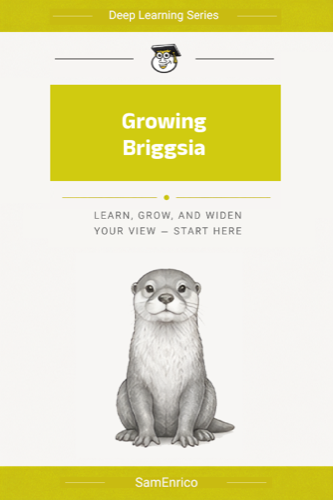
Growing Briggsia
This publication, published by SamEnrico, covers G
by Gary Cordell
This publication, published by SamEnrico, covers Growing Briggsia
Formats
About this book
Free sample
Chapter 1: Beyond the Rosette...--Every serious plant collector remembers the exact moment they first encountered a genus that stopped them mid-stride. For some, it was the impossible blue of a Meconopsis poppy. For others, the geometric precision of a Fritillaria crown. But for those who have fallen under the spell of the Asian gesneriads, that moment often arrives in a quiet alpine house, on a dreary afternoon in late autumn, when most of the greenhouse is retreating into dormancy. There, tucked between a Ramonda and a weathered clay pot of Petrocosmea, sits a plant that seems to defy the season.
Its rosette of quilted, velvety leaves hugs the soil like a hand cupped to catch rain. And from its center, defying all logic of scale, rise bell-shaped flowers the color of stained glass—amber, violet, burnt orange, or creamy yellow spotted with crimson. That plant, more likely than not, belongs to the genus Briggsia. And from that moment forward, your definition of what a houseplant can be will never quite recover.This book exists because Briggsia deserves more than a footnote in gesneriad reference guides. It deserves a full volume of its own.
Not because it is the easiest plant to grow—it is not. Not because it is flashy or forgiving—it is neither, at least not in the way a petunia or a pothos might be. But because Briggsia occupies a rare and precious category in the horticultural world: the plant that rewards patience with astonishment. It asks for precise conditions, and in return, it offers flowers that look like they were blown from molten glass and foliage that feels like pressed velvet. This is not a plant for the casual gardener.
It is a plant for the collector who has grown tired of plants that require no thought at all.Before we dive into soil ratios, temperature minimums, and the precise angle at which to insert a leaf cutting into perlite, we must first understand what Briggsia actually is—not just botanically, but horticulturally. What makes this genus so distinct from its better-known gesneriad cousins? Why do taxonomists keep…
This is the end of the free sample. Get the eBook to keep going. Buy now
Contents
- Chapter 1
- Chapter 2
- Chapter 3
- Chapter 4
- Chapter 5
- Chapter 6
- Chapter 7
- Chapter 8
- Chapter 9
- Chapter 10
- Chapter 11
- Chapter 12
Details
- Author
- Gary Cordell
- Publisher
- SamEnrico
- Language
- English
- Genre
- Non-Fiction, Informative, Educational
- Released
- 2026-05-23
- Pages (approx.)
- 143
- Available as
- eBook, Audiobook

Read better in the ZLOADR app
Your eBooks on your phone or tablet. Sign in with your SamEnrico account and start reading.
More by Gary Cordell
 Remote Deep Work GuideGary Cordell$11.99
 Nonprofit Goal FrameworkGary Cordell$11.99
 Jimmy Hoffa Deathbed Confessions WitnessesGary Cordell$11.99
 Self Esteem for Contract WorkersGary Cordell$11.99
 Burnout Recovery For Yoga TeachersGary Cordell$11.99
 Reward Satisfaction SchedulingGary Cordell$11.99
 Hamstring RecoveryGary Cordell$11.99
 Zillow Home Price EnvyGary Cordell$11.99
 Paper Hearts & PowerPoint NightsGary Cordell$11.99
 The Forgotten Pioneers: How 'Al-Fanous' Lit Up Arab TelevisionGary Cordell$11.99
 How to Produce Sock Knitting MachineryGary Cordell$11.99
 A Collector's Handbook to the Rover 25 (1931-33)Gary Cordell$11.99