
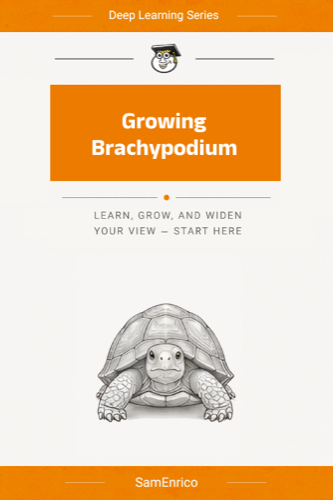
Growing Brachypodium
This publication, published by SamEnrico, covers G
This publication, published by SamEnrico, covers Growing Brachypodium
Formats
About this book
Free sample
Chapter 1: The Grass That Changed Everything--– The first time I held a Brachypodium seed between my fingers, I almost dismissed it. No larger than a grain of sand, brownish-yellow, wrapped in papery glumes that seemed designed by nature to be ignored—this was not what most people imagine when they think of a scientific breakthrough. But in that tiny, unremarkable speck lay the potential to transform our understanding of wheat, barley, and the very future of agriculture. I had spent years working with Arabidopsis, the darling of plant genetics, and with rice, the massive-genome giant that had consumed countless research hours and funding dollars. Neither had prepared me for the quiet power of the roadside weed that would become my obsession.
This book is the story of that obsession, and more importantly, it is your practical guide to mastering Brachypodium distachyon—the grass that is quietly revolutionizing plant science.The Accidental Revolution Every great model organism has its origin story, and Brachypodium’s is no exception. Unlike Arabidopsis, which was deliberately selected for its small genome and rapid lifecycle, Brachypodium stumbled into the scientific spotlight almost by accident. For over 250 years following Linnaeus’s description in 1753, it remained a botanical curiosity—a common grass found growing along roadsides, in disturbed soils, and across temperate regions of Europe, Asia, and North Africa. It was the kind of plant that botanists walked past on their way to study something more obviously interesting. And that, perhaps, is the first lesson that Brachypodium teaches us: the most profound discoveries often hide in plain sight.The turning point came in the early 2000s, when the United States Department of Energy was searching for a model grass to study bioenergy crops.
They needed something with a small genome, a short lifecycle, and genetic proximity to the grasses that actually matter—wheat, barley, and the bioenergy candidate switchgrass. Rice had already been sequenced, but its genome was large (approximately 430 Mbp) and contained extensive repetitive elements that complicated analysis. More critically, rice is a wet grass, adapted to flooded paddies, making it a poor model for the temperate…
This is the end of the free sample. Get the eBook to keep going. Buy now
Contents
- Chapter 1
- Chapter 2
- Chapter 3
- Chapter 4
- Chapter 5
- Chapter 6
- Chapter 7
- Chapter 8
- Chapter 9
- Chapter 10
- Chapter 11
- Chapter 12
Details
- Author
- Huffman Karyn
- Publisher
- SamEnrico
- Language
- English
- Genre
- Non-Fiction, Informative, Educational
- Released
- 2026-05-18
- Pages (approx.)
- 160
- Available as
- eBook, Audiobook

Read better in the ZLOADR app
Your eBooks on your phone or tablet. Sign in with your SamEnrico account and start reading.
More by Huffman Karyn
 Financial Self Care GuideHuffman Karyn$11.99
 Jimmy Hoffa Retirement And Return Bid ManualHuffman Karyn$11.99
 Burnout Recovery Guide For MenHuffman Karyn$11.99
 The Collaborative Confidence CourseHuffman Karyn$11.99
 OnlyFans Body Comparison CrisisHuffman Karyn$11.99
 Spin Bike SetupHuffman Karyn$11.99
 OKR for Learning SkillsHuffman Karyn$11.99
 Bosnia No Fly Zone ProtesterHuffman Karyn$11.99
 The Tides of Trafalgar: Nelson’s Last Stand Against the Leviathans of the DeepHuffman Karyn$11.99
 Glitch in the Grid: The Day the Internet VanishedHuffman Karyn$11.99
 How to Start a Meteorological Instruments (non-electronic) Business (Beginners Guide)Huffman Karyn$11.99
 How to Produce RamsHuffman Karyn$11.99