
Non-FictionInformativeEducational
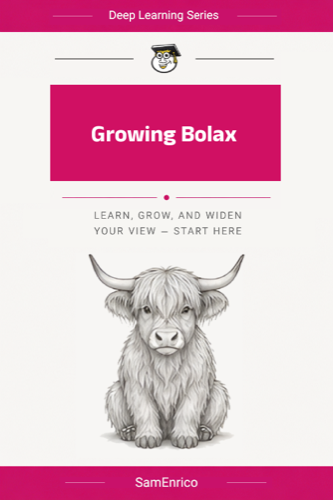
Growing Bolax eBook
This publication, published by SamEnrico, covers G
This publication, published by SamEnrico, covers Growing Bolax
Formats
Free sample
Chapter 1: The Living Boulder...--–- On the windswept ridges of Patagonia, where the Andes crumble into the South Atlantic and the prevailing westerlies have scoured the land bare of any tree taller than a kneeling man, there exists a plant that has learned to thrive by doing the opposite of everything we expect from growing things. It does not reach for the sky. It does not spread eagerly across open ground. It does not reward the impatient gardener with quick results or dramatic seasonal displays. Instead, Bolax gummifera – the living boulder – grows downward into itself, compressing years of effort into a dense, resinous dome that can withstand winds that would snap a sapling in half, temperatures that would burst an unwary plant's cell walls, and the weight of a fully grown human standing on its back.
This is the plant that rock gardeners dream about, that alpine collectors trade secrets over, and that has driven otherwise sensible horticulturists to the brink of obsession. Welcome to the world of Bolax.If you have never encountered this plant before, you might walk past it in a nursery without a second glance. It lacks the flamboyant flowers of a rose, the architectural drama of a agave, the comforting familiarity of a boxwood hedge. What you would see is a hummock – a dense, green cushion perhaps the size of a dinner plate or, if you are very lucky, a small table. It would look almost artificial, like something upholstered by a meticulous craftsman.
The leaves are tiny, overlapping like roof tiles, each one pressed tightly against its neighbor to form an unbroken surface. If you brushed your hand across it, you would feel something unexpected: a faint stickiness, a resinous quality that leaves your fingers smelling vaguely of balsam and earth. This is the plant's signature, its chemical handshake, the reason for its species name gummifera – gum-bearer. And if you pressed your palm down firmly, you would discover that the cushion does not give way. It is as solid as a stone.
Hence the common name that appears in specialist catalogs: the living boulder.The Allure of the Impossible Plant Why would anyone choose to grow a plant that grows so slowly you can measure its progress with a ruler at the end of each growing season? Why devote space in a garden – already a practice in patience – to a species that may take a decade to reach the size of a basketball? The answer lies not in spite of these challenges but precisely because of them. The alpine gardener is a particular breed of horticulturist, one who has learned that the most rewarding plants are often the ones that refuse to be easy. Bolax represents the ultimate test of skill: a plant that demands perfect drainage, resents humidity, punishes overwatering with instant rot, and yet rewards success with a presence unlike any other in the garden.Consider what you are attempting to replicate.
In its native habitat across southernmost South America – the Andes of Patagonia, the Falkland Islands, the archipelago of Tierra del Fuego – Bolax grows in conditions that would be considered hostile by almost any standard. The region is famously windy; the "roaring forties" latitudes produce gales that blow for days on end, sculpting trees into flag-like shapes and making exposed ridges nearly uninhabitable for any plant taller than a few inches. The sun, when it appears, delivers intense ultraviolet radiation that would scorch less adapted species. Winters bring snow, sleet, and freezing temperatures, though the maritime influence of the surrounding ocean prevents the extreme cold of continental climates. Summers are short, cool, and often damp.
The soil is thin, rocky, and poor in nutrients – what soil exists at all.In this crucible of adversity, Bolax has evolved a survival strategy as elegant as it is extreme. Instead of growing up, it grows out, forming a cushion that hugs the ground. Instead of spreading loosely, it maintains an impossibly tight structure that reduces water loss, prevents wind from penetrating to the vulnerable interior, and creates its own microclimate. The cushion's surface temperature can be several degrees warmer than the surrounding air, a crucial advantage on cold nights. The resin exuded by the leaves and stems is thought to serve multiple purposes: it deters herbivores, seals wounds, and may even have antimicrobial properties that protect the plant in the damp conditions of its homeland.
The roots penetrate deep into the rocky substrate, anchoring the cushion against the wind and extracting moisture from seemingly dry ground.Mythology and Misunderstanding: The "Balsam Bog" Confusion Like many plants from remote regions, Bolax has accumulated a small library of myths and misunderstandings over the years. The most persistent of these concerns the nickname "balsam bog" or "balsam bogle," a term that appears in some older horticultural literature and occasionally still surfaces in online forums. The confusion stems from a case of mistaken identity. In the peat bogs of the Falkland Islands, there grows a different cushion-forming plant – Astelia pumila – that produces a fragrant resin and was historically used by settlers as a substitute for balsam. Early explorers and naturalists, encountering the resinous Bolax in similar habitats, sometimes conflated the two plants.
The name stuck in some circles, but it is a misnomer. Bolax is not a bog plant; it demands the sharp drainage described in Chapter 3. It is not a source of commercial balsam. And despite its aromatic resin, it has no connection to the balsam family of trees.Another myth that deserves correction concerns the plant's edibility and medicinal uses, topics explored in detail in Chapter 11. While the roots of Bolax are technically edible and were consumed by the indigenous Yámana and Tehuelche peoples in times of scarcity, the plant is not a food crop.
The edibility rating assigned to Bolax in survival guides – typically 2 out of 5 – reflects its status as a last-resort food source, not a desirable vegetable. The resin's traditional medicinal applications (treatments for liver complaints and glandular swellings) are historically documented but are not recommended for home use without expert guidance. A plant that grows one inch per year is not one to harvest casually, and conservation concerns – discussed in Chapter 11 – strongly discourage any wild collection.Perhaps the most endearing myth about Bolax is also the truest: the claim that you can stand on it without crushing it. This is not an exaggeration. In the wild, these cushions can form extensive mats covering many square feet, and they are routinely walked upon by hikers and researchers.
The dense, interlocking structure of the leaves and stems distributes weight so effectively that a mature cushion can support the weight of a standing adult with no visible damage. This fact is not a recommendation – no responsible gardener would make a habit of walking on their prized specimens – but it does illustrate the remarkable structural integrity of the plant. It is, in the most literal sense, a living boulder.Physical Characteristics: What a Bolax Looks Like To grow Bolax successfully, you must first learn to see it – to recognize not just the plant itself but the subtle signs of health, stress, and maturity that will guide your care decisions. The following descriptions apply…
This is the end of the free sample. Get the eBook to keep going. Buy now
About this book
Details
- Author
- Mabry Rosette
- Publisher
- SamEnrico
- Language
- English
- Genre
- Non-Fiction, Informative, Educational
- Released
- 2026-05-06
- Pages (approx.)
- 146
- Available as
- eBook, Audiobook

Read better in the ZLOADR app
Your eBooks on your phone or tablet. Sign in with your SamEnrico account and start reading.
More by Mabry Rosette
 The Confidence Body Language WorkbookMabry Rosette$11.99
 Arms Manufacturer WhistleblowerMabry Rosette$11.99
 Teamster Boss Last Days Deep DiveMabry Rosette$11.99
 Job Loss for AccountantsMabry Rosette$11.99
 Blue Light Filtering for SADMabry Rosette$11.99
 Medication Withdrawal AnxietyMabry Rosette$11.99
 Widow s Birthday Grief GuideMabry Rosette$11.99
 Natalie Portman HarvardMabry Rosette$11.99
 Sheikh Mohammed and the Birth of Modern Arabian Horse Racing: A Visionary's LegacyMabry Rosette$11.99
 The Oxford Lights: Beacons of Western KnowledgeMabry Rosette$11.99
 How to Produce Paper Product Making MachineryMabry Rosette$11.99
 How to Produce a MowerMabry Rosette$11.99
You may also like
 Hong Kong Handover 1997Dunn Johnnie$11.99
 Zumba For Postnatal Recovery CourseNeal Christian$11.99
 Zumba for BeginnersLadner Nikia$11.99
 YouTube Comment Mining GuideHumes Pandora$12.99
 Worry Box MeditationCarlin Rudy$11.99
 Workplace Stress MeditationNguyen Lynn$11.99
 Workplace Stress and Sleep RepairHawley Ivory$11.99
 Workplace Perfectionism CureDelaney Jeffry$11.99
 Workplace Injustice Anger GuideWallen Isabelle$11.99
 Work Addiction and Burnout LinkGreenwood Ester$11.99
 Women in Yoga and WellnessBeattie Galina$11.99
 Women in Stand Up ComedyChun Evangeline$11.99