
Non-FictionInformativeEducational
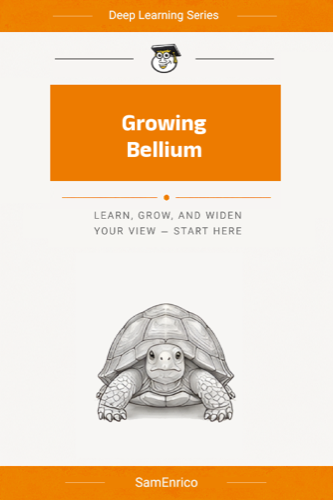
Growing Bellium eBook
This publication, published by SamEnrico, covers G
by Epstein Nana
This publication, published by SamEnrico, covers Growing Bellium
Formats
Free sample
Chapter 1: The Sisyrinchium Trap--–- Every year, thousands of gardeners plant what they believe is Bellium, only to watch it fail spectacularly. They water it correctly. They give it sun. They amend the soil. And still, the plant stretches upward into a leggy, grass-like mess that never forms the promised mat of white daisies.
The gardener concludes that Bellium is finicky, over-hyped, or simply not suited to their garden. The truth is far simpler and far more frustrating: they were never growing Bellium at all.This chapter exists to ensure you are not one of those gardeners.Before we discuss soil mixtures, watering schedules, or design principles, we must first solve a single, foundational problem. The nursery industry, for all its virtues, has a persistent blind spot when it comes to the genus Bellium. Across North America and Europe, Bellium is routinely mislabeled as Sisyrinchium bellum—commonly known as Blue-eyed Grass. The two plants look superficially similar to the untrained eye, especially when sold in small nursery pots without flowers.
Both have narrow, grass-like leaves. Both produce star-shaped flowers. Both are sold as low-growing perennials for rock gardens. But their requirements, growth habits, and ultimate fates could not be more different.I have spoken with dozens of gardeners who abandoned Bellium after a single failed season. In every case, when I asked them to describe their plant, they described Blue-eyed Grass.
They had purchased the wrong plant, blamed themselves, and moved on. This book cannot help you if you start with the wrong plant. So we will begin by ensuring you have the right one.The stakes are real. A mature Bellium planted in the right conditions will live for a decade or more, spreading into a dense, evergreen mat that suppresses weeds and blooms for six months. A Blue-eyed Grass planted in the same spot will survive, but it will never carpet the ground.
It will grow in tufts, go dormant in summer, and leave bare patches that invite weeds. You will water it, fertilize it, and wonder why it refuses to behave like the plant in the photographs. The answer is not your skill. The answer is identity.The Bellium Promise Before we dive into identification, let me tell you what Bellium actually is, because the vision of success is what will carry you through the details.Bellium is a genus of dwarf, mat-forming perennials in the Asteraceae family—the same family as daisies, sunflowers, and asters. Its closest well-known relative is Bellis perennis, the common lawn daisy, but Bellium is smaller, tougher, and more refined.
Where Bellis sends up flower stems that rise several inches above the foliage, Bellium keeps its flowers close to the mat, creating an effect like a dusting of snow over a green carpet.There are three species you will encounter in cultivation, and understanding their differences is your first real step toward expertise.Bellium minutum is the most common and the most versatile. Native to the Mediterranean islands of Corsica and Sardinia, this species forms the densest mats of the group—rarely exceeding two inches in height, even in flower. Its leaves are small, spoon-shaped, and deep green, arranged in rosettes that knit together into a continuous carpet. The flowers are white, with yellow centers, and they appear continuously from late spring through early autumn. In mild winters, minutum remains evergreen, providing texture when almost nothing else in the rock garden is green.
This is the species for ground cover, for planting between stepping stones, and for beginners.Bellium bellidioides is the rock garden specialist. Its stems bear fine hairs—an adaptation for moisture retention in the exposed, windy conditions of its native Alpine habitat. The flowers are slightly larger than those of minutum, and the plant has a looser, more trailing habit. Where minutum forms a tight carpet, bellidioides prefers to spill over the edges of rocks, walls, and containers. It is slightly less cold-tolerant than minutum, thriving in zones 6 through 8, but it handles humidity better, making it the better choice for gardeners in the southeastern United States or maritime Europe.Bellium crassifolium is the outlier, and it is my personal favorite.
This species stores water in thick, succulent, spoon-shaped leaves, giving it a texture and appearance that sets it apart from its cousins. Native to coastal regions of the western Mediterranean, crassifolium is the most drought-tolerant and heat-tolerant of the three. It will thrive in zone 9 gardens where minutum would struggle, and it tolerates the shallowest containers—pots as shallow as four inches deep suffice, where minutum requires six inches or more. The flowers are white with yellow centers, like the others, but they appear in shorter, more concentrated bursts rather than the continuous bloom of minutum. This is the species for hot, dry slopes, for green roofs, and for gardeners who travel frequently and cannot water on a strict schedule.Each of these species is a true Bellium.
Each will form a mat. Each will bloom. Each will reward you for following the principles in this book. But you must start with the correct plant, and that means learning to distinguish Bellium from its impostors.The Great Impostor: Sisyrinchium Sisyrinchium bellum, commonly called Blue-eyed Grass or simply Sisyrinchium, is the plant most frequently mislabeled as Bellium. The confusion is understandable but costly.Blue-eyed Grass is a member of the Iridaceae family—the iris family—and it shares almost nothing with Bellium beyond superficial appearance.
The leaves of Sisyrinchium are true grasses in form: long, narrow, upright, and distinctly folded along the center. A mature Sisyrinchium plant stands six to twelve inches tall, even when not in flower. The flower stems rise another six inches above the foliage, giving the plant an open, airy structure that is the opposite of Bellium's dense, ground-hugging mat.The flowers themselves are the clearest differentiator. Bellium produces white flowers with yellow centers. Sisyrinchium produces blue to violet flowers with yellow centers.
The color difference alone should be decisive, but here is the problem: nurseries often sell Bellium and Sisyrinchium when they are not in bloom. A small pot of green, grass-like foliage could be either plant, and the average nursery worker does not know the difference.When you buy a Bellium, you are buying a promise: a promise of a mat that will stay under four inches tall, of evergreen foliage that persists through winter, of continuous bloom from spring to fall. Sisyrinchium cannot keep any of those promises. It grows taller. It goes dormant in summer heat, dying back to the ground.
Its bloom period is brief—a few weeks in spring, not six months. And it spreads by seed rather than by creeping rhizomes, so it never forms the unified carpet that Bellium creates.I have seen gardeners spend years trying to coax a mat out of Sisyrinchium. They cut it back, thinking they are encouraging branching. They fertilize it, thinking it needs more nutrition to fill in. They divide it, hoping to stimulate spreading.
None of it works, because Sisyrinchium is physically incapable of forming the growth habit they want. They are trying to teach a fish to climb a tree.The good news is that once you know what to look…
This is the end of the free sample. Get the eBook to keep going. Buy now
About this book
Details
- Author
- Epstein Nana
- Publisher
- SamEnrico
- Language
- English
- Genre
- Non-Fiction, Informative, Educational
- Released
- 2026-06-03
- Pages (approx.)
- 143
- Available as
- eBook, Audiobook

Read better in the ZLOADR app
Your eBooks on your phone or tablet. Sign in with your SamEnrico account and start reading.
More by Epstein Nana
 The Meditation Memory LinkEpstein Nana$11.99
 Cross Gender Negotiation GuideEpstein Nana$11.99
 Shame In Chronic IllnessEpstein Nana$11.99
 Moderation Management for DrinkersEpstein Nana$11.99
 Divorce and Debt DivisionEpstein Nana$11.99
 Abbasid Caliphate Golden AgeEpstein Nana$11.99
 Later Life Purpose GuideEpstein Nana$11.99
 Child Loss Nature TherapyEpstein Nana$11.99
 Valhalla’s Reach: The Viking Starships of the NorthEpstein Nana$11.99
 The Unstoppable Force: Jonah Lomu and the Birth of Rugby's Global EraEpstein Nana$11.99
 How to Produce Motorcycle GogglesEpstein Nana$11.99
 AI for Tax Provision CalculationsEpstein Nana$12.99
You may also like
 Hong Kong Handover 1997Dunn Johnnie$11.99
 Zumba For Postnatal Recovery CourseNeal Christian$11.99
 Zumba for BeginnersLadner Nikia$11.99
 YouTube Comment Mining GuideHumes Pandora$12.99
 Worry Box MeditationCarlin Rudy$11.99
 Workplace Stress MeditationNguyen Lynn$11.99
 Workplace Stress and Sleep RepairHawley Ivory$11.99
 Workplace Perfectionism CureDelaney Jeffry$11.99
 Workplace Injustice Anger GuideWallen Isabelle$11.99
 Work Addiction and Burnout LinkGreenwood Ester$11.99
 Women in Yoga and WellnessBeattie Galina$11.99
 Women in Stand Up ComedyChun Evangeline$11.99