
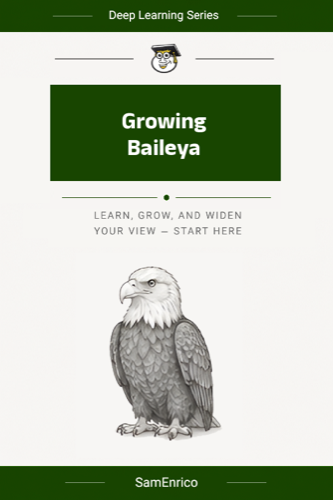
Non-FictionInformativeEducational
Growing Baileya eBook
This publication, published by SamEnrico, covers G
by Sweet Tammi
This publication, published by SamEnrico, covers Growing Baileya
Formats
Free sample
Chapter 1: Beyond the Petunia...--The first time I saw a Baileya growing wild in the Arizona desert, I walked right past it. I was looking for something dramatic—a towering saguaro, a blooming ocotillo, something that announced itself with authority. What I found instead was a modest clump of silvery-gray leaves topped with cheerful yellow flowers no taller than my knee. I dismissed it as a roadside weed and kept walking. That was my first mistake, and it is a mistake most gardeners make every single day.Three years later, during the worst drought my region had seen in a century, I found myself standing in that same stretch of desert.
The saguaros were stressed. The ocotillos had dropped their leaves. But that same clump of Baileya—now spread across fifty feet of rocky hillside—was covered in blooms. While everything else struggled to survive, Baileya was thriving. While my garden at home demanded four hundred gallons of water a week just to keep its petunias and impatiens from wilting, this unassuming wildflower had not seen rain in six months.
It was not just surviving. It was flourishing.That was the moment I realized I had been gardening wrong my entire life.For decades, we have been sold a story about what a garden should look like. It is a story written by the nursery industry, reinforced by glossy magazines, and repeated in thousands of how-to books. The story says that a proper garden needs rich soil amended with bags of compost and fertilizer. It needs daily watering during the summer months.
It needs constant intervention—deadheading, staking, spraying, feeding—to keep everything alive. The story says that gardening is a battle against nature, and the gardener with the most tools and products wins.But what if that story is not just wrong, but actively harmful? What if the plants we have been taught to love are precisely the wrong plants for a changing climate? What if the most beautiful, most productive, most resilient garden you could ever grow requires almost nothing from you except the wisdom to step aside and let nature do its work?This book is about one plant that answers all of those questions. Its name is Baileya, though you might know it by its common name: desert marigold.
It is a genus of flowering plants native to the southwestern United States and northern Mexico. It has been ignored by mainstream horticulture for decades, dismissed as a wildflower too humble for cultivated gardens. But that dismissal is not a reflection of Baileya's limitations. It is a reflection of our own limited imagination.This chapter introduces you to Baileya: what it is, where it comes from, why it has been overlooked, and why it deserves a place in every water-wise garden. By the time you finish reading, you will understand why I walked past that first plant—and why I have never made that mistake again.The Plant That Refuses to Cooperate with Expectations Let me start with a confession.
I am a recovering plant snob. For years, I believed that a garden worth having required rare and unusual specimens, preferably with Latin names that impressed my gardening friends. I hunted down obscure salvias from South Africa, traded cuttings of hard-to-find penstemons, and spent ridiculous amounts of money on the latest introductions from European breeders. I looked down on native plants as common, weedy, and boring.Baileya was exactly the kind of plant I would have ignored. It does not have the oversized blooms of a hybrid tea rose.
It does not offer the intoxicating fragrance of a gardenia. It does not change colors in the fall or produce edible fruit or climb trellises in a dramatic display. It is, at first glance, a modest perennial with gray-green foliage and bright yellow daisy-like flowers. You could drive past a field of it and never think twice.But here is what I have learned: the plants that shout the loudest often have the least to say. And the plants that whisper—the ones that go about their business without demanding your attention—are often the ones with the most wisdom to offer.Baileya belongs to the aster family (Asteraceae), which makes it a cousin to sunflowers, zinnias, and daisies.
The genus includes several species, but the one you will most likely encounter is Baileya multiradiata, known commonly as the desert marigold. The name "multiradiata" refers to the many ray flowers that surround the central disk—typically thirty to fifty individual petals per bloom, giving the flower head a full, lush appearance that belies the plant's tough nature.The less common species is Baileya pauciradiata, or the few-rayed desert marigold. As the name suggests, this species produces fewer petals per flower head—usually ten to twenty. It is a smaller, more delicate plant overall, and it occupies slightly different habitats. While B.
multiradiata prefers rocky slopes and gravelly plains, B. pauciradiata is more often found in sandy soils and along dry washes. For most gardeners, B. multiradiata is the better choice. It is more vigorous, more floriferous, and more forgiving of less-than-ideal conditions.To distinguish between the two species, look at three features.
First, the flower ray count: if the flower head looks full and almost shaggy with petals, you are looking at B. multiradiata. If it looks sparse and you can clearly see the gaps between petals, you have B. pauciradiata. Second, examine the leaves.
B. multiradiata has deeply lobed leaves that almost look like they have been cut with scissors. B. pauciradiata has leaves with shallow lobes or smooth edges. Third, consider the growth habit.
B. multiradiata grows upright, reaching twelve to eighteen inches tall and spreading eighteen to twenty-four inches wide. B. pauciradiata is more sprawling, often lying nearly flat against the ground.Both species share the same fundamental characteristics that make Baileya such a remarkable garden plant. They are drought-tolerant to an almost absurd degree.
They thrive in poor, rocky soil where nothing else will grow. They bloom for months on end with minimal care. And they have a secret weapon that most gardeners do not appreciate until they have grown the plant for themselves: Baileya is almost completely indifferent to fertilizer.Let me say that again because it is so contrary to everything we have been taught about gardening. Baileya does not want your compost. It does not want your fish emulsion.
It does not want your slow-release granular fertilizer or your seaweed extract or any of the other potions and powders that fill garden center shelves. In fact, if you give Baileya rich soil and regular feeding, you will be disappointed. The plant will respond by producing lush, soft growth—lots of leaves, lots of stems, and almost no flowers. It will flop over from its own weight. It will become leggy and unattractive.
You will wonder what all the fuss is about.But if you plant Baileya in lean, gravelly soil and then ignore it completely, it will reward you with a display that lasts from early spring until late fall. That is the paradox of this plant. It does not want your help. It wants you to get out of its way.The…
This is the end of the free sample. Get the eBook to keep going. Buy now
About this book
Details
- Author
- Sweet Tammi
- Publisher
- SamEnrico
- Language
- English
- Genre
- Non-Fiction, Informative, Educational
- Released
- 2026-06-03
- Pages (approx.)
- 152
- Available as
- eBook, Audiobook

Read better in the ZLOADR app
Your eBooks on your phone or tablet. Sign in with your SamEnrico account and start reading.
More by Sweet Tammi
 The Shame Inventory MethodSweet Tammi$11.99
 Gambling Addiction and Lottery AddictionSweet Tammi$11.99
 Construction Contract NegotiationSweet Tammi$11.99
 Child Loss and LGBTQ ParentsSweet Tammi$11.99
 The Digit Span MethodSweet Tammi$11.99
 HIIT for Substance RecoverySweet Tammi$11.99
 Divorce and Family RelationshipsSweet Tammi$11.99
 Obituary Writing With PurposeSweet Tammi$11.99
 When the Sky Married the Earth: The Love That Shaped the WorldSweet Tammi$11.99
 The Lost Victory of the Ionian Revolt: What If Sparta Had Sided with Persia?Sweet Tammi$11.99
 How to Produce Motor Vehicle Parking CamerasSweet Tammi$11.99
 Co Founder Time Zone ManagementSweet Tammi$12.99
You may also like
 Hong Kong Handover 1997Dunn Johnnie$11.99
 Zumba For Postnatal Recovery CourseNeal Christian$11.99
 Zumba for BeginnersLadner Nikia$11.99
 YouTube Comment Mining GuideHumes Pandora$12.99
 Worry Box MeditationCarlin Rudy$11.99
 Workplace Stress MeditationNguyen Lynn$11.99
 Workplace Stress and Sleep RepairHawley Ivory$11.99
 Workplace Perfectionism CureDelaney Jeffry$11.99
 Workplace Injustice Anger GuideWallen Isabelle$11.99
 Work Addiction and Burnout LinkGreenwood Ester$11.99
 Women in Yoga and WellnessBeattie Galina$11.99
 Women in Stand Up ComedyChun Evangeline$11.99