
Non-FictionInformativeEducational
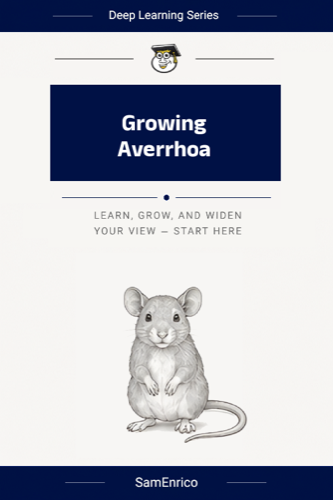
Growing Averrhoa eBook
This publication, published by SamEnrico, covers G
This publication, published by SamEnrico, covers Growing Averrhoa
Formats
Free sample
Chapter 1: The Sour Revolution...--You have probably never heard of Averrhoa. That is about to change.Walk through any supermarket produce section in North America or Europe, and you will see apples from Washington, oranges from Florida, bananas from Ecuador, and avocados from Mexico. You will not see Bilimbi. You will not see Starfruit—not the real ones, anyway. What you might find, tucked between the kiwis and the passionfruit, is a sad, pale imitation of a Starfruit: underripe, waxy, flavorless, shipped across oceans at enormous carbon cost, and sold at a price that makes you wonder who actually buys them.The fruit you could be growing—in your backyard, on your patio, in a greenhouse, or even indoors with sufficient light—is infinitely more flavorful, more productive, and more profitable than anything you have ever bought from a store.
And almost nobody is doing it.That is the sour revolution. And it starts with a tree that most gardeners have never heard of.This book is not a dry botanical textbook. It is not a collection of academic papers dressed up as gardening advice. It is a practical, battle-tested, hands-in-the-soil guide to growing Averrhoa—both the fire-breathing sourness of Bilimbi (Averrhoa bilimbi) and the sweet-tart elegance of Starfruit (Averrhoa carambola)—written for the home gardener, the homesteader, the chef, and the aspiring backyard entrepreneur.By the time you finish this chapter, you will understand why these trees are worth your time, your space, and your effort. You will learn the crucial differences between the two species—because confusing them is the fastest way to disappointment.
And you will have a clear roadmap for the rest of this book, so you can jump straight to the information you need right now, whether you are planting your first seed or planning a commercial orchard.Let us begin with a confession: I wrote this book because I made every mistake possible.The Mistakes That Became This Book My first Averrhoa tree was a Starfruit. I bought it from a big-box garden center, attracted by the $29.99 price tag and the photo on the tag showing golden, star-shaped fruit. I planted it in heavy clay soil. I watered it every day because I thought tropical trees needed constant moisture. I fertilized it with high-nitrogen lawn fertilizer because that was what I had in the shed.
I pruned it like an apple tree, cutting back the central leader because that is what every pruning guide says to do.Within six months, the leaves were yellow, the branches were drooping, and the tree looked like it was actively trying to die. I had no idea why. Every piece of advice I found online was either too vague ("give it sun and water") or too technical ("ensure heterotristylous cross-pollination") without explaining what any of those words meant or why they mattered.My second attempt was a Bilimbi. A friend from the Philippines sent me seeds—small, brown, unremarkable things that looked like they had been dead for years. I planted them in potting mix, put them on a heat mat, and waited.
Nothing happened for a month. I almost threw them away. Then, overnight, three seedlings emerged, growing so fast I could practically watch them move.That tree—the one I almost threw away—now produces over a hundred pounds of fruit every year. It has paid for itself dozens of times over, first in saved grocery bills (have you priced organic lemons lately?), then in vinegar and pickles and chutneys gifted to friends, and finally in cash from local restaurants that discovered what real sour fruit tastes like.The difference between failure and success was not luck. It was understanding.
And that understanding is what this book delivers, chapter by chapter, mistake by mistake, solution by solution.What Exactly Is Averrhoa? (And Why You Should Care)The genus Averrhoa belongs to the wood-sorrel family, Oxalidaceae. This family includes common weeds and ornamental plants, but Averrhoa is its edible superstar. The genus contains only two cultivated species of importance, and they could not be more different.Averrhoa bilimbi – The Bilimbi (aka Cucumber Tree, Belimbing, Kamias)Imagine a cucumber the size of your thumb, pale green, slightly fuzzy, growing in dense clusters directly from the trunk of a tree. Now imagine biting into that cucumber and discovering that it is not mild and watery—it is aggressively, explosively sour.
That is Bilimbi.The fruit is small, typically 4 to 10 centimeters (1.5 to 4 inches) long. It has five gentle lobes (not the dramatic ribs of its cousin) and a crisp texture when green. As it ripens, it softens and turns from bright green to pale yellow or white, losing some acidity but never becoming sweet. The flavor profile is often compared to sorrel, rhubarb, or unripe mango—but more intense.Bilimbi trees are vigorous, fast-growing, and productive. In ideal conditions, a mature tree can reach 10 to 15 meters (33 to 50 feet) in height—though you will learn in Chapter 6 how to keep yours much smaller through strategic pruning.
The tree flowers and fruits multiple times per year in the tropics, producing such heavy crops that branches often bend to the ground under the weight.Here is the catch: Bilimbi is almost unknown outside of Southeast Asia. Ask ten gardeners if they have heard of it, and nine will say no. The tenth will be from the Philippines, Indonesia, or Malaysia, and they will immediately start telling you about their grandmother's sinigang recipe.This obscurity is your opportunity. When you grow Bilimbi, you are not competing with everyone else. You are creating something rare, valuable, and in demand.Averrhoa carambola – The Starfruit (aka Carambola, Five-Finger Fruit)Starfruit needs no introduction to most readers—at least by name.
You have seen it in grocery stores, usually priced absurdly high for what it is: five dramatic ribs that form a perfect star when sliced crosswise. But the starfruit in stores is almost always underripe, harvested green and shipped before it develops any flavor.A properly ripened Starfruit, picked when the ribs are golden-yellow with brown edges and the fruit gives slightly to gentle pressure, is sweet-tart and floral, with a texture like firm grapes. The flavor ranges from apple-like to citrusy, depending on the variety and ripeness. There are two main types: sweet varieties bred for fresh eating (sometimes reaching 10% sugar content), and sour varieties used in cooking and preserves.Unlike Bilimbi, which is almost always cooked, Starfruit is eaten fresh, juiced, dried, candied, or used in jams and tarts. It is also considerably more cold-sensitive than Bilimbi, which matters if you live at the edge of the tropical zone.Starfruit trees are smaller than Bilimbi trees, typically reaching 6 to 10 meters (20 to 33 feet) in maturity.
They are also more forgiving of less-than-ideal conditions, which is why they have become the more commercially successful of the two species.The Critical Difference Most Books Get Wrong Here is the distinction that matters most for the home grower: Bilimbi is for cooking. Starfruit is for fresh eating.If you want a souring agent for soups, stews, curries, chutneys, and pickles—something that replaces tamarind, lemon, or vinegar with a unique tropical acidity—you want Bilimbi. If you want a fruit you can slice…
This is the end of the free sample. Get the eBook to keep going. Buy now
About this book
Details
- Author
- Hammons Gracia
- Publisher
- SamEnrico
- Language
- English
- Genre
- Non-Fiction, Informative, Educational
- Released
- 2026-05-11
- Pages (approx.)
- 150
- Available as
- eBook, Audiobook

Read better in the ZLOADR app
Your eBooks on your phone or tablet. Sign in with your SamEnrico account and start reading.
More by Hammons Gracia
 Self Esteem After Job Loss WorkbookHammons Gracia$11.99
 Gambling Addiction and VeteransHammons Gracia$11.99
 Child Loss and AtheismHammons Gracia$11.99
 Stimulant Use and Harm ReductionHammons Gracia$11.99
 HIIT for Diabetes GuideHammons Gracia$11.99
 Functional Master GuideHammons Gracia$11.99
 Geriatric WithdrawalHammons Gracia$11.99
 Gambling Addiction And Forensic AccountingHammons Gracia$11.99
 The Shadow of the Steppe: Tamerlane's March to the Gates of Delhi (1398)Hammons Gracia$11.99
 The Merlin Code: A Spy in CamelotHammons Gracia$11.99
 How to Become a Rougher OperatorHammons Gracia$11.99
 A Collector's Handbook to the Renault JuvaquatreHammons Gracia$11.99
You may also like
 Hong Kong Handover 1997Dunn Johnnie$11.99
 Zumba For Postnatal Recovery CourseNeal Christian$11.99
 Zumba for BeginnersLadner Nikia$11.99
 YouTube Comment Mining GuideHumes Pandora$12.99
 Worry Box MeditationCarlin Rudy$11.99
 Workplace Stress MeditationNguyen Lynn$11.99
 Workplace Stress and Sleep RepairHawley Ivory$11.99
 Workplace Perfectionism CureDelaney Jeffry$11.99
 Workplace Injustice Anger GuideWallen Isabelle$11.99
 Work Addiction and Burnout LinkGreenwood Ester$11.99
 Women in Yoga and WellnessBeattie Galina$11.99
 Women in Stand Up ComedyChun Evangeline$11.99