
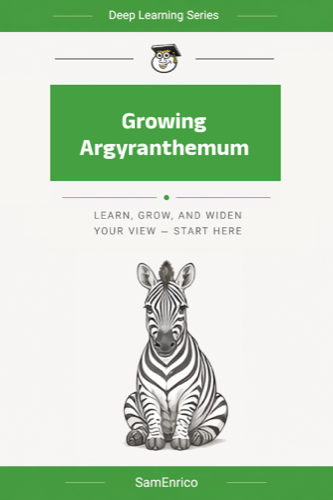
Non-FictionInformativeEducational
Growing Argyranthemum
This publication, published by SamEnrico, covers G
by Tan Modesto
This publication, published by SamEnrico, covers Growing Argyranthemum
Formats
About this book
Free sample
Chapter 1: The Island Vault...--–- On a crescent of black volcanic soil in the eastern Atlantic, where the northeast trade winds scour the landscape and fog drapes the highlands like a second ocean, a single lineage of daisies did something extraordinary. Unlike their weedy cousins that colonize roadsides across the temperate world, these plants stayed home. For millions of years, they hoarded their genetic secrets on the Canary Islands and Madeira, evolving into twenty-three distinct species that range from ankle-high mats of silver foliage to woody shrubs reaching four feet tall. This is the island vault where Argyranthemum locked away the traits that would eventually captivate gardeners from Cornwall to California—traits that most people have never heard of, even as they buy the flowers by the millions under the wrong name.If you have ever purchased a "Paris Daisy" from a spring nursery, or admired a "Marguerite Daisy" tumbling from a Mediterranean window box, you have already met Argyranthemum without knowing its true identity. The tags almost never say Argyranthemum.
They say Chrysanthemum frutescens—an outdated, incorrect label that persists like a stubborn weed. This chapter opens the island vault. It gives you the botanical backstory that every best-selling gardening book hides in the appendix but that you need first: where this plant came from, why it behaves the way it does, and how understanding its native home transforms you from a casual buyer into a master grower.The Forgotten Archipelago The Canary Islands are not actually named for canaries. The name comes from Canaria, Latin for "dog," after the large dogs the Romans found here. But the isolation of these seven main islands—separated from Africa by one hundred kilometers of open ocean and from each other by deep water channels—created a living laboratory of evolution.
Each island developed its own microclimates, its own soil chemistry, and its own unique Argyranthemum species. Some hug the foggy laurel forests of the high peaks. Others sprawl across the sun-blasted coastal barrancos (dry riverbeds) where rain falls for only a few weeks each year. A few cling to the…
This is the end of the free sample. Get the eBook to keep going. Buy now
Contents
- Chapter 1
- Chapter 2
- Chapter 3
- Chapter 4
- Chapter 5
- Chapter 6
- Chapter 7
- Chapter 8
- Chapter 9
- Chapter 10
- Chapter 11
- Chapter 12
Details
- Author
- Tan Modesto
- Publisher
- SamEnrico
- Language
- English
- Genre
- Non-Fiction, Informative, Educational
- Released
- 2026-05-09
- Pages (approx.)
- 153
- Available as
- eBook, Audiobook

Read better in the ZLOADR app
Your eBooks on your phone or tablet. Sign in with your SamEnrico account and start reading.
More by Tan Modesto
 Voice Actor Horror StoriesTan Modesto$11.99
 Forgiveness for Social SlightsTan Modesto$11.99
 Teenage Identity DiscoveryTan Modesto$11.99
 Recovery From Cryptocurrency GamblingTan Modesto$11.99
 Networking With CelebritiesTan Modesto$11.99
 Ultimate Texas Holdem AddictionTan Modesto$11.99
 Principal School StressTan Modesto$11.99
 Pet Loss HelplinesTan Modesto$11.99
 Blindfolded at Blenheim: The Phantom Drums of Marlborough's TriumphTan Modesto$11.99
 The Sultan’s Silent Champions: Women’s Polo in the Islamic Golden AgeTan Modesto$11.99
 How to Produce Modeling Dough ThinnerTan Modesto$11.99
 How to Produce Blank DisksTan Modesto$11.99
You may also like
 Hong Kong Handover 1997Dunn Johnnie$11.99
 Zumba For Postnatal Recovery CourseNeal Christian$11.99
 Zumba for BeginnersLadner Nikia$11.99
 YouTube Comment Mining GuideHumes Pandora$12.99
 Worry Box MeditationCarlin Rudy$11.99
 Workplace Stress MeditationNguyen Lynn$11.99
 Workplace Stress and Sleep RepairHawley Ivory$11.99
 Workplace Perfectionism CureDelaney Jeffry$11.99
 Workplace Injustice Anger GuideWallen Isabelle$11.99
 Work Addiction and Burnout LinkGreenwood Ester$11.99
 Women in Yoga and WellnessBeattie Galina$11.99
 Women in Stand Up ComedyChun Evangeline$11.99