
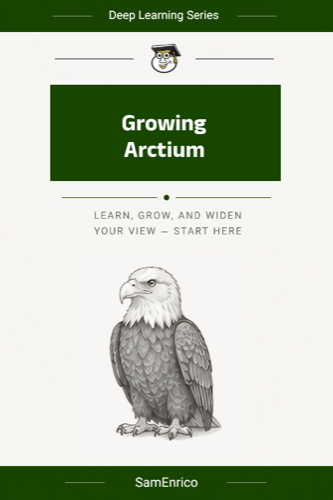
Non-FictionInformativeEducational
Growing Arctium eBook
This publication, published by SamEnrico, covers G
by Jameson Lacy
This publication, published by SamEnrico, covers Growing Arctium
Formats
Free sample
Chapter 1: The Weed That Wasn't--–- The first time I pulled a burdock plant from the ground, I was not trying to harvest it. I was trying to kill it. It was 2008, and I had just rented a small community garden plot in Portland, Oregon—forty dollars for the season, which seemed like a steal until I saw what I had actually paid for. The previous tenant had abandoned the plot sometime in July, and by the time I claimed it the following March, the entire space was a fortress of dead stalks, dried burrs, and the kind of vegetation that makes neighbors leave anonymous notes on your gate. Among the thistles, the morning glory, and the bindweed stood a cluster of plants I did not recognize.
They were massive—some leaves as wide as a dinner plate—and at their bases, thick, woody stems emerged from the soil like anchors. I grabbed a shovel and swung it into the ground beside the largest one. I pried. Nothing happened. I stood on the shovel with both feet and bounced.
The ground cracked, and the plant shifted slightly, but it did not release. I dug a trench around the entire circumference, a full eighteen inches deep, before I finally got enough leverage to pull. What emerged from the soil was a root the color of old coffee, wrinkled and forked, nearly three feet long, covered in a mud that smelled like wet iron. I threw it in the compost pile and moved to the next one. That afternoon, I filled seven buckets with what I assumed was worthless biomass.
A week later, my neighbor—a Japanese-American woman named Emiko who had been gardening in that same plot for fifteen years—saw me wrestling with another burdock and stopped dead in the path. She looked at the root in my hands, then at me, then back at the root. "You are throwing away gobo?" she asked. Her tone was not curious. It was horrified.
"Do you know how much that costs at Uwajimaya?" I did not. She told me. Then she told me something I have never forgotten: "In Japan, we do not grow this. We cultivate it. With respect." That evening, I pulled the seven roots out of the compost pile, washed them carefully, and looked up a recipe for kinpira gobo.
I made it that night—julienned matchsticks of root, braised in soy and mirin, finished with sesame oil and a whisper of chili. It was, without exaggeration, one of the best things I had ever tasted. Earthy, yes. But also sweet. Nutty.
Texturally, it occupied a space between a potato and a water chestnut—substantial but not heavy, tender but not soft. I ate the entire batch standing at my kitchen counter, and when I finished, I looked down at the muddy kitchen towel, the peeler still in my hand, and thought: What else have I been wrong about?This chapter is the answer to that question. It is the story of how the most hated plant in the temperate world became, in the span of a single evening, my greatest horticultural obsession. It is also an invitation: to set aside everything you think you know about weeds, about value, about what belongs in a garden and what does not, and to see Arctium the way Emiko saw it—as a gift, not a nuisance. By the time you finish this chapter, you will understand why burdock is not just worth growing, but worth protecting, celebrating, and, yes, paying for.The Nutritional Case for a Weed Let us begin with the numbers, because the numbers do not lie.
A hundred grams of raw burdock root—roughly the size of a medium carrot—contains 72 calories, 17 grams of carbohydrates, and nearly 4 grams of dietary fiber. That fiber is not the ordinary kind. It is predominantly inulin, a prebiotic soluble fiber that functions as a food source for beneficial gut bacteria. Unlike the insoluble fiber found in wheat bran or celery, which passes through the digestive system largely unchanged, inulin ferments in the colon, stimulating the growth of Bifidobacteria and Lactobacilli—the same probiotics that manufacturers add to expensive yogurts and supplements. The fermentation process also produces short-chain fatty acids, including butyrate, which has been shown to reduce inflammation in the intestinal lining and may lower the risk of colorectal cancer.
A 2015 study published in the Journal of Functional Foods found that regular consumption of inulin-rich foods increased stool frequency, improved mineral absorption (particularly calcium and magnesium), and reduced markers of systemic inflammation in subjects with metabolic syndrome.But inulin is only the beginning. Burdock root also contains significant quantities of polyphenols, specifically caffeoylquinic acids, arctigenin, and arctiin. These compounds function as antioxidants, scavenging free radicals that would otherwise damage cellular DNA and contribute to aging and chronic disease. Arctigenin, in particular, has attracted attention from pharmaceutical researchers for its anti-inflammatory properties. A 2016 paper in the Journal of Ethnopharmacology demonstrated that arctigenin inhibited the activation of NF-κB, a protein complex that plays a central role in the body's inflammatory response.
Chronic activation of NF-κB is associated with conditions ranging from rheumatoid arthritis to inflammatory bowel disease to certain cancers. What makes arctigenin notable is its selectivity: it appears to suppress pathological inflammation while leaving normal immune function intact.The mineral profile of burdock root is equally impressive. A single serving provides approximately 8 percent of the daily recommended intake of potassium, 5 percent of magnesium, and 4 percent of calcium. These minerals are not just micronutrients; they are essential electrolytes that regulate nerve transmission, muscle contraction, and fluid balance. Potassium, in particular, plays a crucial role in blood pressure regulation by counteracting the effects of sodium.
The combination of high potassium, high fiber, and low sodium makes burdock root a cardioprotective food by any reasonable definition.And yet, despite this nutritional density, burdock remains virtually unknown in mainstream Western cuisine. You will not find it at a typical grocery store. Most home cooks cannot identify it. Nutritionists do not mention it alongside kale, broccoli, or blueberries. Why?
The answer is not about the plant's flavor or nutritional value. It is about its reputation. Burdock is, to most Americans and Europeans, a weed. And we have been trained, for our entire lives, to destroy weeds without asking what they might offer.The Velcro Effect: How a Weed Changed the World Before we go further, we need to understand the burr. Because the burr is not just a botanical curiosity; it is a lesson in how nature solves problems, and how human innovation often follows nature's lead.The common burdock burr is a spherical cluster of bracts—modified leaves that surround the flower head—each tipped with a tiny, curved hook.
Under a microscope, these hooks resemble the barbs on a fishhook, but smaller: approximately 50 to 100 microns in length, with a sharp point that curves backward toward the base of the burr. When an animal brushes against a mature burdock plant, the hooks catch on fur, feathers, or clothing. The more the animal moves, the deeper the hooks embed. Eventually, the entire burr detaches from the plant and travels with the animal, sometimes…
This is the end of the free sample. Get the eBook to keep going. Buy now
About this book
Details
- Author
- Jameson Lacy
- Publisher
- SamEnrico
- Language
- English
- Genre
- Non-Fiction, Informative, Educational
- Released
- 2026-06-03
- Pages (approx.)
- 156
- Available as
- eBook, Audiobook

Read better in the ZLOADR app
Your eBooks on your phone or tablet. Sign in with your SamEnrico account and start reading.
More by Jameson Lacy
 Dub Life Foreign Voice ActorJameson Lacy$11.99
 Forgiveness for Canceled PlansJameson Lacy$11.99
 Probation Officer Stress GuideJameson Lacy$11.99
 Voiceover Burnout PreventionJameson Lacy$11.99
 Physical Boundaries During AngerJameson Lacy$11.99
 Pet Loss Poetry and ReadingsJameson Lacy$11.99
 The Hypnosis Refresh ProtocolJameson Lacy$11.99
 Skill Based Slot AddictionJameson Lacy$11.99
 The Trial of the Sunflowers: Van Gogh vs. Art WorldJameson Lacy$11.99
 The Maori Songlines: How Indigenous Chants Shaped the Music of OceaniaJameson Lacy$11.99
 How to Produce Model and Toys ManualsJameson Lacy$11.99
 How to Produce a Bag Making MachineJameson Lacy$11.99
You may also like
 Hong Kong Handover 1997Dunn Johnnie$11.99
 Zumba For Postnatal Recovery CourseNeal Christian$11.99
 Zumba for BeginnersLadner Nikia$11.99
 YouTube Comment Mining GuideHumes Pandora$12.99
 Worry Box MeditationCarlin Rudy$11.99
 Workplace Stress MeditationNguyen Lynn$11.99
 Workplace Stress and Sleep RepairHawley Ivory$11.99
 Workplace Perfectionism CureDelaney Jeffry$11.99
 Workplace Injustice Anger GuideWallen Isabelle$11.99
 Work Addiction and Burnout LinkGreenwood Ester$11.99
 Women in Yoga and WellnessBeattie Galina$11.99
 Women in Stand Up ComedyChun Evangeline$11.99