
Non-FictionInformativeEducational
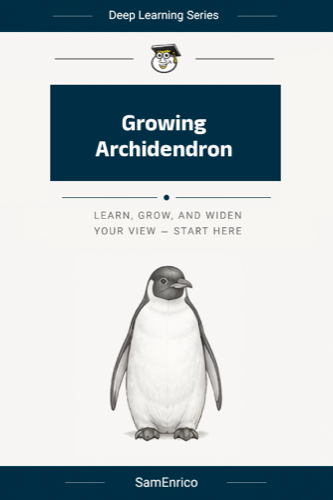
Growing Archidendron eBook
This publication, published by SamEnrico, covers G
This publication, published by SamEnrico, covers Growing Archidendron
Formats
Free sample
Chapter 1: The Kidney Killer--–- The first time I ate jengkol, I didn't know I was holding a kidney bomb. I was twenty-three, traveling through West Java, and a farmer named Pak Hadi had just handed me a small bowl of dark, curled chips that smelled like sulfur and regret. "Makan," he said – eat. I hesitated. The odor was aggressive, somewhere between old propane and fermented garlic.
But Pak Hadi was grinning, and his grandchildren were giggling at the foreigner's hesitation, so I took a bite.The chip was unlike anything I had ever tasted. Crunchy, savory, slightly bitter, with an earthy undertone that lingered on the tongue. I ate the entire bowl. Then I asked for more.What Pak Hadi did not tell me – because he assumed I already knew, because everyone in his village learns this before they can walk – was that those chips came from the seed of the Archidendron tree, and that seed contains a toxin capable of crystallizing inside the human kidney. What he did not know was that I had spent the previous two days hiking in the heat, barely drinking water, my body already dehydrated and vulnerable.
And what neither of us knew was that twelve hours later, I would be curled on the floor of a homestay in a village without a clinic, unable to urinate, certain that my kidneys were shutting down.I survived. Not everyone does.This book is not the book I set out to write. I came to the Archidendron tree as a botanist, curious about its unusual biology and its status as an underutilized crop. I stayed because I nearly died from my own ignorance, and I realized that thousands of people every year – tourists, new immigrants, even local children visiting unfamiliar regions – make the same mistake I did. They eat jengkol without understanding what it contains.
They prepare it wrong. Or they eat it raw, because nobody told them that raw Archidendron seeds are not merely unpleasant but potentially lethal.So let me tell you now, on page one, what Pak Hadi did not tell me: The seeds of Archidendron pauciflorum – known as jengkol in Indonesia, dogfruit in English, or simply "the smelly bean" in countless marketplaces across Southeast Asia – contain a sulfur-based amino acid derivative called djenkolic acid. In its raw form, this compound is a crystalline toxin. When you eat raw or undercooked seeds, the djenkolic acid does not break down in your digestive system. Instead, it travels to your kidneys, where it crystallizes into sharp, needle-like structures.
These crystals lodge in the renal tubules – the microscopic filters that clean your blood. They block urine flow. They tear tissue from the inside. And if enough crystals form, your kidneys stop working entirely.The medical term is djenkolism. The symptoms are unmistakable: severe abdominal pain (often described as a knife twisting in the lower back), nausea and vomiting, blood in the urine (hematuria), and the terrifying inability to urinate despite a full bladder (anuria).
In severe cases, patients require dialysis. In the worst cases – typically involving children, the elderly, or people with pre-existing kidney conditions – djenkolism is fatal.And yet.And yet, millions of people across Indonesia, Malaysia, Thailand, and Myanmar eat jengkol regularly. They fry it, boil it, ferment it underground for two weeks, slice it into chips that sell in every market from Jakarta to Kuala Lumpur. They raise their children on it. They celebrate it.
The poet Chairil Anwar wrote about jengkol. It is served at weddings and funerals and roadside stalls where the price is written on cardboard in faded marker.How can a deadly toxin be a beloved food? The same way cassava contains cyanide and fugu contains tetrodotoxin and kidney beans contain lectins that will hospitalize you if eaten raw. The answer is preparation. The answer is knowledge.
The answer is this book.What This Chapter Covers (And Why It Matters Now)Before we plant a single seed, before we discuss soil p H or germination rates or the best way to space trees for maximum yield, we need to understand what we are dealing with. This chapter is not optional. It is not a warning label to be skimmed and forgotten. It is the foundation upon which everything else in this book rests.In the pages that follow, you will learn:First, what djenkolic acid actually is – its molecular structure, how it behaves in the human body, and why some people are more vulnerable than others. You will learn that dehydration is a risk multiplier, which is exactly why my twenty-three-year-old self, dehydrated from hiking, was the perfect victim.Second, how to identify djenkolism before it becomes an emergency.
The early symptoms are subtle; later symptoms are not. Knowing the difference between "this food gave me gas" and "I need to go to a hospital right now" can save a life – possibly your own.Third, why the Archidendron tree evolved such a dangerous compound in the first place. Toxins are not random. They are evolutionary strategies, shaped by millions of years of predation pressure. Understanding why the seed is toxic helps us understand how to disarm it.Fourth, a preview of the three detoxification methods that will be covered in detail in Chapter 10.
You will not get the full instructions here – that chapter is dedicated entirely to safety – but you will understand the principles that make these methods work. Boiling, salt-soaking, and underground fermentation each neutralize djenkolic acid through different mechanisms. Each has its place. Each requires strict adherence to protocol.Fifth, and perhaps most importantly, you will learn that fear is not the goal here. Respect is.
The Archidendron tree is not malicious. Its seed is not a poison designed to kill you. It is a food that requires knowledge – and knowledge, unlike luck, can be learned.Before we go further, a note about the audience of this book. You may be a tropical farmer looking for a new cash crop. You may be a permaculture designer seeking nitrogen-fixing trees for a food forest.
You may be a home gardener in Florida or Queensland or Hawaii, wondering if this strange Asian tree could grow in your backyard. Or you may simply be curious, drawn by the strange name and the stranger smell.Whatever brought you here, you need this chapter. Because the first rule of growing Archidendron is this: never eat what you have grown until you have read Chapter 10. The second rule is: read Chapter 1 first.What Is Djenkolic Acid, Exactly?Let us get technical for a moment, because precision matters when we are discussing a compound that can crystallize in your kidneys.Djenkolic acid (chemical formula C₇H₁₄N₂O₄S₂) is a sulfur-containing amino acid derivative. It is structurally related to cysteine, one of the common amino acids found in nearly all proteins.
The difference is that djenkolic acid contains two sulfur atoms in a specific ring structure that makes it resistant to enzymatic breakdown in the human digestive tract.When you eat a protein-rich food, your stomach acid and digestive enzymes break it down into individual amino acids, which are then absorbed into your bloodstream. This is normal. This is how you get nutrition…
This is the end of the free sample. Get the eBook to keep going. Buy now
About this book
Details
- Author
- Ashworth Tiffiny
- Publisher
- SamEnrico
- Language
- English
- Genre
- Non-Fiction, Informative, Educational
- Released
- 2026-06-02
- Pages (approx.)
- 154
- Available as
- eBook, Audiobook

Read better in the ZLOADR app
Your eBooks on your phone or tablet. Sign in with your SamEnrico account and start reading.
More by Ashworth Tiffiny
 Social Media Slot AddictionAshworth Tiffiny$11.99
 Radio Days Voice MemoirAshworth Tiffiny$11.99
 Voiceover Batch Recording SystemAshworth Tiffiny$11.99
 Emergency Dispatcher StressAshworth Tiffiny$11.99
 Forgiveness for Past SelfAshworth Tiffiny$11.99
 Recovery After Big LossAshworth Tiffiny$11.99
 Corporate Diversity to Nonprofit DEIAshworth Tiffiny$11.99
 Grief and Faith After Pet LossAshworth Tiffiny$11.99
 The Iron Admiral: How Zheng He's Treasure Fleets Redefined Naval PowerAshworth Tiffiny$11.99
 The Architects of the Sky: Love and Stone in the Heart of the NileAshworth Tiffiny$11.99
 How to Produce an Auto DrivetrainAshworth Tiffiny$11.99
 A Collector's Handbook to the Porsche 356bAshworth Tiffiny$11.99
You may also like
 Hong Kong Handover 1997Dunn Johnnie$11.99
 Zumba For Postnatal Recovery CourseNeal Christian$11.99
 Zumba for BeginnersLadner Nikia$11.99
 YouTube Comment Mining GuideHumes Pandora$12.99
 Worry Box MeditationCarlin Rudy$11.99
 Workplace Stress MeditationNguyen Lynn$11.99
 Workplace Stress and Sleep RepairHawley Ivory$11.99
 Workplace Perfectionism CureDelaney Jeffry$11.99
 Workplace Injustice Anger GuideWallen Isabelle$11.99
 Work Addiction and Burnout LinkGreenwood Ester$11.99
 Women in Yoga and WellnessBeattie Galina$11.99
 Women in Stand Up ComedyChun Evangeline$11.99