
Non-FictionInformativeEducational
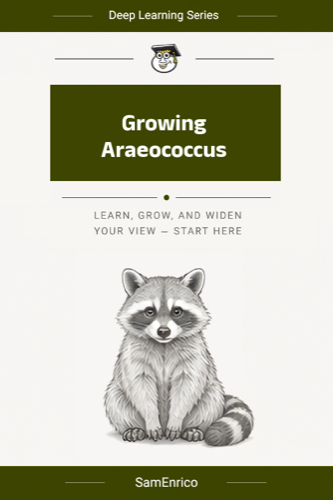
Growing Araeococcus eBook
This publication, published by SamEnrico, covers G
by Bowden Phebe
This publication, published by SamEnrico, covers Growing Araeococcus
Formats
Free sample
Chapter 1: The Unkillable Discovery...–- The plant sat on a back porch in coastal Georgia, beneath a broken rain gutter that hadn’t carried water in eighteen months. Its pot was cracked. Its leaves were the color of old leather. A family of ants had colonized the drainage hole. By all reasonable metrics, this specimen should have been a brown smear of compost.Instead, it was blooming.That was the moment everything changed.
Not just for me—a man who had, at that point, killed forty-seven houseplants with a combination of enthusiasm and misplaced love—but for my entire understanding of what a houseplant could be. The plant was an Araeococcus flagellifolius, though I didn’t know that name yet. To me, it was simply the thing that wouldn’t die. And in that refusal, it offered a radical proposition: what if your neglect isn’t a flaw, but a technique?This book exists because of that plant and that proposition. Growing Araeococcus is not a traditional gardening guide.
It contains no daily watering schedules, no rigid fertilization calendars, no guilt-inducing reminders about humidity trays or leaf-shining solutions. Instead, it offers something far more valuable: permission to do less, paired with the precise knowledge of when and how to do it.The Confession of a Serial Plant Killer Before we discuss the botanical wonders of Araeococcus, let me offer full disclosure. I am not a natural gardener. I am not someone who can look at a yellowing leaf and intuitively diagnose a micronutrient deficiency. I cannot speak to my plants in a soothing voice and watch them perk up.
I have, on multiple occasions, forgotten to water a peace lily until its leaves resembled potato chips, then overwatered it into root rot as an apology.My track record reads like a horticultural crime scene: three succulents that turned to jelly (overwatered), two snake plants that rotted from the base up (also overwatered), a fern that desiccated into a brown tumbleweed (underwatered, ironically), and a calathea that simply gave up after three weeks of what I considered perfectly reasonable care. The calathea was the final straw. I had followed every instruction: distilled water, indirect light, humidity tray, no drafts. It died anyway, with the particular spite that only prayer plants possess.I concluded that I was the problem. Some people have green thumbs.
I had brown thumbs, or possibly thumbs made of industrial solvent. I stopped buying plants. I stopped visiting the garden center. I accepted my fate as a plant-less person, destined to enjoy the greenery of others from a respectful distance.Then a friend moved to Oregon and left behind his back porch collection. “Take them or they’re garbage,” he said.
The collection included a leggy pothos (which I would eventually kill, sorry to say), a spider plant with more brown tips than green leaves, and the strange, spiky specimen that I would later identify as Araeococcus flagellifolius.I took them out of obligation, not hope. The pothos and spider plant received my standard treatment: inconsistent watering, poor lighting, and eventual burial. But the Araeococcus I placed on the back porch and promptly forgot. It was out of sight, behind a grill, partially blocked by a broken lawn chair. I remembered it exactly twice: once when moving the grill, and once eighteen months later when I noticed the flower spike.That flower spike was pale green, almost white, rising from the center of a rosette of narrow, whip-like leaves that had turned from dull green to deep crimson.
The plant was thriving. Not surviving—thriving. It had grown new leaves. It had produced an offset (a “pup,” as I would learn). And it had flowered, all while receiving nothing from me except the occasional splash of hose water when I happened to be spraying down the patio.I had done everything wrong.
And the plant had done everything right.What This Plant Taught Me About Control The first lesson Araeococcus taught me was humiliating: my efforts were the problem. Every time I had hovered over a plant, checking soil moisture with my finger, adjusting its position by two inches, fretting about a slightly yellow leaf, I had been interfering with something that knew how to live better than I did. Araeococcus didn’t need my help. It needed me to get out of the way.This is the central insight of this book, and it runs counter to nearly everything written about houseplants. The conventional wisdom—water on a schedule, fertilize monthly, repot annually, mist daily—assumes that plants are fragile machines requiring constant human intervention.
That assumption is false for most plants, but it is spectacularly false for Araeococcus.Consider what happens in the wild. Araeococcus species grow on the tepuis of South America—ancient, sheer-sided tabletop mountains in Colombia, Venezuela, the Guianas, and Trinidad. These are not lush rainforests. They are dry, rocky ecosystems where rainfall is sporadic and unpredictable. Temperatures swing from warm days to cool nights.
Soil, where it exists at all, is thin and nutrient-poor. In this environment, a plant that demanded consistent moisture or regular feeding would die immediately.Araeococcus survives by doing three things remarkably well:First, it stores water in its tissues during wet periods and enters a state of metabolic slowdown during dry spells. This is not dormancy in the true sense—the plant remains active, but at a reduced rate. Second, it reflects excess sunlight using microscopic structures called trichomes, which act like built-in sunscreen. Third, it grows slowly enough that it never outstrips its available resources.
A plant that grows fast in good conditions dies fast when conditions worsen. Araeococcus plays the long game.What I had interpreted as neglect—no water for weeks, no fertilizer ever, no repotting for years—was actually a rough approximation of the plant’s natural environment. The broken gutter above my back porch had created a rain shadow. The cracked pot provided drainage. The afternoon sun, filtered through a pine tree, delivered the high light that triggered the crimson coloration.
I had not built a greenhouse. I had accidentally built a tepui.The Philosophy of Intelligent Neglect This book introduces a concept I call Intelligent Neglect. It sounds like an oxymoron, and perhaps it is. But it captures something real about how to grow Araeococcus successfully.Intelligent Neglect has three components:1. Observation without interference.
Before you water, before you move, before you fertilize, you observe. You look at the color of the leaves (are they green, or have they started to redden?). You lift the pot (does it feel heavy with water, or light as paper?). You touch the substrate (does it feel cool and damp, or dry and crumbly?). These observations take ten seconds.
They tell you everything you need to know.2. Intervention only at thresholds. Most plant owners intervene constantly: water every Tuesday, fertilize the first of the month, rotate the pot each time they walk by. Intelligent Neglect waits for clear signals. Water only when the substrate is bone-dry.
Fertilize only during active growth (spring and summer) and only three times per year. Repot only when roots are visibly circling the pot or climbing out of the drainage…
This is the end of the free sample. Get the eBook to keep going. Buy now
About this book
Details
- Author
- Bowden Phebe
- Publisher
- SamEnrico
- Language
- English
- Genre
- Non-Fiction, Informative, Educational
- Released
- 2026-05-11
- Pages (approx.)
- 152
- Available as
- eBook, Audiobook

Read better in the ZLOADR app
Your eBooks on your phone or tablet. Sign in with your SamEnrico account and start reading.
More by Bowden Phebe
 Stress Weight Loss GuideBowden Phebe$11.99
 From Stage to Voice BoothBowden Phebe$11.99
 Self Talk for Chronic FatigueBowden Phebe$11.99
 Voiceover Client Testimonial GuideBowden Phebe$11.99
 Bingo Hall Addiction HelpBowden Phebe$11.99
 Construction Site StressBowden Phebe$11.99
 Grief and Sleep After Pet LossBowden Phebe$11.99
 Forgiveness After Angry WordsBowden Phebe$11.99
 The Golden Crescendo: Black Composers of the Classical CanonBowden Phebe$11.99
 The Iron Kings of Meroë: Forging the Future in Ancient KushBowden Phebe$11.99
 How to Produce Apparel MachineryBowden Phebe$11.99
 A Collector's Handbook to the Porsche 924Bowden Phebe$11.99
You may also like
 Hong Kong Handover 1997Dunn Johnnie$11.99
 Zumba For Postnatal Recovery CourseNeal Christian$11.99
 Zumba for BeginnersLadner Nikia$11.99
 YouTube Comment Mining GuideHumes Pandora$12.99
 Worry Box MeditationCarlin Rudy$11.99
 Workplace Stress MeditationNguyen Lynn$11.99
 Workplace Stress and Sleep RepairHawley Ivory$11.99
 Workplace Perfectionism CureDelaney Jeffry$11.99
 Workplace Injustice Anger GuideWallen Isabelle$11.99
 Work Addiction and Burnout LinkGreenwood Ester$11.99
 Women in Yoga and WellnessBeattie Galina$11.99
 Women in Stand Up ComedyChun Evangeline$11.99