
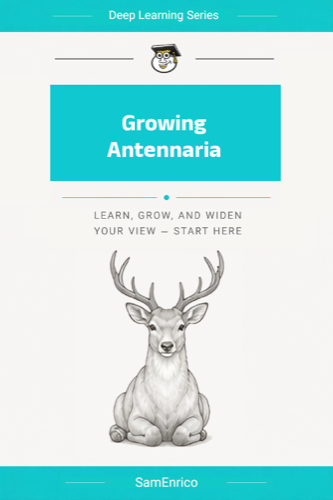
Non-FictionInformativeEducational
Growing Antennaria
This publication, published by SamEnrico, covers G
by Hays Elouise
This publication, published by SamEnrico, covers Growing Antennaria
Formats
About this book
Free sample
Chapter 1: The Silver Carpet Secret...--Every great gardening obsession begins with a single plant—one that stops you mid-stride, kneels you down to the dirt, and whispers that everything you thought you knew about growing things might be wrong. For me, that plant was Antennaria, though I didn't know its name at the time. I only knew that here, in a neglected corner of a rock garden that had received no water, no fertilizer, and certainly no love for three consecutive summers, this silver-grey mat was not merely surviving. It was thriving. It was spreading.
It was flowering.I had spent years wrestling with finicky perennials, coddling seedlings under grow lights, and composing elaborate soil amendments. And yet this nameless weed—this interloper that I had never planted, never watered, never even noticed until that moment—was doing something my cherished garden plants could not: it was flourishing on pure neglect.That day changed how I garden. And this chapter explains why Antennaria might change how you garden, too.What Exactly Is Antennaria?Before we can grow Antennaria with confidence, we must understand what we are growing. The name itself offers the first clue. Antennaria derives from the Latin antenna, referring to the bristly, insect-antenna-like male flower stalks that rise above the foliage in spring.
These tiny, club-shaped protrusions are the plant's most distinctive feature—and the source of its most charming common name, pussytoes, which describes the soft, fuzzy, toe-like flower heads of the female plants.Taxonomically, Antennaria belongs to the Asteraceae family, the largest family of flowering plants on Earth, which includes daisies, sunflowers, asters, and ragweeds. Within this vast family, Antennaria occupies a quiet corner: a genus of approximately 45 species distributed across the temperate and arctic regions of the Northern Hemisphere. You will find native species in North America, Europe, and Asia, from sea level to alpine elevations exceeding 10,000 feet.What unites all Antennaria species is a remarkable suite of adaptations for surviving in places where other plants cannot. We will explore these adaptations throughout this chapter, but the most important to understand immediately is this: Antennaria is…
This is the end of the free sample. Get the eBook to keep going. Buy now
Contents
- Chapter 1
- Chapter 2
- Chapter 3
- Chapter 4
- Chapter 5
- Chapter 6
- Chapter 7
- Chapter 8
- Chapter 9
- Chapter 10
- Chapter 11
- Chapter 12
Details
- Author
- Hays Elouise
- Publisher
- SamEnrico
- Language
- English
- Genre
- Non-Fiction, Informative, Educational
- Released
- 2026-05-11
- Pages (approx.)
- 154
- Available as
- eBook, Audiobook

Read better in the ZLOADR app
Your eBooks on your phone or tablet. Sign in with your SamEnrico account and start reading.
More by Hays Elouise
 Stress Lupus Autoimmune GuideHays Elouise$11.99
 Step One Unmanageability Recognition ManualHays Elouise$11.99
 Borderline Personality Self TalkHays Elouise$11.99
 Upwork Voiceover Profile OptimizerHays Elouise$11.99
 Trauma Nurse Resilience GuideHays Elouise$11.99
 Suicide Loss and WritingHays Elouise$11.99
 Internal Transfer Salary GuideHays Elouise$11.99
 The Last Oracle: When the Gods Fell SilentHays Elouise$11.99
 Sand and Serenade: Love in the Storm of the Gulf WarHays Elouise$11.99
 Ransomware Payment Proof of LifeHays Elouise$12.99
 Pricing for Positive Cash FlowHays Elouise$12.99
 How to Produce YukataHays Elouise$11.99
You may also like
 Hong Kong Handover 1997Dunn Johnnie$11.99
 Zumba For Postnatal Recovery CourseNeal Christian$11.99
 Zumba for BeginnersLadner Nikia$11.99
 YouTube Comment Mining GuideHumes Pandora$12.99
 Worry Box MeditationCarlin Rudy$11.99
 Workplace Stress MeditationNguyen Lynn$11.99
 Workplace Stress and Sleep RepairHawley Ivory$11.99
 Workplace Perfectionism CureDelaney Jeffry$11.99
 Workplace Injustice Anger GuideWallen Isabelle$11.99
 Work Addiction and Burnout LinkGreenwood Ester$11.99
 Women in Yoga and WellnessBeattie Galina$11.99
 Women in Stand Up ComedyChun Evangeline$11.99