
Non-FictionInformativeEducational
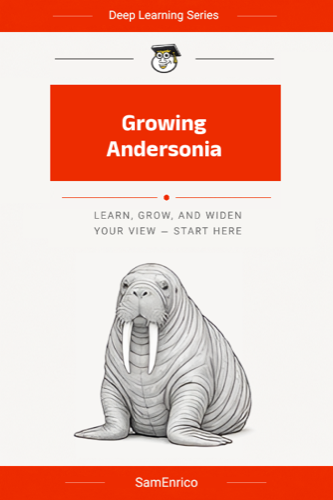
Growing Andersonia
This publication, published by SamEnrico, covers G
by Lopez Todd
This publication, published by SamEnrico, covers Growing Andersonia
Formats
About this book
Free sample
Chapter 1: The Plant That Refused Taming...--–- It arrived in a plain cardboard box, wrapped in damp newspaper and trembling with the particular desperation of living things sent through the postal system. The label read Andersonia simplex – Spiked Andersonia – and beneath that, in fading marker, the words "Do Not Overwater. Seriously. Do Not."I had ordered it on a whim, late at night, after falling into a internet rabbit hole about rare Australian plants. The seller, a taciturn nurseryman from Albany, Western Australia, had included a handwritten note: "If you kill this, you are not alone.
I have killed over two hundred. Try anyway."That was my introduction to the genus that would consume the next seven years of my life.The Forbidden Plant Every serious plant collector knows the feeling. You read about a species that seems to defy all logic – a plant that requires fire to germinate, that dies if you look at it wrong, that has driven botanists to quiet desperation. Andersonia is that plant. It is the locked door in the botanical garden of easy houseplants.
And once you know it exists, you cannot stop thinking about it.The genus Andersonia (Family Ericaceae, the same family as rhododendrons, blueberries, and heathers) comprises approximately twenty-five species of flowering shrubs, all but one endemic to the Southwest Australian Floristic Region. That region – a wedge of land roughly the size of England – is one of the world's thirty-six biodiversity hotspots, meaning it contains an extraordinary concentration of plant species found nowhere else on Earth. Within this botanical treasure chest, Andersonia occupies a peculiar and difficult niche.The first specimens reached European botanists in 1792, collected near King George Sound by Archibald Menzies, naturalist aboard Captain Vancouver's expedition. The genus was formally named in 1798 by the French botanist René Louiche Desfontaines, who honored William Anderson – a Scottish naturalist who had accompanied Captain Cook on his second voyage and died of tuberculosis at twenty-eight. Anderson never saw the plant that bears his name.
He was buried at sea near the Sandwich Islands, and his botanical collections were scattered across Europe, where they would…
This is the end of the free sample. Get the eBook to keep going. Buy now
Contents
- Chapter 1
- Chapter 2
- Chapter 3
- Chapter 4
- Chapter 5
- Chapter 6
- Chapter 7
- Chapter 8
- Chapter 9
- Chapter 10
- Chapter 11
- Chapter 12
Details
- Author
- Lopez Todd
- Publisher
- SamEnrico
- Language
- English
- Genre
- Non-Fiction, Informative, Educational
- Released
- 2026-06-02
- Pages (approx.)
- 156
- Available as
- eBook, Audiobook

Read better in the ZLOADR app
Your eBooks on your phone or tablet. Sign in with your SamEnrico account and start reading.
More by Lopez Todd
 Twelve Step Programs For Family Members GuideLopez Todd$11.99
 The Nonprofit Reference Check GuideLopez Todd$11.99
 Stress Hormones Body Damage GuideLopez Todd$11.99
 Sean Carroll BioLopez Todd$11.99
 Goal Setting for ReadingLopez Todd$11.99
 Goal Setting ResearchLopez Todd$11.99
 Health Benefits NegotiationLopez Todd$11.99
 Suicide Note AftermathLopez Todd$11.99
 Wolf of the Seas: The Legend of Simo HäyhäLopez Todd$11.99
 The Lion of Granada: Tariq ibn Ziyad's Unbreakable Will (711 AD)Lopez Todd$11.99
 A Collector's Handbook to the Peugeot 505Lopez Todd$11.99
 Mailchimp Abandoned Cart RecoveryLopez Todd$12.99
You may also like
 Hong Kong Handover 1997Dunn Johnnie$11.99
 Zumba For Postnatal Recovery CourseNeal Christian$11.99
 Zumba for BeginnersLadner Nikia$11.99
 YouTube Comment Mining GuideHumes Pandora$12.99
 Worry Box MeditationCarlin Rudy$11.99
 Workplace Stress MeditationNguyen Lynn$11.99
 Workplace Stress and Sleep RepairHawley Ivory$11.99
 Workplace Perfectionism CureDelaney Jeffry$11.99
 Workplace Injustice Anger GuideWallen Isabelle$11.99
 Work Addiction and Burnout LinkGreenwood Ester$11.99
 Women in Yoga and WellnessBeattie Galina$11.99
 Women in Stand Up ComedyChun Evangeline$11.99