
Non-FictionInformativeEducational
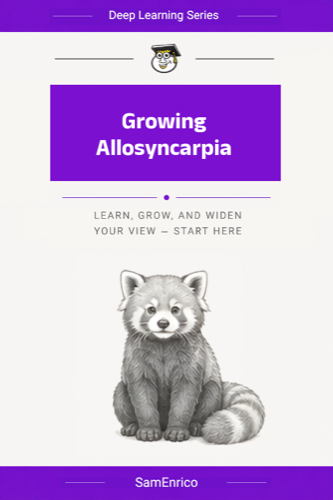
Growing Allosyncarpia eBook
This publication, published by SamEnrico, covers G
by Whitlow Jay
This publication, published by SamEnrico, covers Growing Allosyncarpia
Formats
Free sample
Chapter 1: The Last Refugium...–- The wet season had arrived late that year. I stood at the base of a sandstone escarpment in western Arnhem Land, the air thick with the smell of rain-soaked earth and eucalyptus. Waterfalls that had been dry for six months were now roaring down ancient rock faces, carving deep into stone that had witnessed the slow dance of continents. Above me, clinging to a narrow ledge where fire could not reach, stood a tree unlike any I had ever seen. Its bark was rough and flaky, like old ironbark, but its leaves grew in perfect whorls of three—a pattern that seemed to break every rule I had learned about Australian trees.
This was Allosyncarpia ternata, known to the Bininj people as An-binik, and I had traveled over 3,000 kilometers to find it. What I discovered in the months that followed would challenge everything I thought I knew about fire, survival, and the quiet resilience of living fossils.The Monotypic Mystery To understand Allosyncarpia ternata, one must first confront a botanical anomaly: this tree has no close living relatives anywhere on Earth. In the language of taxonomy, it is a monotypic genus—a single species representing an entire evolutionary branch that diverged from its nearest cousins tens of millions of years ago and never diversified. Imagine a family tree where only one child was ever born, generation after generation, for fifty million years. That is Allosyncarpia.The genus belongs to the family Myrtaceae, the myrtle family, which includes over 5,500 species worldwide.
In Australia, this family dominates the landscape: eucalypts, melaleucas, callistemons, and leptospermums cover the continent from the snow gums of the Australian Alps to the paperbarks of the tropical floodplains. Within Myrtaceae, Allosyncarpia sits in the tribe Eucalypteae, the same tribe that contains Eucalyptus and Corymbia (the bloodwoods and ghost gums). But here is where the story becomes extraordinary: while Eucalyptus has radiated into over 800 species across every Australian ecosystem, Allosyncarpia remains a single species confined to a 200-kilometer stretch of sandstone country in the Northern Territory.Why? The answer lies partly in its evolutionary history. Fossil evidence and molecular dating suggest that the ancestors of Allosyncarpia split from the main eucalypt lineage during the Oligocene epoch, roughly 30 to 35 million years ago.
At that time, Australia was still connected to Antarctica, and the climate was far wetter and more temperate than today. Rainforests covered much of the continent. As Australia drifted northward and dried out over the ensuing millennia, most of those ancient rainforest lineages perished. A few retreated to refugia—pockets of persistently wet, fire-protected habitat where they could survive as relicts. Allosyncarpia was one of the lucky ones.But here is the paradox that will echo through every chapter of this book: being a relict is not the same as being fragile.
As we will see in Chapter 4, Allosyncarpia developed an extraordinary survival strategy—the lignotuber—that allows it to persist in a landscape dominated by fire. Yet that same strategy comes with trade-offs that make the tree exquisitely sensitive to changes in fire frequency. The story of Allosyncarpia is the story of a survivor that succeeded too well in one direction, painting itself into an evolutionary corner from which it cannot easily escape.A Botanical Portrait: How to Know This Tree Before we delve into ecology and cultivation, let us first learn to recognize Allosyncarpia ternata in all its life stages. This section provides a detailed botanical description that will serve as your field guide, whether you are walking through Arnhem Land or inspecting a seedling in a nursery tray. Future chapters will reference these characteristics, so consider this your reference anatomy.Bark and Stem Mature trees reach heights of 15 to 25 meters, occasionally taller in sheltered gorges.
The trunk is typically straight and cylindrical, reaching diameters of 50 to 80 centimeters at breast height, though older individuals can exceed one meter. The bark is persistent, meaning it does not shed annually like a gum tree. Instead, it accumulates in rough, flaky, fissured layers, ranging in color from grey-brown to reddish-brown. Unlike the smooth, powdery bark of Eucalyptus or the tessellated bark of Corymbia, Allosyncarpia bark has a fibrous, almost stringy texture that peels in narrow strips. Run your hand along it and you will feel small plates lifting at the edges, like an old book whose cover is beginning to crack.This bark is remarkably thin for a tree of its size—rarely exceeding 8 to 12 millimeters even on ancient trunks.
As we will see in Chapter 3, this thin bark is a critical vulnerability in a fire-prone landscape. Compare this to Callitris intratropica, a co-occurring conifer that can develop bark up to 40 millimeters thick, and you begin to understand why Allosyncarpia requires such extraordinary fire protection.Leaves: The Signature Triplets If you remember only one feature of Allosyncarpia, remember this: leaves in whorls of three. The species epithet ternata is Latin for "in threes," and the pattern is unmistakable once you see it. At each node along the branch, three leaves emerge symmetrically, spaced 120 degrees apart. No other Australian rainforest tree of this size has this arrangement.
Eucalypts have alternate leaves; most myrtaceous trees have opposite leaves; but whorled triples are rare.The individual leaves are lanceolate to elliptic, measuring 6 to 12 centimeters in length and 2 to 4 centimeters in width. The apex is acute to acuminate (tapering to a point), and the base is cuneate (wedge-shaped). The margin is entire—smooth, not toothed or lobed. The upper surface is dark green and glossy, reflecting light in a way that makes the canopy shimmer from a distance. The lower surface is paler, often with a slightly glaucous (waxy) bloom.
Both surfaces are glabrous (smooth, without hairs), though under a microscope you can see simple, unicellular trichomes scattered along the midvein.The venation is pinnate and conspicuous: a prominent midvein runs the length of the leaf, with lateral veins spaced 2 to 4 millimeters apart, joining in an intramarginal vein that runs parallel to the leaf edge. Hold a leaf up to the light and you will see a dense network of fine veinlets forming areoles—a pattern typical of myrtaceous leaves and visible even in dried herbarium specimens.Flowers and Inflorescences Flowering occurs in the late dry season to early wet season, typically September to November. The flowers are small (1 to 1.5 centimeters in diameter) and borne in axillary clusters of three to seven. Each flower is creamy white to pale yellow, with five small petals that are quickly shed. The most distinctive feature, visible only with magnification, is the staminal fascicles—bundles of stamens that are fused at the base, a trait that separates Allosyncarpia from true eucalypts (which have free stamens).
Each flower contains 30 to 50 stamens, radiating outward like a small burst of fireworks.The inflorescence is a condensed panicle or umbel, typically emerging from the leaf axils of new growth. Because the tree flowers sporadically rather than in a synchronized mass bloom, you may find flowers, immature fruits, and mature fruits on the same branch at different times of the year—a phenomenon known as "continuous flowering" that ensures some seed production even in poor years.From a distance, a flowering Allosyncarpia is subtle. It does not produce…
This is the end of the free sample. Get the eBook to keep going. Buy now
About this book
Details
- Author
- Whitlow Jay
- Publisher
- SamEnrico
- Language
- English
- Genre
- Non-Fiction, Informative, Educational
- Released
- 2026-06-02
- Pages (approx.)
- 154
- Available as
- eBook, Audiobook

Read better in the ZLOADR app
Your eBooks on your phone or tablet. Sign in with your SamEnrico account and start reading.
More by Whitlow Jay
 Step Four Resentment Worksheet GuideWhitlow Jay$11.99
 HGH and Gut HealthWhitlow Jay$11.99
 Union Salary NegotiationWhitlow Jay$11.99
 Internal Audit Schedule CreationWhitlow Jay$11.99
 Recording Hypnosis for SleepWhitlow Jay$11.99
 Goal Setting for SalesWhitlow Jay$11.99
 Voltaire EnlightenmentWhitlow Jay$11.99
 Grief and Parenting After Parent LossWhitlow Jay$11.99
 The Silk Road Gambit: Han China's March to the West (138-126 BC)Whitlow Jay$11.99
 Whispers of the Forbidden Garden: The Enchantress of BabylonWhitlow Jay$11.99
 A Collector's Handbook to the Packard Standard 8 (1930-31)Whitlow Jay$11.99
 How to Produce Wooden and Pegged PuzzlesWhitlow Jay$11.99
You may also like
 Hong Kong Handover 1997Dunn Johnnie$11.99
 Zumba For Postnatal Recovery CourseNeal Christian$11.99
 Zumba for BeginnersLadner Nikia$11.99
 YouTube Comment Mining GuideHumes Pandora$12.99
 Worry Box MeditationCarlin Rudy$11.99
 Workplace Stress MeditationNguyen Lynn$11.99
 Workplace Stress and Sleep RepairHawley Ivory$11.99
 Workplace Perfectionism CureDelaney Jeffry$11.99
 Workplace Injustice Anger GuideWallen Isabelle$11.99
 Work Addiction and Burnout LinkGreenwood Ester$11.99
 Women in Yoga and WellnessBeattie Galina$11.99
 Women in Stand Up ComedyChun Evangeline$11.99