
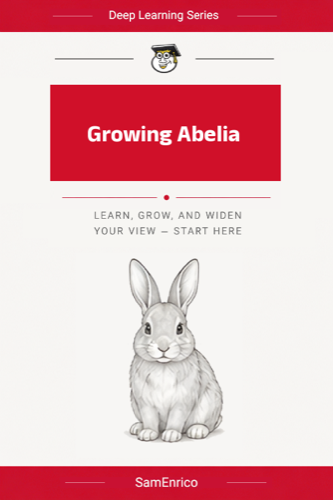
Non-FictionInformativeEducational
Growing Abelia eBook
This publication, published by SamEnrico, covers G
This publication, published by SamEnrico, covers Growing Abelia
Formats
Free sample
Chapter 1: The Parking Lot Revelation--I killed my first Abelia. Not on purpose, of course. I ignored it completely, the way you ignore a plant you’ve decided is boring, common, and not worth your time. It sat in a one-gallon nursery pot on my back patio for an entire summer, tipped over behind a broken clay pot, receiving only the rain that happened to drift sideways onto its lopsided container. By autumn, it was a skeleton.
By winter, it was kindling. And I felt absolutely nothing.That was fifteen years ago, and I’ve since changed my tune. Dramatically. Because here’s the thing about Abelias: they’re not boring. They’re not common.
And the only thing that was beneath my attention back then was my own willingness to judge a book by its cover—or in this case, a shrub by its reputation.If you’ve picked up this book, you’ve probably seen Abelias before. You’ve definitely seen them. They’re those medium-sized shrubs with small, glossy leaves and clusters of tiny white or pink flowers that seem to last forever. They’re planted in front of office parks, along highway medians, and in the foundation plantings of apartment complexes. They’re the plants that landscapers use when they want something that won’t die, won’t complain, and won’t call attention to itself.
And because of that—because they do their job so quietly, so reliably, so unglamorously—we’ve collectively decided they’re not worth a second glance.We were wrong.The Plant That Refuses to Be a Drama Queen Let me tell you what an Abelia actually is, beyond the parking lot associations. The genus Abelia (pronounced uh-BEE-lee-uh, though you’ll hear some say ay-BEE-lee-uh) contains about thirty species of flowering shrubs, most native to eastern Asia and Mexico. The plant that dominates American gardens is a hybrid, Abelia × grandiflora, which crossed two Chinese species back in the 1880s at an Italian nursery. That hybrid turned out to be tougher, more floriferous, and more adaptable than either parent—the gardening equivalent of a mule that can also sing opera.The name honors Dr. Clark Abel, a 19th-century British naturalist and physician who served as the first official naturalist to Lord Amherst’s embassy to China in 1816.
Abel collected the first Abelia specimen during that expedition, though the plant didn’t make it back to England alive. Later collectors succeeded, and by the 1850s, Abelias were finding their way into European gardens. The hybrid grandiflora appeared around 1880, and by the early 1900s, Abelias had crossed the Atlantic to American nurseries.So why don’t we treat them like royalty? Why aren’t Abelias mentioned in the same breath as hydrangeas, rhododendrons, or roses?The answer has almost nothing to do with the plant’s merits and everything to do with its work ethic. Abelias are survivors.
They thrive in conditions that would send a hydrangea into a dramatic spiral of wilt and despair. They bloom their heads off in heat that makes roses drop their petals in protest. They shrug off drought, ignore mediocre soil, and ask for almost nothing in return. And because they’re so forgiving, landscapers started planting them everywhere. Strip malls.
Office parks. Gas station islands. The front of every budget apartment complex built between 1985 and 2005.Familiarity breeds contempt. Or at least, it breeds indifference. We stopped seeing Abelias.
They became part of the background, like asphalt and parking lines.The Six-Month Flower Show Here’s what we’ve been missing while we’ve been looking the other way. An established Abelia, planted in the right spot, will begin blooming in late spring—typically May in most of the United States—and will continue producing fresh flowers every single day until the first hard frost. That’s not an exaggeration. That’s not marketing hype. That’s five to six months of continuous bloom, depending on your climate.Let me put that in perspective.
A typical hydrangea gives you four to six weeks of flowers. A rose bush blooms in flushes, with gaps of two to three weeks between. A lilac gives you ten glorious days, tops. An Abelia just keeps going. You’ll walk past it in June, and it’s covered in small, tubular white or pink blossoms.
You’ll walk past it in August, during a heatwave when everything else looks crispy, and it’s covered in blossoms. You’ll walk past it in October, after the first light frost has knocked back your impatiens and your tomatoes, and it’s still covered in blossoms.The flowers themselves are small—about half an inch long—but they appear in clusters at the ends of every branch. Each cluster contains dozens of individual flowers, each one a tiny trumpet shape that’s perfectly designed for bees and butterflies. The flowers have a subtle sweetness to their scent, though you’ll need to get your nose close to appreciate it. Some newer cultivars, like ‘Edward Goucher’ and ‘Sweet Emotion’, have been bred for stronger fragrance that carries on warm summer air.And then there’s the foliage.
Glossy Abelia gets its name from the leaves, which are small (one to two inches long), oval, and so shiny they look lacquered. The standard green form is attractive enough on its own, but the real magic happens with modern cultivars. ‘Kaleidoscope’ starts the spring with leaves that are yellow-green at the center and bright green at the edges. By summer, the whole leaf turns golden. By autumn, it’s a riot of orange, red, and purple.
‘Radiance’ has leaves edged in creamy white that turns pink in cool weather. ‘Mardi Gras’ is variegated white and green, with new growth flushed in pink. ‘Poco Loco’ pushes out new leaves in deep purple-red that gradually mature to green.You’re not planting one plant. You’re planting a season ticket to a color show that lasts from April to December.The Drought Tolerance That Actually Works I need to be careful here. Every gardening book claims every plant is “drought tolerant.” It’s become one of those meaningless marketing phrases, like “all-natural” or “low maintenance.” So let me be specific about what I mean when I say Abelia is drought tolerant.An established Abelia—meaning a plant that has been in the ground for at least one full year—can survive three to four weeks without rainfall or irrigation in most climates.
It won’t look its best by week four. The leaves may droop. The edges may crisp slightly. But the plant will not die, and as soon as water returns, it will bounce back within days. When I say “established,” I mean it.
The first year is different. A newly planted Abelia needs consistent moisture to develop its root system. But after that first year, you can put the hose away for long stretches.Compare that to a hydrangea, which wilts after three days of dry weather and drops its flowers after a week. Compare it to a rhododendron, which needs consistently moist, well-drained soil and sulks in clay. Compare it to a rose, which requires deep weekly watering to stay…
This is the end of the free sample. Get the eBook to keep going. Buy now
About this book
Details
- Author
- Oldham Breanne
- Publisher
- SamEnrico
- Language
- English
- Genre
- Non-Fiction, Informative, Educational
- Released
- 2026-05-23
- Pages (approx.)
- 136
- Available as
- eBook, Audiobook

Read better in the ZLOADR app
Your eBooks on your phone or tablet. Sign in with your SamEnrico account and start reading.
More by Oldham Breanne
 HGH and Bone Density ConnectionOldham Breanne$11.99
 Pandemic Ethics Decision GuideOldham Breanne$11.99
 Airport Terminal Memory PathOldham Breanne$11.99
 Goal Adjustment GuideOldham Breanne$11.99
 Foster Care Locked KitchenOldham Breanne$11.99
 Chemical BurnOldham Breanne$11.99
 Opioid Hyperalgesia GuideOldham Breanne$11.99
 HIIT Master GuideOldham Breanne$11.99
 The Druid's Gambit: A Cloak-and-Dagger Spell in the Tuatha Dé DanannOldham Breanne$11.99
 The Corsairs of the Stage: Black Ballet’s Golden AgeOldham Breanne$11.99
 How to Produce Window FramesOldham Breanne$11.99
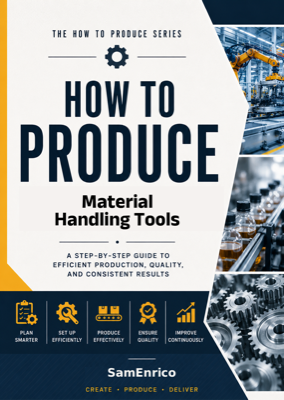 How to Produce Material Handling ToolsOldham Breanne$11.99
You may also like
 Hong Kong Handover 1997Dunn Johnnie$11.99
 Zumba For Postnatal Recovery CourseNeal Christian$11.99
 Zumba for BeginnersLadner Nikia$11.99
 YouTube Comment Mining GuideHumes Pandora$12.99
 Worry Box MeditationCarlin Rudy$11.99
 Workplace Stress MeditationNguyen Lynn$11.99
 Workplace Stress and Sleep RepairHawley Ivory$11.99
 Workplace Perfectionism CureDelaney Jeffry$11.99
 Workplace Injustice Anger GuideWallen Isabelle$11.99
 Work Addiction and Burnout LinkGreenwood Ester$11.99
 Women in Yoga and WellnessBeattie Galina$11.99
 Women in Stand Up ComedyChun Evangeline$11.99