
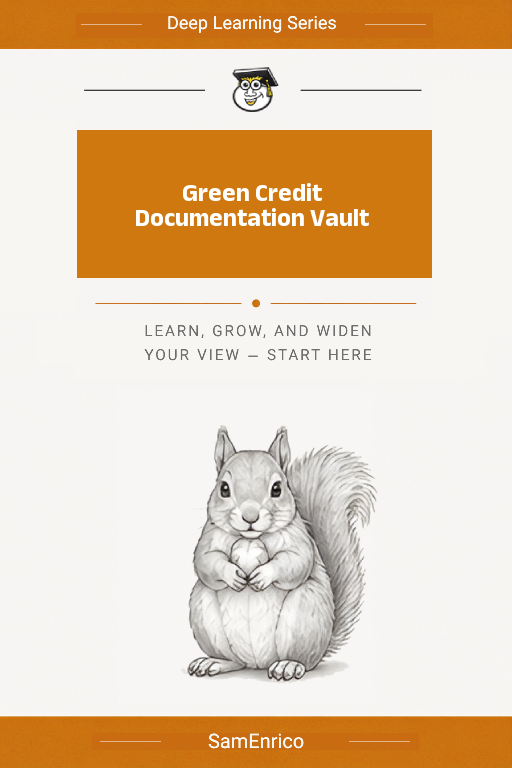
Green Credit Documentation Vault
Build a verifiable green credit evidence system wi
Build a verifiable green credit evidence system with digital ledger recommendations and third-party verification templates.
Formats
About this book
Free sample
Chapter 1: The Fragility Trap--–- Most green finance today rests on evidence that would fail a basic digital audit. That is not an opinion. It is a forensic fact. In 2021, a mid-sized asset manager in Frankfurt received a routine document request from Ba Fin, Germany's financial regulator. The request was simple: produce the original, unaltered meter readings for a portfolio of three wind farms that had been receiving preferential green loan rates for eighteen months.
The asset manager's compliance team opened a shared drive, sorted by date, and discovered something terrifying. The Excel files had been edited by six different people, the original timestamps were overwritten, and three critical months of data existed only as email attachments with no chain of custody. The firm escaped a public fine only by accepting a private censure and implementing a $2.3 million remediation plan. But thousands of other firms will not be so lucky. The warning shot has been fired.
Regulators are no longer asking for spreadsheets. They are asking for proof that spreadsheets have not been tampered with.The Core Problem: Why Spreadsheets and PDFs Are Failing Green Audits The evidence infrastructure for green finance is built on tools designed for an era before verifiable data was required. Spreadsheets were never designed to be audit trails. They are editing environments. Every time someone opens an Excel file, sorts a column, or corrects a typo, the original record is overwritten unless forensic recovery tools are deployed.
PDFs are worse. A PDF appears static, but metadata can be stripped, creation dates can be manipulated with freely available software, and digital signatures on PDFs require the recipient to trust that the signing certificate was never compromised.The problem is not bad actors. The problem is that the tools themselves create plausible deniability. When a regulator asks for evidence of a carbon reduction claim, and the borrower produces a spreadsheet that shows the data, the regulator has no technical basis to trust that the spreadsheet hasn't been edited since the claim was made. The borrower may be completely innocent.
But innocence and provability are not the same thing. A senior enforcement official at the US Securities and Exchange Commission…
This is the end of the free sample. Get the eBook to keep going. Buy now
Contents
- Chapter 1
- Chapter 2
- Chapter 3
- Chapter 4
- Chapter 5
- Chapter 6
- Chapter 7
- Chapter 8
- Chapter 9
- Chapter 10
- Chapter 11
- Chapter 12
Details
- Author
- Savoy Matthew
- Publisher
- SamEnrico
- Language
- English
- Genre
- Non-Fiction, Annual Checkup
- Released
- 2026-06-01
- Pages (approx.)
- 149
- Available as
- eBook, Audiobook

Read better in the ZLOADR app
Your eBooks on your phone or tablet. Sign in with your SamEnrico account and start reading.
More by Savoy Matthew
 The Listening Manager PlaybookSavoy Matthew$11.99
 Emotion Regulation For HealthcareSavoy Matthew$11.99
 The Spaced Repetition GuideSavoy Matthew$11.99
 DBT For Homelessness SurvivorsSavoy Matthew$11.99
 The Restraining Order Digital GuideSavoy Matthew$11.99
 The Phantom Phreaker: The Rise and Fall of John DraperSavoy Matthew$11.99
 How to Start a NAAFI Shop Without Alcohol Licence (retail) Business (Beginners Guide)Savoy Matthew$11.99
 Trademark Search ARIPOSavoy Matthew$12.99
 Understanding TeratocarcinosarcomaSavoy Matthew$17.99
 Model ShipsSavoy Matthew$11.99
You may also like
 Hong Kong Handover 1997Dunn Johnnie$11.99
 Zumba For Postnatal Recovery CourseNeal Christian$11.99
 Zumba for BeginnersLadner Nikia$11.99
 YouTube Comment Mining GuideHumes Pandora$12.99
 Worry Box MeditationCarlin Rudy$11.99
 Workplace Stress MeditationNguyen Lynn$11.99
 Workplace Stress and Sleep RepairHawley Ivory$11.99
 Workplace Perfectionism CureDelaney Jeffry$11.99
 Workplace Injustice Anger GuideWallen Isabelle$11.99
 Work Addiction and Burnout LinkGreenwood Ester$11.99
 Women in Yoga and WellnessBeattie Galina$11.99
 Women in Stand Up ComedyChun Evangeline$11.99