
Non-FictionSelf-HelpDigital Wellness
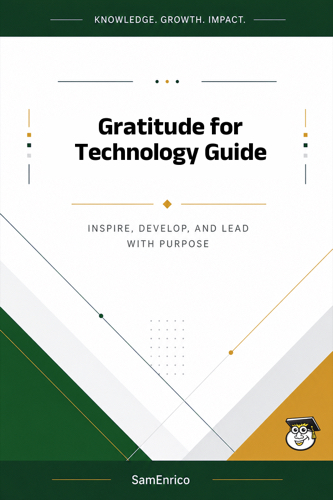
Gratitude for Technology Guide eBook
Appreciates how devices connect us rather than com
Appreciates how devices connect us rather than complaining about distractions.
Formats
Free sample
Chapter 1: The Nostalgia Trap--Most digital distress begins not with a notification, a bad algorithm, or a distracted child. It begins with a story we tell ourselves—a story about how things used to be better, quieter, more real, more human. Before the screens. Before the endless pings. Before we traded genuine connection for digital ghosts.That story is almost entirely wrong.Let me say that again, because it matters: the story of the "good old days" before technology ruined everything is not history.
It is nostalgia bias dressed up as wisdom. And it is the single biggest obstacle to gratitude for the very real gifts your devices offer you every single day.This chapter will dismantle that story. Not to make you feel foolish for believing it—almost everyone does—but to free you from a false comparison that keeps you stuck in resentment. Because here is the truth: you cannot be grateful for a gift if you believe the gift is actually a curse. And you cannot use technology well if you secretly wish it would disappear.So let us begin by examining the myth.
Then let us replace it with something truer, kinder, and far more useful.The Myth of the Unplugged Paradise Close your eyes for a moment. Picture the "good old days." Perhaps you imagine a family sitting around a dinner table, talking and laughing, with no phones in sight. Perhaps you imagine a teenager reading a book under a tree, undistracted and serene. Perhaps you imagine a worker leaving the office at 5 PM and not thinking about work again until morning.This image is powerful. It is also a fantasy.The truth about pre-digital life is far less romantic.
Let us travel back, not to an imagined paradise, but to the actual world your grandparents or great-grandparents inhabited. Not the highlight reel. The full picture.Boredom was everywhere. Before smartphones, before the internet, before even cable television, boredom was a constant companion. You sat in a doctor's waiting room with nothing to read but a three-year-old magazine.
You rode a bus for an hour with no music, no podcast, no way to learn anything, no way to talk to anyone except the stranger next to you who did not want to talk. You waited in line at the grocery store staring at the back of someone's head. You lay awake at night with a question—"What year was that movie made?" "How do you fix a leaky faucet?" "Is that rash serious?"—and had no way to get an answer except to wait until morning and hope the library had a book on the subject.Isolation was normal. Before social media, before email, before long-distance calling became cheap, staying in touch with anyone who did not live nearby was an enormous effort. You wrote letters that took weeks to arrive.
You made phone calls that cost a dollar a minute. You moved to a new city and lost touch with almost everyone you had ever known, not because you stopped caring but because there was no practical way to maintain the connection. The geographically isolated—people in rural areas, elderly folks, stay-at-home parents, teenagers with niche interests—were simply alone for large portions of their lives.Information was scarce. Before Wikipedia, before Google, before search engines of any kind, knowledge was locked inside books that you had to find, check out, and hope contained the answer. Want to know the capital of Burkina Faso?
Drive to the library, find the atlas, hope it is not checked out. Want to settle a debate with a friend about whether a certain actor was in a certain movie? Argue for an hour, then give up. Want to learn how to change a tire? Hope someone taught you, because there was no You Tube tutorial waiting.
The world was opaque in a way that people under thirty cannot fully comprehend.Help was slow. Before cell phones, breaking down on a remote road was genuinely frightening. You walked to the nearest house or waited for a stranger to stop. Before GPS, getting lost in an unfamiliar city could cost hours of driving, gallons of wasted gas, and real emotional distress. Before texting, if you needed to ask a spouse to pick up milk on the way home, you called their workplace and hoped they were at their desk, or you simply forgot the milk.
Before video calls, if you missed your child's first steps because you were traveling for work, you missed them forever. There was no recording. No replay. No "send me the video."Distraction was still present. We tend to imagine that before screens, people were focused and present.
They were not. They read newspapers at the dinner table. They listened to radio dramas while ignoring their children. They stared out train windows for hours, not in mindful contemplation but in bored dissociation. They daydreamed not because they were spiritually advanced but because there was literally nothing else to do.
The human brain craves stimulation. When stimulation is not available, it manufactures it through worry, fantasy, or simple mental fog. Technology did not invent distraction. It just gave distraction new clothing.Why We Remember Only the Good Parts If pre-digital life was so full of boredom, isolation, and frustration, why does it feel so golden in memory?The answer lies in a quirk of the human brain called nostalgia bias. We systematically remember past positives and forget past pains.
This is not a flaw; it is a survival mechanism. Remembering the saber-toothed tiger that almost ate you keeps you alive. Remembering the berry bush that gave you a stomach ache is less useful. So evolution shaped us to remember threats (which we need to avoid again) and to forget discomfort (which no longer matters). The result: the past feels safer and sweeter than it actually was.This bias is amplified by what psychologists call rosy retrospection.
We do not remember average days. We remember holidays, birthdays, summer vacations, the smell of a grandparent's kitchen. Those memories are real and precious. But they are not representative. They are the highlight reel, not the daily grind.
And when we compare the highlight reel of the past to the unfiltered present of notifications and spam emails and slow Wi-Fi, the present will always lose.Here is a simple test. Think back to the last time you had no cell service for an extended period. Perhaps you were camping, or on an airplane, or in a rural area with bad coverage. How did it feel? For the first hour, it might have felt freeing.
By the second hour, many people feel anxious. By the third hour, they are climbing the walls. The "good old days" without phones were not a vacation. They were permanent dead zones.The Mattering Framework: What We Actually Need To understand why we blame technology for our unhappiness, we need to understand what humans actually need to thrive. This book introduces a concept called the Mattering Framework, which will appear throughout these chapters.
It is simple: human well-being rests on feeling that we matter to others and that others matter to us.Feeling that you matter means three things:Attention…
This is the end of the free sample. Get the eBook to keep going. Buy now
About this book
Details
- Author
- Delatorre Kaitlin
- Publisher
- SamEnrico
- Language
- English
- Genre
- Non-Fiction, Self-Help, Digital Wellness
- Released
- 2026-06-06
- Pages (approx.)
- 126
- Available as
- eBook, Audiobook

Read better in the ZLOADR app
Your eBooks on your phone or tablet. Sign in with your SamEnrico account and start reading.
More by Delatorre Kaitlin
 The Micro Stress Couples RecoveryDelatorre Kaitlin$11.99
 Performance Breath MasteryDelatorre Kaitlin$11.99
 The Mistake AdmissionDelatorre Kaitlin$11.99
 Listening In Mining GuideDelatorre Kaitlin$11.99
 Sailing Around the World AloneDelatorre Kaitlin$11.99
 Breathing Techniques for StressDelatorre Kaitlin$11.99
 Power Nine Lifestyle GuideDelatorre Kaitlin$11.99
 Johnny Carson CouchDelatorre Kaitlin$11.99
 The Secret Codebreaker: How a Teenage Girl Cracked the Nazi’s Enigma MachineDelatorre Kaitlin$11.99
 Silk and Shadows: The Opium Wars' Forgotten ConspiratorsDelatorre Kaitlin$11.99
 The Great British Bake-Off: Political Pastry WarsDelatorre Kaitlin$11.99
 Growing HydrocleysDelatorre Kaitlin$11.99
You may also like
 Hong Kong Handover 1997Dunn Johnnie$11.99
 Zumba For Postnatal Recovery CourseNeal Christian$11.99
 Zumba for BeginnersLadner Nikia$11.99
 YouTube Comment Mining GuideHumes Pandora$12.99
 Worry Box MeditationCarlin Rudy$11.99
 Workplace Stress MeditationNguyen Lynn$11.99
 Workplace Stress and Sleep RepairHawley Ivory$11.99
 Workplace Perfectionism CureDelaney Jeffry$11.99
 Workplace Injustice Anger GuideWallen Isabelle$11.99
 Work Addiction and Burnout LinkGreenwood Ester$11.99
 Women in Yoga and WellnessBeattie Galina$11.99
 Women in Stand Up ComedyChun Evangeline$11.99