
Non-FictionInformativeEducational
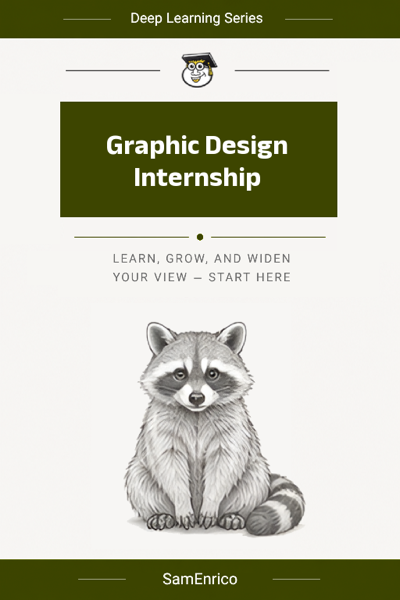
Graphic Design Internship eBook
A Coursebook on Graphic Design Internship
A Coursebook on Graphic Design Internship
Formats
Free sample
Chapter 1: The Rockstar Delusion...--The biggest lie you have been told as a design student is that raw talent opens doors. You have spent countless nights hunched over a glowing screen, obsessing over kerning pairs and gradient meshes, convinced that the sheer brilliance of your portfolio will be your golden ticket. You have been raised on stories of legendary designers who burst onto the scene with revolutionary work, who landed dream internships because their typography was simply too good to ignore. This is the rockstar myth, and it is actively sabotaging your career before it begins.Creative directors across the industry have a dirty secret they rarely share in public portfolios or behind-the-scenes documentaries. When they evaluate internship candidates, raw creativity ranks surprisingly low on their list.
What they are desperately searching for is something far more mundane and infinitely more valuable: reliability, coachability, and low ego. A student who shows up on time, asks smart questions, and absorbs feedback without defensiveness will almost always beat out a wildly talented but unpredictable peer. Your portfolio got you in the door, but your behavior keeps you there.This chapter exists to perform a radical surgery on your professional identity. You must stop thinking of yourself as a student who designs and start thinking of yourself as a colleague who solves problems. The difference between these two identities is not semantic—it is the difference between being tolerated for three months and being remembered for a decade.
Before you write a single email or submit a single application, you need to rewire the default settings of your professional brain.The Hidden Curriculum of the Design Studio Design school operates on a reward system that is almost the exact inverse of how a professional studio functions. In school, you are judged almost exclusively on the final artifact. The process, the late nights, the dead ends, the conversations with peers—none of that appears on the critique wall. Your professor looks at the poster, the logo, the website, and assigns a grade based on visual excellence, conceptual rigor, and personal expression. The message is clear: what you make is who you are.The studio could not care less about your personal expression.
They care about whether the work solves the client's problem, meets the deadline, and fits within the budget. The final artifact matters, of course, but it matters as a solution, not as a self-portrait. More importantly, the studio watches how you arrived at that solution. Did you communicate clearly with the project manager? Did you flag potential issues before they became crises?
Did you receive feedback without rolling your eyes or disappearing into a spiral of self-doubt? These invisible behaviors determine your future far more than your ability to craft a perfect bezier curve.This is what industry veterans call the hidden curriculum of the internship. No one will explicitly teach you these rules. No one will hand you a manual titled "How to Be a Colleague." You are expected to absorb them through osmosis, to watch what the successful interns do and mimic it. The problem is that most students do not even know they are supposed to be watching.
They arrive on day one believing the internship is an extended classroom where they will receive instruction, produce work, and receive a grade-like evaluation at the end. That is a catastrophic misunderstanding.The internship is a low-risk, eight-to-twelve-week job interview. Every single day, you are being evaluated not on your potential but on your actual behavior. The art director is not thinking, "Wow, this student has so much promise, we should be patient with their rough edges." She is thinking, "Can I trust this person with a paying client's money?" The answer to that question has almost nothing to do with your student portfolio and almost everything to do with how you handle the small, unglamorous moments—the rushed production request, the confusing feedback, the boring asset resize.The Rockstar Myth and Why It Persists You have been sold the rockstar myth because it is a seductive story. Design schools use it to attract tuitions.
Design influencers use it to sell courses. Students use it to justify all-nighters and dramatic portfolio overhauls. The myth says that exceptional talent is rare, that studios are desperate for it, and that if you can just make your work good enough, the doors will fly open. This is comforting because it puts everything in your control. If you fail, it is because your work was not good enough.
Try harder. Stay up later. Make it better.The reality is far messier and, in some ways, far more liberating. Studios reject talented students every single day. They reject them not because the work is bad but because the student seemed difficult, or unreliable, or unable to take direction.
A creative director at a major branding agency once admitted to me that they hired a candidate with a mediocre portfolio over a brilliant one because the brilliant candidate spent the entire interview arguing about typography choices. "She was probably right," the director said. "But I didn't want to spend forty hours a week managing her ego."The rockstar myth also ignores the basic economics of the design industry. Most studios make their money not from revolutionary rebrandings that win awards but from steady, reliable production work—social media assets, email templates, presentation decks, print collateral. This work is not glamorous, but it pays the bills.
Interns who look down on production work as beneath them announce themselves as liabilities. Interns who embrace production work as an opportunity to demonstrate reliability announce themselves as future hires.There is a second, more insidious version of the rockstar myth that affects students who do not consider themselves rockstars. If you have internalized the belief that only brilliant talent matters, and you do not feel brilliant, you may have already decided that the industry has no place for you. This is equally false. The vast majority of working designers are not geniuses.
They are competent, steady, collaborative professionals who show up every day and solve problems. The design industry runs on their backs. You do not need to be a rockstar to succeed. You need to be reliable, coachable, and low-ego.The Professional Identity Audit Before you take another step toward applying for internships, you need to complete a professional identity audit. This is not a vague exercise in self-reflection.
It is a concrete process that will produce a document you can use throughout your entire job search.Begin by writing a one-sentence design mission statement. This is not a tagline for your portfolio. It is a private declaration of what you actually do. A good mission statement follows this formula: "I design [type of work] that [outcome] for [audience]." For example: "I design data visualizations that make complex information accessible for nonprofit donors." Or: "I design brand identities that help small businesses feel established and trustworthy." Or: "I design social media graphics that drive engagement for mission-driven organizations."If you cannot write this sentence, you do not yet have a professional identity. That is fine—most students do not.
But you need to develop one before you enter any interview. A clear mission statement signals to studios that you…
This is the end of the free sample. Get the eBook to keep going. Buy now
About this book
Details
- Author
- Rees Cheyenne
- Publisher
- SamEnrico
- Language
- English
- Genre
- Non-Fiction, Informative, Educational
- Released
- 2026-05-08
- Pages (approx.)
- 149
- Available as
- eBook, Audiobook

Read better in the ZLOADR app
Your eBooks on your phone or tablet. Sign in with your SamEnrico account and start reading.
More by Rees Cheyenne
 Improv Yes And HandbookRees Cheyenne$11.99
 Barbara Walters Hard QuestionRees Cheyenne$11.99
 Colleague Negativity Anger Management HandbookRees Cheyenne$11.99
 Financial Stress and Mental HealthRees Cheyenne$11.99
 The Chronic Illness ResentmentRees Cheyenne$11.99
 The Lonely Hearts Bandit: Europe's First Long-Distance Love ScammerRees Cheyenne$11.99
 Understanding Radial Ray Hypoplasia Choanal AtresiaRees Cheyenne$17.99
 How to Start a Ores (wholesale) Business (Beginners Guide)Rees Cheyenne$11.99
 African Export Success StoriesRees Cheyenne$12.99
 Drift Sales-Led GuideRees Cheyenne$12.99
You may also like
 Hong Kong Handover 1997Dunn Johnnie$11.99
 Zumba For Postnatal Recovery CourseNeal Christian$11.99
 Zumba for BeginnersLadner Nikia$11.99
 YouTube Comment Mining GuideHumes Pandora$12.99
 Worry Box MeditationCarlin Rudy$11.99
 Workplace Stress MeditationNguyen Lynn$11.99
 Workplace Stress and Sleep RepairHawley Ivory$11.99
 Workplace Perfectionism CureDelaney Jeffry$11.99
 Workplace Injustice Anger GuideWallen Isabelle$11.99
 Work Addiction and Burnout LinkGreenwood Ester$11.99
 Women in Yoga and WellnessBeattie Galina$11.99
 Women in Stand Up ComedyChun Evangeline$11.99