
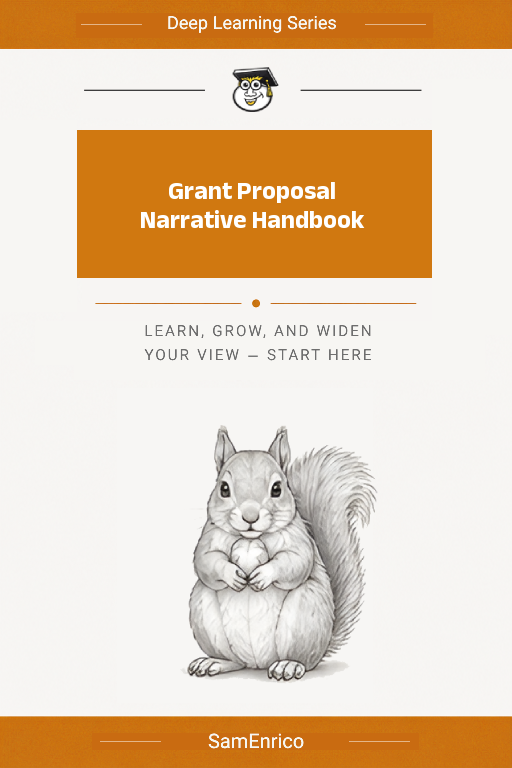
Non-FictionFirst 30 DaysNon-Dilutive FundingProposal Writing
Grant Proposal Narrative Handbook
Write problem statements, logic models, and sustai
Write problem statements, logic models, and sustainability sections that funders want. Includes sample proposals from Kenyan, Nigerian, and South African grant winners.
Formats
About this book
Free sample
Chapter 1: The Narrative Lie--–- Every year, over one billion dollars in grant funding goes unclaimed — not because the problems aren't urgent, not because the organizations aren't capable, but because the proposals are unreadable. Funders don't reject projects. They reject narratives.If you have ever spent weeks perfecting a budget, gathering letters of support, and designing a logical work plan, only to receive a rejection letter that says "not a good fit" or "insufficient justification of need," you have experienced the central tragedy of grant writing: the narrative is where proposals go to die.This chapter dismantles the most dangerous myth in the grant writing profession — a myth repeated in workshops, webinars, and even competing books. That myth is simple, seductive, and entirely wrong: Funders primarily care about your budget and your organizational credibility.They do not.The U.S. Department of Energy, after analyzing thousands of proposal scores, found that the narrative section accounts for 70 to 80 percent of a proposal's final score.
SAGE Publications, which trains grant writers for academic and nonprofit settings, confirms that even the most pristine budget cannot rescue a weak story. And yet, the vast majority of grant writers spend 80 percent of their time on budgets, forms, and appendices — then rush through the narrative the night before the deadline.This book exists to reverse that equation.The Grant Proposal Narrative Handbook is not another general guide to grantsmanship. It does not teach you how to find funders, format federal forms, or calculate indirect cost rates. Those skills matter, but they are mechanical. This book teaches you the art and science of persuasion — specifically, how to write the three sections where most proposals fail: the Problem Statement (why should anyone care?), the Logic Model (how will you actually create change?), and the Sustainability Section (what happens after the grant ends?).And because theory without reality is useless, every chapter includes real examples from grant winners in Kenya, Nigeria, South Africa, and Somalia — contexts where resources are scarce, stakes are high, and the competition for funding is fierce.
You will see exactly what worked, why it worked, and how to adapt those principles to your own proposals.But before…
This is the end of the free sample. Get the eBook to keep going. Buy now
Contents
- Chapter 1
- Chapter 2
- Chapter 3
- Chapter 4
- Chapter 5
- Chapter 6
- Chapter 7
- Chapter 8
- Chapter 9
- Chapter 10
- Chapter 11
- Chapter 12
Details
- Author
- Dyer Dominique
- Publisher
- SamEnrico
- Language
- English
- Genre
- Non-Fiction, First 30 Days, Non-Dilutive Funding, Proposal Writing
- Released
- 2026-05-29
- Pages (approx.)
- 160
- Available as
- eBook, Audiobook

Read better in the ZLOADR app
Your eBooks on your phone or tablet. Sign in with your SamEnrico account and start reading.
More by Dyer Dominique
 Last Mile Delivery Address Verification Systems HandbookDyer Dominique$11.99
 Scar Body Image Healing GuideDyer Dominique$11.99
 Therapy For People With AlbinismDyer Dominique$11.99
 Meth Cold Turkey SurvivalDyer Dominique$11.99
 From Silk to Skyscrapers: The Untold Empire of the MediciDyer Dominique$11.99
 The Vanishing of the Pacific Princess: A Cruise Ship Cold CaseDyer Dominique$11.99
 How to Become a Trim-machine AdjusterDyer Dominique$11.99
 Understanding Hip DislocationDyer Dominique$17.99
 2026-2030 AI Retail OutlookDyer Dominique$12.99
 Empressite MiningDyer Dominique$11.99
You may also like
 Hong Kong Handover 1997Dunn Johnnie$11.99
 Zumba For Postnatal Recovery CourseNeal Christian$11.99
 Zumba for BeginnersLadner Nikia$11.99
 YouTube Comment Mining GuideHumes Pandora$12.99
 Worry Box MeditationCarlin Rudy$11.99
 Workplace Stress MeditationNguyen Lynn$11.99
 Workplace Stress and Sleep RepairHawley Ivory$11.99
 Workplace Perfectionism CureDelaney Jeffry$11.99
 Workplace Injustice Anger GuideWallen Isabelle$11.99
 Work Addiction and Burnout LinkGreenwood Ester$11.99
 Women in Yoga and WellnessBeattie Galina$11.99
 Women in Stand Up ComedyChun Evangeline$11.99