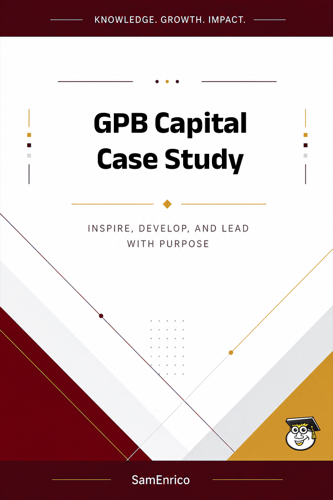
GPB Capital Case Study eBook
Major private placement fraud enforcement action d
Major private placement fraud enforcement action detailed.
Formats
Free sample
Chapter 1: The Eight Percent...--The pitch arrived in mailboxes, inboxes, and living rooms across America with the seductive regularity of a utility bill, but the promise it carried was far more exciting than electricity or running water. "Earn 8% annualized distributions," the brochures proclaimed in elegant serif fonts, "from recession-resilient assets you can touch and feel." The assets in question were auto dealerships—buildings filled with gleaming sedans and pickup trucks, staffed by smiling salespeople, rooted in communities from Pennsylvania to Florida. For retired teachers in Ohio, for veterans in Arizona, for family farmers in Iowa, for nurses in upstate New York, the proposition felt like salvation. After years of near-zero interest rates on savings accounts and certificates of deposit that yielded less than inflation, here was a chance to earn real income on retirement savings. The fact that the offering came through a trusted financial advisor—the same person who had helped them save for college, plan for retirement, or navigate a spouse's passing—made it feel not just safe, but prudent.Between 2013 and 2018, more than seventeen thousand investors would pour approximately $1.6 billion into a constellation of private placement funds managed by a little-known firm called GPB Capital.
The firm's pitch was simple, consistent, and devastatingly effective. GPB would acquire stakes in auto dealerships, which it described as having "high barriers to entry" due to manufacturer franchise laws that limited competition. Once acquired, these dealerships would generate steady cash flow from vehicle sales, parts, service, and financing. That cash flow would be distributed to investors monthly or quarterly. The dealerships would then appreciate in value over time, creating an additional capital gain when GPB eventually sold them.
It was, in the words of one promotional video, "Main Street investing for Main Street investors."The reality, as would be exposed over nearly a decade of investigations, lawsuits, and criminal trials, was something else entirely. The 8% distributions were not paid from dealership profits. They were paid from new investor capital—a classic Ponzi scheme mechanism dressed in private equity clothing. The auto dealerships GPB claimed to own were often not actually owned, because GPB could not secure required manufacturer approvals. The financial statements were riddled with backdated contracts and fabricated revenue.
The auditors who raised concerns were fired. The whistleblowers who spoke up were silenced. And at the center of it all sat a man named David Gentile, who drove a Ferrari funded by investor money, flew private jets while his victims struggled to pay for prescription drugs, and, after a federal jury convicted him of securities fraud and conspiracy, would serve just twelve days in prison before receiving a presidential commutation that wiped away his sentence and his $15.5 million restitution obligation.This is the story of GPB Capital. It is a story about the limits of financial regulation, the corrupting power of sales commissions, the failure of gatekeepers, and the vulnerability of ordinary Americans who trusted the wrong people with their retirement savings. It is also a story that remains unfinished, because the structural weaknesses that enabled the GPB fraud persist today, waiting for the next David Gentile to exploit them.The Promise To understand how GPB Capital attracted $1.6 billion from retail investors, one must first understand the financial environment in which it launched.
The years following the 2008 financial crisis were brutal for savers. The Federal Reserve had slashed interest rates to near zero and kept them there for years. By 2013, the average one-year certificate of deposit yielded less than 0.3%. A five-year CD might pay 0.8%. Savings accounts were even worse, often yielding 0.05% or less.
For retirees living on fixed incomes, the math was impossible. A million dollars in savings, which might have generated $50,000 in annual interest at pre-crisis rates, now generated $5,000—or less.Into this environment stepped GPB Capital, founded in 2013 by David Gentile, a former stockbroker with a checkered regulatory history, and his business partners. The firm's flagship funds—GPB Automotive Portfolio, GPB Holdings, GPB Holdings II, and others—offered something the banks would not: yield. Eight percent. Not the low-single-digit returns of Treasury bonds.
Not the volatile, unpredictable returns of the stock market. A steady, reliable, annualized 8%, paid monthly or quarterly, just like a paycheck.The promised returns were presented as the natural result of GPB's investment strategy. The firm would acquire limited partner interests in auto dealerships, which meant GPB investors would share in the profits generated by those dealerships. Auto dealerships, GPB explained in its marketing materials, were uniquely attractive investments. They enjoyed "high barriers to entry" because auto manufacturers like Nissan, Honda, and Volkswagen strictly limited the number of dealerships and carefully vetted any prospective buyer.
Once a dealership was established, it generated multiple revenue streams: new car sales, used car sales, parts, service, and financing. Even during the Great Recession, dealerships had continued to generate cash flow because people still needed to repair their cars, buy used vehicles, and finance purchases.The marketing materials were polished and persuasive. One brochure featured a photograph of a smiling mechanic in a clean, well-lit service bay, accompanied by text about "the backbone of the American economy." Another showed a family standing next to a new SUV, with a headline about "investing in communities, not just companies." The funds were promoted as appropriate for "accredited investors"—a regulatory designation that typically requires either $200,000 in annual income or $1 million in net worth—but in practice, many investors who fell far short of those thresholds were admitted anyway, their advisors simply checking the "accredited" box on subscription documents without verifying the information.The sales engine that powered GPB's growth was Ascendant Capital, a placement agent that acted as the exclusive marketer for GPB funds. Ascendant had relationships with more than sixty broker-dealers across the country, and those broker-dealers employed thousands of financial advisors who had direct, trusted relationships with retail investors. When Ascendant pitched GPB funds to a broker-dealer, the pitch was straightforward: here is a product that offers steady 8% returns, here is a commission of up to 11% of every dollar invested, and here is a marketing budget to help you sell it to your clients.The Sales Machine The commission structure was the engine that turned GPB from a small private equity firm into a billion-dollar fraud machine.
Financial advisors who sold GPB funds to their clients received up to 11% of the invested amount as a sales commission. On a $100,000 investment, that meant the advisor earned $11,000 immediately. For comparison, a typical mutual fund might pay an advisor 1% or less. A variable annuity might pay 5% to 7%. An 11% commission was extraordinary—and it created an almost irresistible incentive to recommend GPB funds to clients, regardless of whether those funds were appropriate for the client's financial situation.The commissions flowed both to the individual advisors and to the broker-dealers that employed them.
For a regional brokerage firm with hundreds of advisors, GPB funds represented millions of dollars in potential revenue. Some broker-dealers established internal sales quotas, encouraging or requiring advisors to sell a certain dollar amount of GPB products each quarter. Others held contests, offering prizes like vacations or bonuses to the top GPB sellers. One firm reportedly held a "GPB Sales Challenge" that awarded a luxury cruise to the advisor who raised…
This is the end of the free sample. Get the eBook to keep going. Buy now
About this book
Details
- Author
- Solomon Stephane
- Publisher
- SamEnrico
- Language
- English
- Genre
- Non-Fiction, Compliance & Risk Archive, Case Study
- Released
- 2026-06-07
- Pages (approx.)
- 145
- Available as
- eBook, Audiobook

Read better in the ZLOADR app
Your eBooks on your phone or tablet. Sign in with your SamEnrico account and start reading.
More by Solomon Stephane
 Purpose Without Exhaustion GuideSolomon Stephane$11.99
 Anger Management TherapySolomon Stephane$11.99
 Self Hypnosis for CoachesSolomon Stephane$11.99
 Retirement Housing Fraud BriefSolomon Stephane$11.99
 Whaling Captains and the Frozen Deep: The Untold Story of Early Submersible Pioneers in AntarcticaSolomon Stephane$11.99
 Beyond the Wire: The Untold Story of Audie Murphy’s Last StandSolomon Stephane$11.99
 Understanding Diffuse Idiopathic Skeletal HyperostosisSolomon Stephane$17.99
 UK Visa Fee IncreasesSolomon Stephane$12.99
 CTA Penalty Appeals GuideSolomon Stephane$12.99
 Art Therapy AssistantSolomon Stephane$11.99
 10 Ways to Use Creme De Cassis (Recipe Book)Solomon Stephane$11.99