
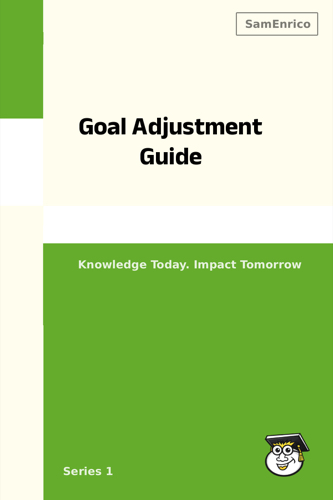
Free sample
Chapter 1: The Cult of Blind Grit--For the last decade, you have been lied to by people who meant well. The lie sounds noble, inspiring, and profoundly simple: Winners never quit, and quitters never win. It is engraved on motivational posters, repeated by commencement speakers, tweeted by influencers, and whispered by coaches into the ears of exhausted athletes. It has become the unofficial motto of the hustle economy, the battle cry of the overworked, and the final rationalization of the miserable. And it is, in its most common interpretation, dangerously wrong.Not because persistence is bad.
Persistence is essential. Without the ability to endure difficulty, to push through discomfort, to wake up on the thousandth day and do the work anyway, nothing of value has ever been accomplished. Every book you have ever loved, every building you have ever admired, every relationship that has lasted decades, every scientific breakthrough, every athletic record—all of it required someone who refused to give up when giving up would have been easier. Persistence is a virtue. The problem is that persistence has been elevated from *a* virtue to the only virtue.
And when persistence becomes the only virtue, it stops being wisdom and starts being a trap.This chapter is not an argument against effort, discipline, or endurance. It is an argument against blind grit—the application of persistence to goals that are unfeasible, misaligned with your values, or actively harmful. It is an argument for knowing when to stop, when to pivot, and when to admit that the path you are on leads nowhere worth going. This book will teach you how to do that. But first, we have to deconstruct the religion of never quitting and replace it with something far more useful: the science of knowing when to hold and when to fold.The Parable of the Gold Miner Imagine a gold miner who has spent three years digging a tunnel into a mountain.
He has invested his life savings, destroyed his marriage, and damaged his health. Every day, he swings his pickaxe against the rock, convinced that just one more strike will reveal the vein. The problem is that geologists have confirmed there is no gold in this mountain. None. The miner is not persistent; he is delusional.
But when his friends tell him to stop, he quotes the poster on his wall: "Winners never quit."This parable is not hypothetical. It plays out every day in every domain of life. The entrepreneur who pours years into a business model that the market has clearly rejected. The student who stays in a degree program they hate because they are "halfway through." The athlete who trains for a competition their body can no longer safely endure. The spouse who stays in a marriage that has been dead for a decade because "we made a vow." The artist who continues to produce work in a style that no gallery will touch because "this is who I am."In each case, the person is not praised for wisdom.
They are pitied. But they cannot see it because the culture of blind grit has convinced them that persistence is always noble, that quitting is always shameful, and that the only way to prove their worth is to keep swinging the pickaxe long after any rational person would have walked away.The science tells a different story. And that science begins with one of the most powerful and dangerous cognitive biases known to psychology.The Sunk Cost Fallacy: Why You Can't Walk Away The Sunk Cost Fallacy is the human tendency to continue investing in a losing endeavor simply because we have already invested resources that we cannot recover. The name comes from economics: a "sunk cost" is money that has already been spent and cannot be returned. Rational economic theory says that sunk costs should be ignored when making future decisions.
What is done is done. The only question is whether the future benefits outweigh the future costs. But human beings are not rational economic actors. We are emotional, status-conscious, loss-averse creatures who would rather throw good money after bad than admit that the first investment was a mistake.The classic demonstration of the sunk cost fallacy comes from a study by behavioral economists Hal Arkes and Catherine Blumer. They asked participants to imagine they had spent $100 on a ski trip to Michigan and $50 on a ski trip to Wisconsin.
They later learned that the Michigan trip would be much less enjoyable than the Wisconsin trip. Which trip would they take? Most chose Michigan, despite it being less enjoyable, simply because they had spent more money on it. The $100 was gone either way, but the participants could not let it go.This fallacy operates everywhere. You have seen it in yourself.
You have stayed in a movie theater for the last forty minutes of a terrible film because you paid for the ticket. You have finished a meal you did not enjoy because you paid for it. You have continued reading a novel you hated because you were already two hundred pages in. These are small examples. But the same cognitive mechanism applies to life-changing decisions: careers, relationships, education, housing, and health.When you stay in a job you hate for five years because you have already put in five years, you are not being persistent.
You are being manipulated by a cognitive glitch. The five years are gone. They will not come back whether you stay or leave. The only question is whether the next five years will be better if you stay or if you go. But the sunk cost fallacy blinds you to that question.
It whispers: You have already sacrificed so much. If you quit now, it was all for nothing.This is the first and most important lie that blind grit tells you. The truth is that staying in a losing situation does not redeem the past. It only sacrifices the future. The money, time, and effort you have already spent are gone.
They are not coming back. The only thing you control is what you do next.Action Crises: The Agony of Being Torn The sunk cost fallacy creates a specific psychological state that researchers call an Action Crisis. This is the internal battle where you feel torn between the desire to persist (driven by pride, social pressure, ego, fear of appearing weak, and the sunk cost fallacy) and the logical need to quit (driven by evidence, self-preservation, and long-term well-being). An action crisis is not a momentary doubt. It is a sustained, exhausting, often agonizing state of ambivalence that can last for months or years.Here is what an action crisis feels like.
You wake up in the morning and immediately feel a weight on your chest. The goal you have been pursuing—the business, the degree, the relationship, the fitness transformation—looms over you like a storm cloud. You go through the motions. You do the work. But the joy is gone.
You are running on obligation, not inspiration. At night, you lie awake asking yourself the same questions: Is this worth it? Should I quit? What would people think? What if I regret it?
What if I am just being lazy?You look for signs. You read articles about successful people who persisted against all…
This is the end of the free sample. Get the eBook to keep going. Buy now
About this book
Details
- Author
- Oldham Breanne
- Publisher
- SamEnrico
- Language
- English
- Genre
- Non-Fiction, Self-Help / Adjustment
- Released
- 2026-06-08
- Pages (approx.)
- 154
- Available as
- eBook, Audiobook

Read better in the ZLOADR app
Your eBooks on your phone or tablet. Sign in with your SamEnrico account and start reading.
More by Oldham Breanne
 HGH and Bone Density ConnectionOldham Breanne$11.99
 Pandemic Ethics Decision GuideOldham Breanne$11.99
 Airport Terminal Memory PathOldham Breanne$11.99
 Foster Care Locked KitchenOldham Breanne$11.99
 Chemical BurnOldham Breanne$11.99
 Opioid Hyperalgesia GuideOldham Breanne$11.99
 HIIT Master GuideOldham Breanne$11.99
 The Druid's Gambit: A Cloak-and-Dagger Spell in the Tuatha Dé DanannOldham Breanne$11.99
 The Corsairs of the Stage: Black Ballet’s Golden AgeOldham Breanne$11.99
 How to Produce Window FramesOldham Breanne$11.99
 How to Produce Material Handling ToolsOldham Breanne$11.99
 A Collector's Handbook to the Morris Twenty-fiveOldham Breanne$11.99
You may also like
 Hong Kong Handover 1997Dunn Johnnie$11.99
 Zumba For Postnatal Recovery CourseNeal Christian$11.99
 Zumba for BeginnersLadner Nikia$11.99
 YouTube Comment Mining GuideHumes Pandora$12.99
 Worry Box MeditationCarlin Rudy$11.99
 Workplace Stress MeditationNguyen Lynn$11.99
 Workplace Stress and Sleep RepairHawley Ivory$11.99
 Workplace Perfectionism CureDelaney Jeffry$11.99
 Workplace Injustice Anger GuideWallen Isabelle$11.99
 Work Addiction and Burnout LinkGreenwood Ester$11.99
 Women in Yoga and WellnessBeattie Galina$11.99
 Women in Stand Up ComedyChun Evangeline$11.99