

Non-FictionInformativeEducational
Glp Study Manage eBook
A Coursebook on Glp Study Manage
A Coursebook on Glp Study Manage
Formats
Free sample
Chapter 1: The Million-Dollar Lie...--– The FDA inspector slid a single page across the table. “This freezer log,” she said quietly, “has three different ink colors for the same date. And the temperature never changed – not even by a tenth of a degree – for six months. That’s not monitoring. That’s fiction.”The study director across from her said nothing.
She knew the study was now dead. Not because the science was wrong – the compound was safe, the data were real. But because someone, years ago, had decided that filling in logs from memory was faster than walking to the freezer. That decision cost the sponsor $4.7 million. It cost the CRO its largest client.
And it cost the study director her career.This book exists because of that lie. Not just the lie on that freezer log, but the larger lie that pervades non-clinical research: the belief that Good Laboratory Practice is a bureaucratic burden rather than a competitive weapon. The top 10 bestselling GLP books teach you the rules. This coursebook teaches you why the rules exist, how they break when people cut corners, and exactly what to do when – not if – something goes wrong.Welcome to the first hour of the rest of your GLP career.The Six Pillars: What This Book Will Build Before we descend into the regulatory trenches, you need the architectural drawing of everything that follows. After synthesizing the ten most influential GLP books in the industry – from The GLP Quality Audit Manual to Data Integrity in GLP – six core pillars emerge.
Every chapter in this coursebook strengthens one or more of these pillars:Pillar 1: Quality Assurance (QA) – The independent oversight function that inspects studies without directing them. QA is not your enemy; it is your alibi.Pillar 2: Documentation – Every observation, every calculation, every deviation, every signature. If it wasn’t written down, it didn’t happen.Pillar 3: Facilities – The physical walls, ventilation, separation, and security that prevent cross-contamination and ensure study integrity.Pillar 4: Equipment – From balances to blood analyzers to freezers: qualified, calibrated, and maintained with documented evidence.Pillar 5: Test Systems – The animals, plants, or microorganisms that receive the test item. Their health, environment, and welfare are inseparable from data quality.Pillar 6: Archiving – The final resting place of raw data, final reports, and specimens. Accessible, secure, and retained for the full regulatory period.This chapter builds Pillars 1 and 2 – the foundations of accountability and truth-telling.
Let us begin.The Crime Scene: What Happened in the 1970s To understand GLP, you must first understand the fraud that created it.In the mid-1970s, the United States Food and Drug Administration (FDA) was reviewing safety data for some of the most common drugs on the market – antibiotics, painkillers, heart medications. The studies had been conducted by industrial testing laboratories, the contract research organizations (CROs) of their day. But when FDA investigators looked closely, they found something alarming.At Industrial Bio-Test Laboratories (IBT), the largest testing facility in the country, investigators discovered that almost every study was compromised. Animals that died were replaced mid-study without documentation. Pathological specimens from one animal were labeled as another.
Date books were backfilled weeks after experiments concluded. In one notorious case, a technician wrote “all animals normal” for a group of rabbits that had already been euthanized. The fraud was not subtle. It was systematic. And it had been used to support safety claims for more than 200 products, including some still on pharmacy shelves.IBT was not alone.
Biometric Testing, another major CRO, was found to have falsified data in carcinogenicity studies. Research Testing Laboratories substituted untrained personnel for qualified staff and fabricated raw data from thin air.The result was a crisis of confidence. If non-clinical safety studies could not be trusted, then no drug, no pesticide, no industrial chemical could safely enter human trials or the marketplace.In 1978, the FDA published 21 CFR Part 58 – the Good Laboratory Practice regulations. Three years later, the Organisation for Economic Co-operation and Development (OECD) published its own Principles of GLP, harmonizing the framework across 35+ countries. Today, nearly every major regulatory agency – the EPA, MHRA, PMDA, and others – has adopted GLP or its equivalent.GLP does not guarantee that a compound is safe.
It guarantees that the study producing the safety data was conducted with integrity, transparency, and accountability. That distinction is everything.What GLP Covers – And What It Does Not One of the most common mistakes new study managers make is assuming GLP applies to everything. It does not.GLP applies specifically to non-clinical safety studies intended to support research or marketing permits for regulated products. Let me break that down.Non-clinical means the study does not involve human subjects. Clinical trials in humans fall under GCP (Good Clinical Practice), not GLP.
Manufacturing processes fall under GMP (Good Manufacturing Practice). GLP sits between them – animal studies, laboratory experiments, and environmental fate studies conducted before a product is tested in humans or released to the market.Safety studies means the study is designed to identify hazards – toxicity, carcinogenicity, reproductive harm, environmental persistence. Efficacy studies (does the compound work?) may be conducted under GLP but are not required to be. However, many sponsors choose GLP conditions for efficacy studies to ensure regulatory acceptance.Regulated products include pharmaceuticals, biologics, pesticides, industrial chemicals, food additives, and medical devices. If a product must be approved by the FDA, EPA, or a comparable agency before it can be sold, GLP likely applies to the non-clinical safety studies supporting that approval.What falls outside GLP?
Basic research. Method development. Exploratory studies not intended for regulatory submission. Quality control testing of manufactured products. Clinical trials.
If the data will never be seen by a regulator, GLP does not apply – though many laboratories adopt GLP principles voluntarily because they produce better science.[SIMULATED CASE SCENARIO 1.1 – see Appendix for answer key]You are a study manager at a CRO. A sponsor requests a 90-day repeated-dose toxicity study in rats for a new biologic intended to treat rheumatoid arthritis. The sponsor explicitly states that the data will be used to support an Investigational New Drug (IND) application to the FDA. Does GLP apply? If so, which regulatory scheme?
(Answer: Yes – FDA 21 CFR Part 58 applies because it is a non-clinical safety study supporting human trials. OECD principles would also apply if the data will be submitted to non-U.S. regulators.)The Regulatory Landscape: Who Enforces What?GLP is not a single set of rules. It is a family of related regulations, each with its own enforcement agency, jurisdictional boundaries, and subtle differences.FDA 21 CFR Part 58 – The original GLP regulation. Applies to non-clinical safety studies supporting FDA-regulated products (drugs, biologics, medical devices, food additives).
Enforcement includes inspections, Form 483 observations, warning letters, and disqualification of testing facilities.OECD Principles of GLP (OECD Series on Principles of GLP No. 1) – Harmonized framework adopted by 35+ member countries plus many others (e.g., South Africa, Singapore). Not a regulation but a consensus document adopted into national laws. Key difference: OECD requires a Quality Assurance (QA) statement for each study phase, whereas FDA requires one overall QA statement. OECD also has stricter requirements for multi-site studies.EPA GLP Standards (40 CFR Part 160 for pesticides; 40 CFR Part 792 for toxic substances)…
This is the end of the free sample. Get the eBook to keep going. Buy now
About this book
Details
- Author
- Limon Willetta
- Publisher
- SamEnrico
- Language
- English
- Genre
- Non-Fiction, Informative, Educational
- Released
- 2026-05-06
- Pages (approx.)
- 156
- Available as
- eBook, Audiobook

Read better in the ZLOADR app
Your eBooks on your phone or tablet. Sign in with your SamEnrico account and start reading.
More by Limon Willetta
 Therapy For Acid Attack SurvivorsLimon Willetta$11.99
 Stimulant Peer Support GroupsLimon Willetta$11.99
 Death Valley Desert RescueLimon Willetta$11.99
 Muscle Dysmorphia Recovery GuideLimon Willetta$11.99
 The Last Duel of the RegencyLimon Willetta$11.99
 The Great Disappearing: How the 1918 Flu Vanished OvernightLimon Willetta$11.99
 2026-2030 AI Construction GuideLimon Willetta$12.99
 Instagram Ad Creative PrimerLimon Willetta$12.99
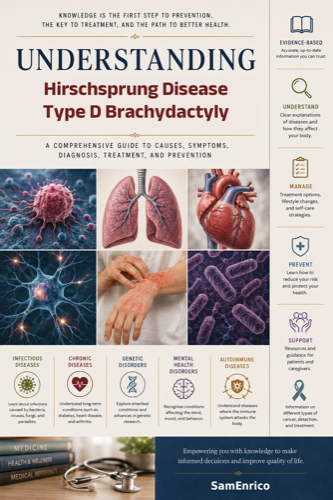 Understanding Hirschsprung Disease Type D BrachydactylyLimon Willetta$17.99
 How to Become a Trombone-slide AssemblerLimon Willetta$11.99
You may also like
 Hong Kong Handover 1997Dunn Johnnie$11.99
 Zumba For Postnatal Recovery CourseNeal Christian$11.99
 Zumba for BeginnersLadner Nikia$11.99
 YouTube Comment Mining GuideHumes Pandora$12.99
 Worry Box MeditationCarlin Rudy$11.99
 Workplace Stress MeditationNguyen Lynn$11.99
 Workplace Stress and Sleep RepairHawley Ivory$11.99
 Workplace Perfectionism CureDelaney Jeffry$11.99
 Workplace Injustice Anger GuideWallen Isabelle$11.99
 Work Addiction and Burnout LinkGreenwood Ester$11.99
 Women in Yoga and WellnessBeattie Galina$11.99
 Women in Stand Up ComedyChun Evangeline$11.99