
Non-FictionHealth & WellnessGenetics
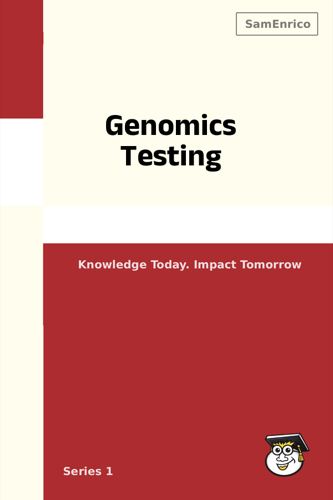
Genomics Testing eBook
Teaches MTHFR and other genetic variants.
Teaches MTHFR and other genetic variants.
Formats
Free sample
Chapter 1: The Methylation Highway...--Imagine for a moment that your body is a sprawling, bustling city of 37 trillion citizens—each one a cell. Every second of every day, this city must repair its roads, clear its garbage, dispatch emergency services, build new housing, and communicate across vast distances. To coordinate all of this, the city relies on a single, silent transit system. This system has no trains, no busses, and no traffic lights. Instead, it operates at the molecular level, using tiny chemical tags that are passed from one molecule to another like batons in a relay race.This system is called methylation, and if you have ever wondered why you feel exhausted despite sleeping eight hours, why your brain feels wrapped in cotton wool, or why your mood swings wildly without warning, the answer may lie not in a single broken part of your body, but in the smoothness—or gridlock—of this microscopic highway.Methylation is the single most underappreciated biochemical process in human health.It is the switch that turns genes on and off.
It is the assembly line that builds your neurotransmitters. It is the recycling center that neutralizes toxins. It is the clock that regulates your sleep-wake cycle. And for nearly one in three people, this highway has a bottleneck—a genetic variant that slows traffic to a crawl, leading to the mysterious symptoms that conventional medicine so often dismisses as “all in your head.”This chapter will give you a complete, analogy-driven map of the methylation highway. By the time you finish reading, you will understand exactly what methylation does, why it matters more than any single gene, and how to recognize the signs of a traffic jam in your own body.
You will also complete a simple self-assessment that will tell you, before you even order a genetic test, whether methylation dysfunction is likely driving your health struggles.The City Analogy: Your Body as a Metropolis Let us return to the city analogy, because it will serve as our map for the entire book. Your body is a city. The citizens are your cells. The mayor is your DNA, which issues proclamations (instructions) about how the city should run. But a proclamation is useless if no one can read it.
This is where methylation comes in.Methyl groups are the chemical equivalent of a transit pass. A methyl group is a tiny cluster of atoms—one carbon atom bonded to three hydrogen atoms (CH₃). It is the smallest possible molecular unit that can be attached to a gene, a protein, or a toxin to change its behavior.When a methyl group attaches to a gene, it can silence that gene (prevent it from being read) or activate it (allow it to be read). This process is called epigenetic regulation, and it is why two people with identical MTHFR genes can have completely different health outcomes. The gene is the hardware.
Methylation is the software.In our city analogy:Methyl groups are transit passes.The Folate Cycle is the production plant where transit passes are manufactured.The Methionine Cycle is the distribution hub where transit passes are used to keep the city running.Homocysteine is the toxic exhaust that builds up when the plant and hub fall out of sync.Every organ in your city depends on this transit system. Your brain needs methyl groups to produce serotonin (mood), dopamine (motivation), and melatonin (sleep). Your liver needs methyl groups to neutralize estrogen, heavy metals, and environmental toxins. Your heart needs methyl groups to keep homocysteine from scarring your arteries. Your immune system needs methyl groups to distinguish your own cells from invaders.When the methylation highway flows smoothly, you feel energetic, clear-headed, resilient to stress, and emotionally stable.
When it jams, everything grinds to a halt.The Two Cycles: Production Plant and Distribution Hub To understand methylation dysfunction, you need to understand two interconnected cycles. Think of them as the production plant and the distribution hub. They are linked by a single, crucial molecule: homocysteine.The Folate Cycle (The Production Plant)The folate cycle is where methyl groups are manufactured. The raw material is dietary folate—a B vitamin found in leafy greens, beans, lentils, asparagus, and avocados. Your body takes this folate and, through a series of enzymatic reactions, converts it into methylfolate (also called 5-MTHF).Methylfolate is the active, usable form of folate.
It is the transit pass that has been printed and is ready to be handed out.The key enzyme in this cycle is MTHFR (methylenetetrahydrofolate reductase). This is the gene that has become famous—and infamous—in the genomics world. MTHFR is the gatekeeper of the production plant. If MTHFR function is reduced (due to genetic variants), the plant produces fewer transit passes.What happens when the production plant slows down?Less methylfolate is available.Homocysteine begins to accumulate (because it cannot be processed).Neurotransmitter production drops.Detoxification slows.You feel fatigued, foggy, and low.The Methionine Cycle (The Distribution Hub)The methionine cycle takes the methyl groups produced in the folate cycle and uses them to run the city. The central molecule here is methionine, an essential amino acid that you get from protein-rich foods like meat, eggs, fish, and beans.When a methyl group is added to methionine, it becomes SAMe (S-adenosylmethionine).
SAMe is the universal methyl donor. It participates in over 200 biochemical reactions, including:Creating creatine (which powers your muscles and spares methyl groups—more on this in Chapter 9).Synthesizing neurotransmitters (serotonin, dopamine, norepinephrine).Building and repairing DNA.Detoxifying hormones and drugs.Producing melatonin for sleep.After SAMe donates its methyl group, it becomes homocysteine. Homocysteine is the toxic exhaust of this system. It is not useful on its own; it must be either:Remethylated back into methionine (using methylfolate from the folate cycle and B12), or Transsulfurated into cysteine and then glutathione (using B6).If the folate cycle is slow (due to MTHFR variants), homocysteine cannot be remethylated efficiently. It builds up.
And high homocysteine is a powerful predictor of heart disease, stroke, dementia, and pregnancy complications.What happens when the distribution hub slows down?SAMe levels drop.Neurotransmitter production suffers.Homocysteine rises.Detox pathways become congested.Homocysteine: The Canary in the Coal Mine Homocysteine is the single most important blood marker for methylation health. It is the canary in the coal mine because it rises whenever either the folate cycle or the methionine cycle is dysfunctional.Optimal vs. Acceptable Ranges:Most conventional labs tell you that a homocysteine level between 5 and 15 μmol/L is “normal.” This is dangerously misleading. Epidemiological studies have shown that cardiovascular risk begins to increase at levels above 8 μmol/L, and each 3-point increase in homocysteine raises the risk of heart attack by approximately 15–20%.Homocysteine Level (μmol/L)Interpretation< 7Excellent (optimal methylation function)7–9Moderate (consider supporting methylation)9–11Elevated (high likelihood of MTHFR or B12 issues)11–15Significantly elevated (take action immediately)> 15Severe (strongly associated with cardiovascular and neurological risk)What causes high homocysteine?The most common causes are:Genetic variants in MTHFR, MTR, or MTRR (the B12 recycling genes). These are covered in depth in Chapters 4 and 6.Low dietary folate (not eating enough leafy greens).Low B12 (especially if you are vegetarian, vegan, or have MTR/MTRR variants).Low B6 (less common but relevant for CBS variants; see…
This is the end of the free sample. Get the eBook to keep going. Buy now
About this book
Details
- Author
- Grenier Nigel
- Publisher
- SamEnrico
- Language
- English
- Genre
- Non-Fiction, Health & Wellness, Genetics
- Released
- 2026-06-06
- Pages (approx.)
- 156
- Available as
- eBook, Audiobook

Read better in the ZLOADR app
Your eBooks on your phone or tablet. Sign in with your SamEnrico account and start reading.
More by Grenier Nigel
 The Client Interruption GuideGrenier Nigel$11.99The Client Interruption GuideGrenier Nigel$11.99
 Sat Nav Travel SuggestionGrenier Nigel$11.99
 Toddler Loss BereavementGrenier Nigel$11.99
 Fear Of Criticism Treatment GuideGrenier Nigel$11.99
 Vegan Weekly Meal PrepGrenier Nigel$11.99
 Pet Loss Meditation GuideGrenier Nigel$11.99
 The Forge of Hephaestus: Fire and Betrayal in OlympusGrenier Nigel$11.99
 The Great Canadian Bank Heist: The $10 Million Vanishing ActGrenier Nigel$11.99
 Public Health Law: Quarantine, Vaccines & Emergency PowersGrenier Nigel$11.99
 A Collector's Handbook to the American Motors (USA) American Motors HornetGrenier Nigel$11.99
 Cross Border Franchise Confidentiality AgreementsGrenier Nigel$12.99
You may also like
 Hong Kong Handover 1997Dunn Johnnie$11.99
 Zumba For Postnatal Recovery CourseNeal Christian$11.99
 Zumba for BeginnersLadner Nikia$11.99
 YouTube Comment Mining GuideHumes Pandora$12.99
 Worry Box MeditationCarlin Rudy$11.99
 Workplace Stress MeditationNguyen Lynn$11.99
 Workplace Stress and Sleep RepairHawley Ivory$11.99
 Workplace Perfectionism CureDelaney Jeffry$11.99
 Workplace Injustice Anger GuideWallen Isabelle$11.99
 Work Addiction and Burnout LinkGreenwood Ester$11.99
 Women in Yoga and WellnessBeattie Galina$11.99
 Women in Stand Up ComedyChun Evangeline$11.99