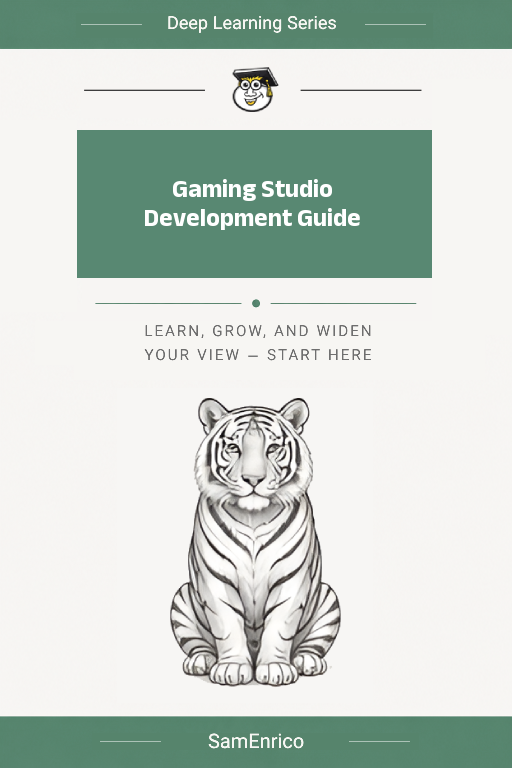
Gaming Studio Development Guide Audiobook
Analyze Polish and Czech game developers, mobile g
Analyze Polish and Czech game developers, mobile gaming publishers, and VR/AR content creation.
Formats
Free sample
Chapter 1: The Scarcity Superpower--–- In 2012, a tiny Polish studio with seventeen people and a budget that wouldn't cover the catering bill at a Ubisoft launch party released a game about a white-haired monster hunter. The Witcher 2 had no multiplayer, no microtransactions, and no live ops roadmap. It was, by every metric of modern gaming orthodoxy, a relic before arrival. It sold over eight million copies. Four years later, the same studio—now slightly larger but still laughably small by AAA standards—released The Witcher 3: Wild Hunt.
It has since sold over fifty million units, generated more than three billion dollars in revenue, and is routinely cited as one of the greatest roleplaying games ever made.The name of that studio is CD Projekt Red. They are not from Los Angeles, Tokyo, or London. They are from Warsaw, Poland. And their story—alongside dozens of other successful studios from the Czech Republic and across Central and Eastern Europe—reveals something uncomfortable about the global games industry. The regions with the least money, the hardest histories, and the most constrained resources are quietly outpacing their wealthy counterparts.
Not because they have better technology, bigger marketing budgets, or more favorable tax laws. They are winning because they developed something Western studios forgot: the scarcity superpower.This chapter explores the cultural and historical roots of the Central and Eastern European development philosophy. It traces how decades of economic scarcity under communist rule bred a generation of developers who learned to do more with less, who treat player trust as their only non-renewable resource, and who view crunch not as a badge of honor but as a failure of planning. We will examine the infamous Cyberpunk 2077 launch disaster not as a cautionary tale about ambition, but as a masterclass in crisis recovery, radical transparency, and long-term reputation rebuild. We will study how Bohemia Interactive transformed a military simulator into a billion-dollar survival genre, and why the founders of Techland built a studio culture that survived two decades of industry upheaval.Most importantly, this chapter introduces the first pillar of the scarcity superpower: survival-first, then artistry.
It is a mindset that sounds obvious but is rarely practiced. You cannot make your dream game if your studio dies in year one. You cannot innovate if you are desperate for rent money. The Polish and Czech studios mastered the art of paying bills through contract work, consulting…
This is the end of the free sample. Get the Audiobook to keep going. Buy now
About this book
Details
- Author
- Segura Edison
- Publisher
- SamEnrico
- Language
- English
- Genre
- Non-Fiction, Forecast & Outlook, Gaming
- Released
- 2026-05-30
- Pages (approx.)
- 153
- Available as
- eBook, Audiobook

Listen in the VoxFlicks app
Audiobooks and audio dramas wherever you go. Sign in with your SamEnrico account and press play.
More by Segura Edison
 Overwatch 2 Addiction RecoverySegura Edison$11.99
 Jumper Survival Paraplegic StorySegura Edison$11.99
 Shark Phobia Aquarium Glass GuideSegura Edison$11.99
 1031 Exchange for EasementsSegura Edison$11.99
 The Stress Kidney Function GuideSegura Edison$11.99
 Anansi's Web: The Spider Who Outwitted Gods and KingsSegura Edison$11.99
 Understanding Maroteaux–cohen–solal–bonaventure SyndromeSegura Edison$17.99
 How to Become a News LibrarianSegura Edison$11.99
 Remote Review For Remote First CompaniesSegura Edison$12.99
 Night CrewSegura Edison$11.99