
Non-FictionHealth & WellnessImpulse Control
Gambling and Impulse Control eBook
Strengthening pause between urge and action for pr
Strengthening pause between urge and action for problem bettors.
Formats
Free sample
Chapter 1: The Vanishing Second--–- The screen glows at 2:47 AM. Your thumb hovers over the green "Place Bet" button. In the time it takes for your phone to vibrate once—less than half a second—everything you know about probability, every promise you made to yourself, every consequence you can vividly imagine, simply evaporates. The bet is placed. The money is gone.
And you are left holding a device that feels strangely heavier than it did a moment ago, wondering how you got here again.This is not a failure of character. It is not a lack of love for your family, a deficiency in intelligence, or evidence that you secretly want to destroy your life. This is a failure of something far more specific, far more mechanical, and—here is the good news—far more fixable than your character. This is a failure of what this book calls the Pause Point.The Pause Point is the microscopic window of time between the moment an urge arises and the moment you act on it. For a person who does not struggle with gambling, that window might last five, ten, even thirty seconds.
Long enough to think, Do I really want to do this? Long enough to check their bank balance. Long enough to remember that they have an early meeting. For a problem gambler, that window is often compressed to near-zero. The urge and the action become fused, like two rails of metal welded together by heat and pressure and repetition.
You do not decide to gamble. You simply gamble, and then retroactively invent a decision to explain what just happened.This chapter is about that vanishing second. It is about why the pause disappears, why "one last bet" is the most dangerous sentence in the English language, and why everything you have tried so far—willpower, shame, solemn promises, self-imposed bans, tearful confessions—has likely failed for the same underlying reason. You have been trying to solve a neurological problem with moral tools. You cannot hate yourself into stopping.
You cannot think your way out of a brain that has, through no fault of your own, learned to bypass the thinking part entirely.The Anatomy of a Vanishing Let us slow down what happens in that half-second. It is useful to do this in extreme detail, because the whole premise of this book is that the pause can be stretched, but you cannot stretch what you cannot see.Imagine you are sitting on your couch. It is a Tuesday evening. You have had a moderately stressful day at work. You are alone.
Your phone is on the cushion next to you. You are not thinking about gambling. Then, for reasons you cannot quite identify, you pick up the phone. You open an app—not the betting app, something neutral, maybe social media. But your thumb, as if it has a mind of its own, swipes to the next screen.
There it is. The icon. The familiar colors. Your heart rate increases slightly. You do not click it yet.Here is what happens in your brain during the three seconds that follow.Second One: The visual cue (the app icon) travels from your retina to your thalamus, then to your amygdala.
Your amygdala, which is designed to detect threats and rewards with incredible speed but very little accuracy, flags the cue as relevant. It sends a signal to your nucleus accumbens, the brain's reward center. Dopamine is released. This is not the dopamine of pleasure; this is the dopamine of anticipation. It feels like a pull, a leaning forward, a slight intensification of focus.
Your conscious mind has not yet registered anything unusual.Second Two: The dopamine signal strengthens. Your prefrontal cortex—the part of your brain responsible for planning, inhibition, and long-term thinking—begins to receive input from the reward system. But here is the critical problem: the reward signal arrives faster and more intensely than the inhibitory signal can muster. Your prefrontal cortex is not damaged; it is simply outpaced. By the time your executive function starts to ask, Should I?, the rest of your brain is already committed to the action.
This is the neurological equivalent of a car whose accelerator pedal is directly wired to the engine while the brake pedal has to send a message through three different computers before it engages.Second Three: Your thumb moves. You do not remember deciding to move it. The app opens. You are now looking at a screen displaying odds, counts, flashy graphics. The urge has become an action.
The pause point—what little of it existed—has collapsed to zero. You are gambling.This sequence is not a metaphor. It has been observed in functional MRI studies of problem gamblers. The pathways between the amygdala and the nucleus accumbens become super-efficient with repeated gambling, like a trail through the woods that has been walked so many times it has become a paved highway. Meanwhile, the pathways from the prefrontal cortex to the motor areas—the "stop" signals—atrophy from disuse.
You are not weak. You are not stupid. You have simply, through repetition, laid down a neural highway that your brain now treats as the default route.Why "One Last Bet" Is a Trap The phrase "one last bet" deserves special attention because it is the single most common cognitive distortion preceding a relapse, and it is almost never true. Let us examine the logic."One last bet" implies that this bet will be different from all previous bets. It implies control, finality, and a special exception to the rule that you are trying to stop.
But the neurological reality is that the brain does not recognize "lastness." The brain recognizes patterns. When you place that "one last bet," you are not closing a chapter; you are reheating the neural pathway. You are walking the highway again, smoothing the asphalt, making it easier to drive next time.There is a famous study on extinction learning in addiction. Rats who were trained to self-administer cocaine and then went through a period of abstinence showed a phenomenon called "reinstatement." A single cue—a light that had previously been associated with the drug—could trigger a full relapse even after months of abstinence. The neural pathway was not gone; it was merely dormant.
One exposure was enough to wake it up.Your "one last bet" is that cue. It does not give you closure. It gives you a reactivated addiction.Many gamblers report a specific feeling after a relapse that begins with "one last bet." It is not relief. It is not satisfaction. It is a strange, hollow disappointment mixed with a racing heart.
You already know, the moment the bet is placed, that you have been lied to—not by a bookmaker or a casino, but by the addiction itself. The addiction wears your face and speaks in your voice, but it is not you. It is a learned circuit in your brain that has become expert at producing justifications.The Truth About Willpower Let us be very precise about willpower, because this book takes a specific position that differs from both popular self-help and clinical folklore.Willpower is not a myth.…
This is the end of the free sample. Get the eBook to keep going. Buy now
About this book
Details
- Author
- Rinehart Joaquina
- Publisher
- SamEnrico
- Language
- English
- Genre
- Non-Fiction, Health & Wellness, Impulse Control
- Released
- 2026-06-09
- Pages (approx.)
- 134
- Available as
- eBook, Audiobook

Read better in the ZLOADR app
Your eBooks on your phone or tablet. Sign in with your SamEnrico account and start reading.
More by Rinehart Joaquina
 Insect Fear CoexistenceRinehart Joaquina$11.99
 ADHD and Sexual CompulsionRinehart Joaquina$11.99
 Meditation For Environmental AnxietyRinehart Joaquina$11.99
 Software Developer Sprint StressRinehart Joaquina$11.99
 The Courtroom CaptiveRinehart Joaquina$11.99
 Bankruptcy And Confidential DataRinehart Joaquina$11.99
 Tutoring Anxiety ReductionRinehart Joaquina$11.99
 The Silk Road’s Shadow Empire: How a Forgotten Dynasty Dominated Global TradeRinehart Joaquina$11.99
 The Rise and Fall of FTX: Empire in Fast ForwardRinehart Joaquina$11.99
 The Golden Gates of Axum: Africa's Forgotten Empire of Trade and TriumphRinehart Joaquina$11.99
 Growing Davallia (Hare's Foot Fern)Rinehart Joaquina$11.99
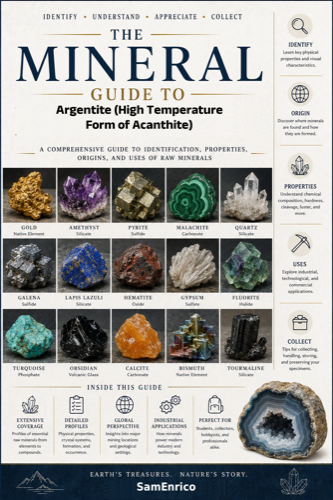 The Mineral Guide to Argentite (High Temperature Form of Acanthite)Rinehart Joaquina$11.99
You may also like
 Hong Kong Handover 1997Dunn Johnnie$11.99
 Zumba For Postnatal Recovery CourseNeal Christian$11.99
 Zumba for BeginnersLadner Nikia$11.99
 YouTube Comment Mining GuideHumes Pandora$12.99
 Worry Box MeditationCarlin Rudy$11.99
 Workplace Stress MeditationNguyen Lynn$11.99
 Workplace Stress and Sleep RepairHawley Ivory$11.99
 Workplace Perfectionism CureDelaney Jeffry$11.99
 Workplace Injustice Anger GuideWallen Isabelle$11.99
 Work Addiction and Burnout LinkGreenwood Ester$11.99
 Women in Yoga and WellnessBeattie Galina$11.99
 Women in Stand Up ComedyChun Evangeline$11.99