

Non-FictionBiographyYouth Activism
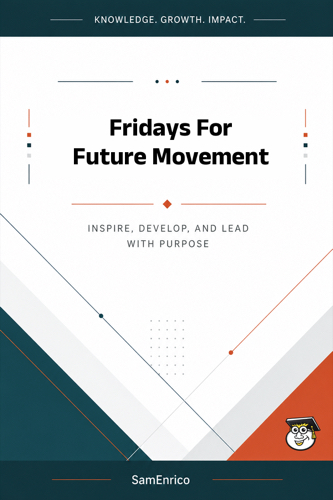
Fridays For Future Movement eBook
How Thunberg's school strike became a worldwide yo
How Thunberg's school strike became a worldwide youth climate rebellion.
Formats
Free sample
Chapter 1: The Girl Who Stopped Eating...--She was eight years old when the world ended for the first time.It was a Tuesday in 2011, an unremarkable autumn afternoon in Stockholm. Greta Thunberg sat cross-legged on the carpet of her fourth-grade classroom as her teacher queued up a documentary. The lights dimmed. The projector whirred. And for the next forty-five minutes, Greta watched the planet die.The film showed plastic-choked oceans.
Birds with stomachs full of colorful debris. A polar bear, ribs visible through its thinning fur, collapsing onto melting ice. Then came the graphs. The carbon dioxide curve, jagged and rising, soaring past every safe boundary that scientists had drawn. The narrator’s voice was calm, measured—the voice of someone who had already accepted the news.
Greta had not.She stopped breathing. Not dramatically. Not in a way that made the teacher notice. Just a quiet, internal collapse. Her hands, which had been resting on her knees, began to shake.
Her vision tunneled. She could hear the other children whispering, shuffling papers, laughing at something someone had said—they were still watching the screen but somehow not seeing what she saw. How could they laugh? How could anyone laugh?That night, she did not eat dinner. Her mother, Malena Ernman, an opera singer who had performed on the world’s most prestigious stages, noticed the untouched plate.
“Are you feeling unwell?”Greta did not answer. She had already gone to her room, closed the door, and curled into a ball on her bed. The documentary played on a loop in her head. The polar bear. The plastic.
The curve.She did not eat the next morning either. Or the day after that.The Silent House What followed was not a tantrum or a protest. It was a systematic withdrawal from life itself. Greta stopped speaking to her father, Svante, a former actor turned producer. She stopped speaking to her younger sister, Beata.
She stopped going to birthday parties, stopped playing with friends, stopped laughing. The girl who had once sung loudly in the car, who had argued passionately about why horses were better than dogs, who had demanded bedtime stories with increasingly elaborate sequels—that girl was gone.In her place was a ghost who moved through the house silently, who ate only a few bites of bread each day, who lost weight so rapidly that her cheekbones became visible beneath her pale skin. Her parents took her to doctors. The doctors ran tests. The tests came back normal.
“Maybe it’s a phase,” one pediatrician suggested. “Maybe she’s just sensitive.”But Svante and Malena knew the truth. Their daughter was not having a phase. She was having a breakdown.The diagnosis came months later, after a battery of psychological evaluations. Asperger’s syndrome.
Obsessive-compulsive disorder. Selective mutism. The doctor explained the terms carefully, using gentle language. “These are not illnesses to be cured,” she said. “They are ways of being.
They mean she sees the world differently. More intensely. More literally.”Malena cried in the car on the way home. Svante gripped the steering wheel so hard his knuckles turned white. In the backseat, Greta stared out the window.
She had known something was different about her for years—the way sounds were too loud, the way crowds made her chest tighten, the way she could not understand why people said one thing but meant another. Now she had a name for it. But the name did not stop the documentary from playing in her head.The Mathematics of Despair Here is what Greta understood that the other children—and most adults—did not.The documentary had shown her a graph. The graph had numbers on it. Numbers, to Greta, were not abstractions.
They were facts. A fact was something that was either true or false. There was no gray area. There was no “maybe.” If the graph said that atmospheric carbon dioxide had risen from 280 parts per million to 400 parts per million since the Industrial Revolution, that was a fact. If the graph predicted that the temperature would rise by two degrees Celsius by 2050, that was a fact.
And if the fact said that two degrees would mean the death of coral reefs, the displacement of hundreds of millions of people, the collapse of agricultural systems, and the extinction of a quarter of all species on Earth—then those things were also facts.Adults, she noticed, did not seem to treat these facts as facts. They treated them as opinions. Or warnings. Or possibilities. “We need to take climate change seriously,” a politician said on the news, as if “taking it seriously” were an option rather than an obligation.
“We are working toward a sustainable future,” a corporate CEO said, as if “working toward” were the same as “achieving.”Greta did not understand this. If your house was on fire, you did not “work toward” putting it out. You put it out. You did not “take seriously” the smoke filling your lungs. You ran.But the world was not running.
The world was arguing. The world was holding conferences where delegates debated the wording of communiqués while the curve kept rising. The world was building more coal plants, drilling more oil wells, cutting down more forests. Every day, Greta learned, humans released ninety million tons of carbon dioxide into the atmosphere. Ninety million tons.
Every day.She started doing the math. Her own calculations. At night, when her parents thought she was sleeping, she would lie awake and multiply. If the rate of emissions stayed the same, how many days until the two-degree threshold was crossed? How many until the ice caps melted?
How many until the ocean acidified beyond recovery?The answers she found were not published in any textbook. She found them in the IPCC reports, which she downloaded and read by the light of her phone under her blanket. She was ten years old, reading documents written for climate scientists, and she understood every word. Because the words were facts. And facts were all she had left.The Family That Learned to Listen The Thunberg household became a strange place.
Malena, who was preparing for a tour of major opera houses across Europe, found herself canceling rehearsals to sit with her daughter. Svante, who had never been particularly political, began researching carbon footprints. Beata, younger and more bewildered than anyone, learned to play quietly in her room so as not to upset her sister.For two years, this was the pattern. Greta would go to school, sit through classes without speaking, come home, retreat to her room, and cry. Sometimes she would eat a small meal.
Sometimes she would not. Her parents tried everything. Therapy. Medication. A specialized school with smaller classes.
They took her to see a psychiatrist who asked, “What do you want for your future?”Greta, who rarely spoke to strangers, looked at the psychiatrist with an expression that was not sad but certain. “I don’t believe I have one,” she said.The psychiatrist wrote something on a pad. Malena started to cry.It was Svante who finally asked the question that changed everything. Not a question for a doctor or a…
This is the end of the free sample. Get the eBook to keep going. Buy now
About this book
Details
- Author
- Cortez Sophia
- Publisher
- SamEnrico
- Language
- English
- Genre
- Non-Fiction, Biography, Youth Activism
- Released
- 2026-06-11
- Pages (approx.)
- 155
- Available as
- eBook, Audiobook

Read better in the ZLOADR app
Your eBooks on your phone or tablet. Sign in with your SamEnrico account and start reading.
More by Cortez Sophia
 Study Abroad Stress ManagementCortez Sophia$11.99
 LinkedIn Market Research GuideCortez Sophia$11.99
 Teen Affirmation CardsCortez Sophia$11.99
 Turnover Creation MindsetCortez Sophia$11.99
 Missing Never Twice RuleCortez Sophia$11.99
 The Group Innovation SprintCortez Sophia$11.99
 Nonprofit Executive BurnoutCortez Sophia$11.99
 Philippine Green Tax CreditsCortez Sophia$11.99
 The Sun King’s Grandeur: Versailles and the Birth of Modern EuropeCortez Sophia$11.99
 The Midnight Railroad: Harriet Tubman’s Secret War RoomCortez Sophia$11.99
 Numbers Don't Lie: The Mathematical Secrets of the Great PyramidCortez Sophia$11.99
 How to Start a Hobby in BowlingCortez Sophia$11.99
You may also like
 Hong Kong Handover 1997Dunn Johnnie$11.99
 Zumba For Postnatal Recovery CourseNeal Christian$11.99
 Zumba for BeginnersLadner Nikia$11.99
 YouTube Comment Mining GuideHumes Pandora$12.99
 Worry Box MeditationCarlin Rudy$11.99
 Workplace Stress MeditationNguyen Lynn$11.99
 Workplace Stress and Sleep RepairHawley Ivory$11.99
 Workplace Perfectionism CureDelaney Jeffry$11.99
 Workplace Injustice Anger GuideWallen Isabelle$11.99
 Work Addiction and Burnout LinkGreenwood Ester$11.99
 Women in Yoga and WellnessBeattie Galina$11.99
 Women in Stand Up ComedyChun Evangeline$11.99