
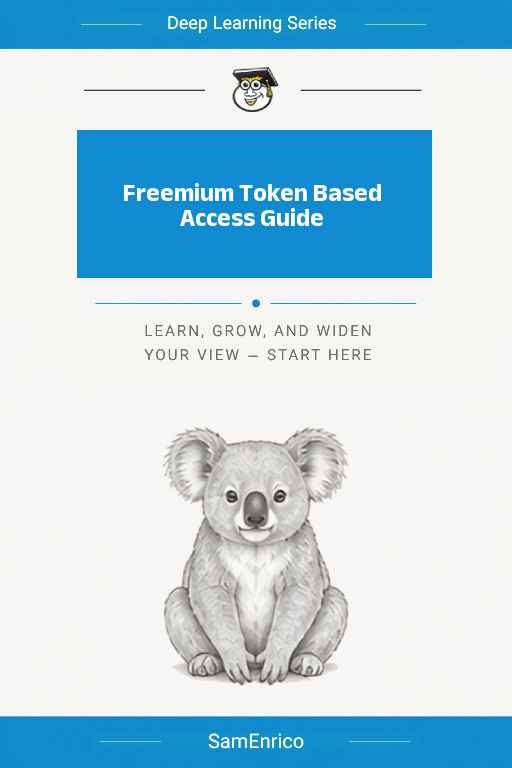
Freemium Token Based Access Guide eBook
Sell daily access tokens through local resellers,
Sell daily access tokens through local resellers, monetizing freemium users without requiring internet connection to purchase.
Formats
Free sample
Chapter 1: The Connectivity Mirage--–- In 2019, a mobile gaming company launched a freemium title in Lagos, Nigeria, with a sophisticated subscription model that had generated millions in London and Singapore. Within six months, they had achieved exactly forty-three paying subscribers from a user base of over two hundred thousand. The post-mortem revealed what local entrepreneurs already knew: the assumption that a smartphone implies an always-on, payment-ready consumer is one of the most expensive fallacies in modern technology.Welcome to the connectivity mirage. It is the seductive but false belief that because internet penetration statistics are rising and smartphone shipments are breaking records, the world is rapidly becoming a seamless digital marketplace where freemium monetization works everywhere the same way it works in San Francisco or Berlin. This chapter dismantles that mirage, reveals the structural limitations of traditional freemium models in regions with poor connectivity, low banking penetration, or cash-based economies, and introduces the architecture of offline-first monetization as the only viable path to reaching half the world.The Unbanked Reality That Changes Everything Let us begin with a number that should haunt every product manager who has ever designed a paywall that requires a credit card: 2.5 billion.
That is the number of unbanked adults on the planet according to the World Bank's Global Findex Database. These are people who have smartphones, who use mobile applications, who consume digital content, and who have cash in their pockets right now, but who do not possess a bank account or a credit card that can be used for in-app purchases.The unbanked are not uniformly poor. Many earn reliable wages, but those wages are paid in cash. Many have smartphones that cost more than the average monthly rent, but those phones were purchased with cash saved over months. Many use mobile money services like M-Pesa or GCash for basic transfers, but those services are often siloed, expensive for micropayments, or simply unavailable for cross-border digital purchases.
The critical point is this: the unbanked are not a problem to be solved by future banking infrastructure. They are a present market of billions who are actively excluded from the freemium economy because the freemium economy assumes a payment rail that does not exist for them.The cash economy that supports these 2.5 billion people is staggering in scale. The Global Cash Index estimates that over forty trillion dollars annually changes hands through physical currency. This is not a fringe parallel economy. In many countries, cash remains the dominant, not alternative, payment method.
In Egypt, over ninety percent of transactions are cash-based. In Vietnam, the figure exceeds eighty percent. In Mexico, despite rapid fintech growth, cash still accounts for more than eighty-five percent of point-of-sale transactions. When a freemium app presents a credit card form to a user in Cairo or Ho Chi Minh City or Guadalajara, it is essentially asking that user to exit the economy in which they live.The Connectivity Assumption Is A Lie The second destructive assumption is that internet connectivity is becoming universally available and reliable. The statistics tell a misleading story.
While it is true that over five billion people have access to mobile broadband networks according to the GSMA, "access" means something very different in practice than it does in theory.A user in rural Indonesia may have a 4G signal for four hours per day when the generator at the local tower has fuel. A user in suburban Mumbai may have data connectivity that is so expensive that they ration it to essential messaging and turn it off for everything else. A user in disaster-prone regions of the Philippines may have a smartphone that works perfectly but live in an area where network outages lasting days or weeks are a normal part of the yearly cycle. A student in South Africa may have a phone with a cracked screen that functions but has a battery that dies within three hours, making constant connectivity impossible.The concept of "average connectivity" is meaningless. What matters is connectivity at the exact moment of monetization.
Traditional freemium models require the user to be online at the precise moment they decide to pay, at the moment the payment is processed, and at the moment the premium access is granted. A user who makes a purchase decision while riding a train through a tunnel, who has the desire to pay but no signal, is a lost conversion. A user who walks into a store, sees a product they want, and cannot complete the transaction because the store's Wi Fi is down is a user who walks out without purchasing.This is not a theoretical problem. Large-scale data from mobile game publishers shows that between fifteen and forty percent of in-app purchase attempts fail due to connectivity issues, depending on the region. These are not users who refused to pay.
These are users who tried to pay and were rejected by the infrastructure. In the world of conversion optimization, where every percentage point of friction is fought with armies of growth hackers, leaving up to forty percent of would-be paying customers stranded by connectivity is not an edge case. It is a design flaw.The Subscription Fallacy in Cash Economies The third assumption that crumbles under scrutiny is the universality of the subscription model. Software-as-a-service recurring revenue is the holy grail of modern technology businesses for good reason: predictable income, high customer lifetime value, and efficient capital allocation. But subscriptions are culturally and economically mismatched for enormous populations.Consider the psychology of a daily wage earner.
A person who is paid in cash at the end of each day, who may earn 5onagooddayand5 on a good day and 5onagooddayand2 on a slow day, cannot commit to a $10 monthly subscription. The monthly commitment requires financial planning and stability that does not exist. However, that same person can easily spend twenty cents once per day for access to premium features. The unit economics are identical over thirty days, but the payment structure is radically different.This is the subscription fallacy: assuming that because subscriptions work for salaried, banked, connected users in wealthy economies, they are the optimal monetization model for everyone. In fact, subscriptions are actively hostile to the financial reality of the unbanked.
They create anxiety about forgotten renewals. They require the user to maintain a balance in a digital account that may be difficult to replenish. They punish irregular income with failed payments and lost access.Single-use tokens purchased with cash align with how billions of people already spend money: small, discrete, immediate transactions for immediate value. You do not subscribe to a bottle of water. You buy it when you are thirsty.
You do not subscribe to a bus ticket. You buy it when you need to travel. Freemium access, when properly designed, can follow the same pattern. You do not subscribe to premium features. You buy a token when you hit the paywall.The Privacy Premium That Nobody Is Monetizing There is a fourth group of users that the connectivity-reliant freemium model ignores, and it is perhaps the most underserved: the privacy-conscious.
These are users who have bank accounts, who have reliable internet, and who have the ability to pay with credit cards, but…
This is the end of the free sample. Get the eBook to keep going. Buy now
About this book
Details
- Author
- Hammons Gracia
- Publisher
- SamEnrico
- Language
- English
- Genre
- Non-Fiction, Business Brief
- Released
- 2026-06-01
- Pages (approx.)
- 148
- Available as
- eBook, Audiobook

Read better in the ZLOADR app
Your eBooks on your phone or tablet. Sign in with your SamEnrico account and start reading.
More by Hammons Gracia
 Self Esteem After Job Loss WorkbookHammons Gracia$11.99
 Gambling Addiction and VeteransHammons Gracia$11.99
 Child Loss and AtheismHammons Gracia$11.99
 Stimulant Use and Harm ReductionHammons Gracia$11.99
 HIIT for Diabetes GuideHammons Gracia$11.99
 Functional Master GuideHammons Gracia$11.99
 Geriatric WithdrawalHammons Gracia$11.99
 Gambling Addiction And Forensic AccountingHammons Gracia$11.99
 The Shadow of the Steppe: Tamerlane's March to the Gates of Delhi (1398)Hammons Gracia$11.99
 The Merlin Code: A Spy in CamelotHammons Gracia$11.99
 How to Become a Rougher OperatorHammons Gracia$11.99
 A Collector's Handbook to the Renault JuvaquatreHammons Gracia$11.99
You may also like
 Hong Kong Handover 1997Dunn Johnnie$11.99
 Zumba For Postnatal Recovery CourseNeal Christian$11.99
 Zumba for BeginnersLadner Nikia$11.99
 YouTube Comment Mining GuideHumes Pandora$12.99
 Worry Box MeditationCarlin Rudy$11.99
 Workplace Stress MeditationNguyen Lynn$11.99
 Workplace Stress and Sleep RepairHawley Ivory$11.99
 Workplace Perfectionism CureDelaney Jeffry$11.99
 Workplace Injustice Anger GuideWallen Isabelle$11.99
 Work Addiction and Burnout LinkGreenwood Ester$11.99
 Women in Yoga and WellnessBeattie Galina$11.99
 Women in Stand Up ComedyChun Evangeline$11.99