

Freemium Referral Program Guide
Build referral programs that work offline and rewa
Build referral programs that work offline and reward low-bandwidth users.
Formats
About this book
Free sample
Chapter 1: The Bandwidth Bias...–- In 2017, a farming cooperative in rural Maharashtra, India, launched a beautifully designed mobile app. It had gamified referral buttons, social share links with pre-populated text, and a real-time leaderboard. The product was excellent. The farmers loved it when they could use it. The referral program offered generous rewards – free weather alerts and pest control advice for every friend who signed up.
Within three months, the program had generated exactly forty-seven referrals. Forty-seven. From a pilot group of two thousand users. The app had been downloaded, the referral links had been generated, but they rotted in the digital equivalent of a dead letter office: SMS drafts folders, unsent Whats App messages, and the vague memories of farmers who had every intention of sharing a link but never got around to it because the signal at the village bus stop dropped to zero bars.The post-mortem was painful but instructive. The product team had assumed that if they built a low-friction digital referral mechanism – one click, one tap, one share – the referrals would flow.
They had not accounted for the fact that their users lived in a world where connectivity was not a given but a sporadic gift. They had built for a reality that did not exist for their customers. This is the Bandwidth Bias: the unexamined assumption that all users have reliable, always-on internet access, Java Script-enabled browsers, and the ability to click links at any moment. It is the single greatest reason why referral programs fail in rural areas, emerging economies, industrial zones, underground transit systems, and even affluent neighborhoods with spotty cellular coverage.This chapter dismantles that bias. It introduces the Connectivity Spectrum, a five-level framework that will guide every decision in this book.
It distinguishes between Digital Virality (the world of share buttons and tracked links) and Physical Virality (the world of spoken words, printed codes, and SMS). It introduces the Offline-First Storage Pattern, a unified architectural principle that will appear in every subsequent chapter. And it ends with the Bandwidth Audit, a diagnostic tool that will force you to confront the…
This is the end of the free sample. Get the eBook to keep going. Buy now
Contents
- Chapter 1
- Chapter 2
- Chapter 3
- Chapter 4
- Chapter 5
- Chapter 6
- Chapter 7
- Chapter 8
- Chapter 9
- Chapter 10
- Chapter 11
- Chapter 12
Details
- Author
- Jung Charlena
- Publisher
- SamEnrico
- Language
- English
- Genre
- Non-Fiction, Business Brief
- Released
- 2026-06-01
- Pages (approx.)
- 160
- Available as
- eBook, Audiobook

Read better in the ZLOADR app
Your eBooks on your phone or tablet. Sign in with your SamEnrico account and start reading.
More by Jung Charlena
 The Gacy Murder KitJung Charlena$11.99
 Self Talk For ForeclosureJung Charlena$11.99
 The Reformation Battle HymnsJung Charlena$11.99
 TB And Mental Health Dual Access GuideJung Charlena$11.99
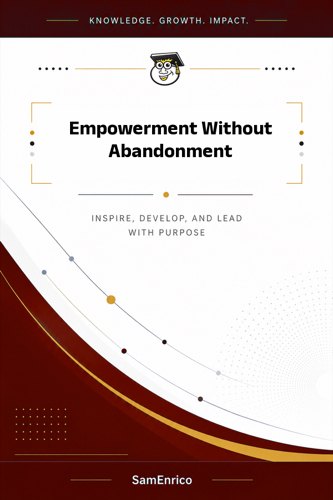 Empowerment Without AbandonmentJung Charlena$11.99
 Blue Light and Memory SleepJung Charlena$11.99
 Chunking Computer CodeJung Charlena$11.99
 TM For SeniorsJung Charlena$11.99
 The Sobriety Identity ShiftJung Charlena$11.99
 The Day the Music Died... Twice: The Forgotten Concert That Saved a GenerationJung Charlena$11.99
 Magellan's Gambit: Storms, Mutiny, and the First Voyage Around the WorldJung Charlena$11.99
 Whiskers of War: The Secret Lives of WWII’s Heroic CatsJung Charlena$11.99
You may also like
 Franchising Your Local Brand Across Borders Child Labor LawsWilson Ida$11.99
 Franchising Your Local Brand Across Borders Beneficial OwnershipGordon Debbie$11.99
 Franchising Your Local Brand Across Borders Trade SecretsKeener Tatum$11.99
 Franchising Your Local Brand Across Borders Performance DashboardsCota Lisette$11.99
 Franchising Your Local Brand Across Borders Parallel ImportsBailey Wallace$11.99
 Franchising Your Local Brand Across Borders Packaging RegulationsRandle Adaline$11.99
 Franchising Your Local Brand Across Borders Know Your CustomerMyers Adam$11.99
 Franchising Your Local Brand Across Borders Human TraffickingFranklin Lee$11.99
 Franchising Your Local Brand Across Borders Government IncentivesLogsdon Beckie$11.99
 Franchising Your Local Brand Across Borders Carbon FootprintMcfarlane Margot$11.99
 Franchising Your Local Brand Across Borders Bribery LawsStarr Cortney$11.99
 Franchising Your Local Brand Across Borders Best Practice SharingBryson Vernia$11.99