
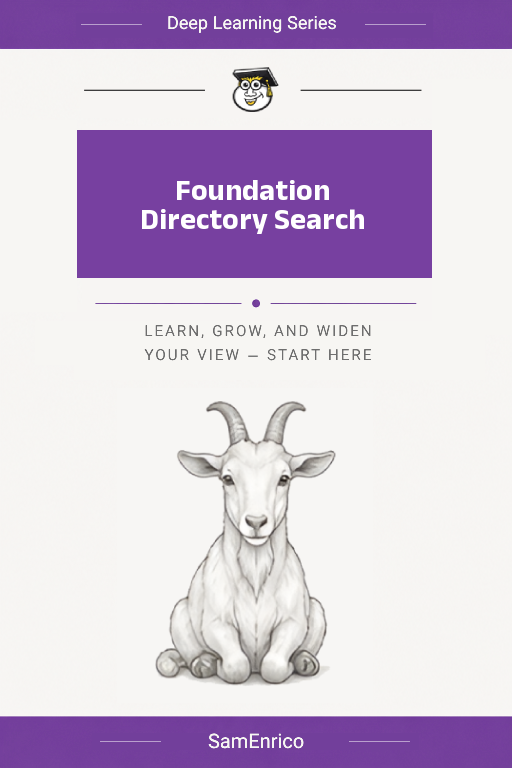
Non-FictionNon-Obvious CareerFoundation ResearchGrant Sourcing
Foundation Directory Search eBook
Find 50 foundations giving to your cause using Can
by Brady Leland
Find 50 foundations giving to your cause using Candid's free search tool.
Formats
Free sample
Chapter 1: The $7,000 Lie--–- The email arrived on a Tuesday. Sarah, the executive director of a small youth literacy nonprofit in Ohio, had just maxed out her credit card to purchase a $1,200 annual subscription to a popular grant database. Her board had pressured her for months. "Everyone uses it," they said. "How will you find funders without it?"Six months later, she had submitted exactly four grant proposals.
Two were rejected. Two never received a reply. She had spent countless nights scrolling through thousands of foundation profiles, exporting lists she didn't know how to use, and feeling like a failure. The software company sent her a renewal notice. She couldn't afford it.
She cried at her desk.Then a volunteer mentioned something offhand: "Have you tried the free Foundation Directory at the public library?"Sarah almost laughed. Free? The same database she had been paying for? Impossible.She walked to the downtown library the next morning. A librarian sat her down at a terminal, logged into Candid's Foundation Directory with a free institutional license, and said, "You have full access.
No limits. Take all the time you need."Within two hours, Sarah had found 47 foundations that gave specifically to literacy programs in her county. She had exported their contact information, reviewed their past grants, and identified the program officers by name. She had done in one morning what six months of paid subscription had failed to deliver.The difference was not the tool. The difference was knowing how to use it.This book exists because Sarah's story is not rare.
It is the rule. Thousands of nonprofit leaders are paying thousands of dollars for access to data that is already free, then failing to find funders not because the money is missing, but because they were never taught how to search.This is the $7,000 lie. And this chapter will expose it.The Anatomy of a False Premise The fundraising software industry has built a billion-dollar market on a single, carefully cultivated belief: that finding foundation grants requires expensive tools, exclusive data, and professional subscriptions. This belief is false. It has always been false.
But it persists because it benefits the sellers, not the seekers.Let us examine the three pillars of this lie.Pillar One: "You need access to our exclusive database."Every foundation that files a Form 990-PF with the IRS is required by law to make that document public. The data inside those forms—funder names, grant amounts, recipient organizations, board members, giving priorities—is not proprietary. It is not exclusive. It is public record. Paid databases repackage public information, add a search interface, and charge you for the convenience of not having to visit the IRS website yourself.Candid's Foundation Directory, the industry standard, is no exception.
The full version contains the same public data that appears on the free version available at over 400 partner libraries nationwide. The paid subscription adds convenience features: saved searches that persist across sessions, cloud-synced notes, and the ability to export larger batches of data from your home computer. It adds zero exclusive foundation records.Zero.Pillar Two: "Free tools are too limited to be useful."This lie depends on your ignorance of what the free in-library version actually offers. At any Candid partner location—typically a public library, community foundation, or nonprofit resource center—you receive:Unlimited searches across the entire Foundation Directory database Full access to all 990-PF documents, including Schedule I (grants made) and Part XV (officers and directors)The ability to export up to 25 full records per session, or 100 lines of data as a CSVThe same search filters (geographic, subject, population, support strategy) as the paid version The "Recipients" tab for reverse-engineering funder lists from similar organizations The only meaningful difference is persistence. A paid subscription saves your notes and searches in the cloud.
The free version saves your search parameters (if you create a free personal account) but your typed notes will disappear when you close the browser on a public computer. That is not a data limitation. That is a workflow limitation. Bring a notebook or a USB drive. Problem solved.Pillar Three: "Professional fundraisers use paid tools.
You should too."This is an appeal to authority disguised as practical advice. The truth is that professional fundraisers use paid tools because their employers pay for them, not because they are necessary. A development director at a major hospital with a $500,000 fundraising budget will subscribe to a paid database because the cost is negligible relative to their overhead. A small nonprofit with a single development staff member and a shoestring budget cannot afford that logic.More importantly, the most sophisticated fundraisers I know do not rely on paid databases at all. They rely on relationships, on public records, on the 990 hacks you will learn in Chapter 6, and on the reverse-engineer method from Chapter 5.
The paid database is a convenience, not a competitive advantage. The competitive advantage is knowing what to search for and how to interpret what you find.The Real Cost of Ignorance When Sarah paid $1,200 for her subscription, the direct financial cost was painful but survivable. The indirect costs were devastating.First, she spent six months searching incorrectly. She used Boolean operators and complex filters because an online tutorial told her to. She ended up with zero results for entire weeks.
She concluded that no foundations funded literacy in Ohio. This was wrong. There were dozens. She simply did not know how to find them.Second, she wasted her board's trust. They had pushed for the subscription.
When it failed to produce results, they lost confidence in her leadership. She lost confidence in herself. The emotional toll of grant seeking—the rejection, the silence, the sense of spinning wheels—multiplied when she believed she was using the best tool available and still failing.Third, she delayed programs. The $25,000 grant she eventually won from a local family foundation (found during that first library visit) would have funded a summer reading program. That program started six months late because she spent half a year chasing the wrong funders with the wrong method.This is the 7,000lie.Notbecause Sarahspent7,000 lie.
Not because Sarah spent 7,000lie.Notbecause Sarahspent7,000—she spent $1,200. But because the opportunity cost, the lost time, the burned confidence, and the delayed impact added up to something far more expensive.I have seen this pattern repeat across thousands of organizations. A food bank in Georgia (you will meet them in Chapter 4) spent 3,000onamulti−usersubscriptionbeforeavolunteerlibrarianshowedthemthefreeversion.Anenvironmentalgroupin Oregon(Chapter5)hiredagrantwriterfor3,000 on a multi-user subscription before a volunteer librarian showed them the free version. An environmental group in Oregon (Chapter 5) hired a grant writer for 3,000onamulti−usersubscriptionbeforeavolunteerlibrarianshowedthemthefreeversion.Anenvironmentalgroupin Oregon(Chapter5)hiredagrantwriterfor5,000 who produced zero funded proposals before they discovered the reverse-engineer method. A youth program in Detroit (Chapter 11) renewed their paid subscription for three consecutive years before realizing they could access the same data for free.Add those numbers.
They approach seven thousand dollars in wasted spending across just three organizations. Multiply by the estimated 1.5 million nonprofits in the United States, and the scale of waste becomes staggering.This book is not merely about saving money. It is about redirecting resources from software subscriptions to mission-critical programs. Every dollar you…
This is the end of the free sample. Get the eBook to keep going. Buy now
About this book
Details
- Author
- Brady Leland
- Publisher
- SamEnrico
- Language
- English
- Genre
- Non-Fiction, Non-Obvious Career, Foundation Research, Grant Sourcing
- Released
- 2026-06-01
- Pages (approx.)
- 149
- Available as
- eBook, Audiobook

Read better in the ZLOADR app
Your eBooks on your phone or tablet. Sign in with your SamEnrico account and start reading.
More by Brady Leland
 Nightmare Processing DBTBrady Leland$11.99
 Surgical Resident Burnout GuideBrady Leland$11.99
 Suicide Hotline Responder GuideBrady Leland$11.99
 The Breath For Public SpeakingBrady Leland$11.99
 Inner Safe Room GuideBrady Leland$11.99
 South Africa NYDA Grant GuideBrady Leland$11.99
 Paraphrasing for UnderstandingBrady Leland$11.99
 Gandhi Salt MarchBrady Leland$11.99
 Dreamwalker Indigenous Guidance ManualBrady Leland$11.99
 The Silk Road Reborn: Rediscovering Central Asia's Lost Spice KingdomsBrady Leland$11.99
 The House Always Wins: The Untold Rise and Fall of Steve Wynn’s Las Vegas EmpireBrady Leland$11.99
 How to Start a Motivational Speakers - Independent BusinessBrady Leland$11.99
You may also like
 Hong Kong Handover 1997Dunn Johnnie$11.99
 Zumba For Postnatal Recovery CourseNeal Christian$11.99
 Zumba for BeginnersLadner Nikia$11.99
 YouTube Comment Mining GuideHumes Pandora$12.99
 Worry Box MeditationCarlin Rudy$11.99
 Workplace Stress MeditationNguyen Lynn$11.99
 Workplace Stress and Sleep RepairHawley Ivory$11.99
 Workplace Perfectionism CureDelaney Jeffry$11.99
 Workplace Injustice Anger GuideWallen Isabelle$11.99
 Work Addiction and Burnout LinkGreenwood Ester$11.99
 Women in Yoga and WellnessBeattie Galina$11.99
 Women in Stand Up ComedyChun Evangeline$11.99