
Non-FictionSelf-HelpForgiveness
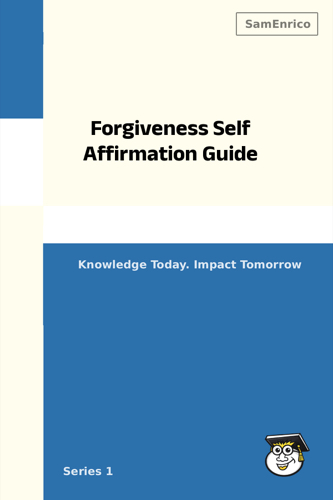
Forgiveness Self Affirmation Guide eBook
Release resentment through compassionate self talk
Release resentment through compassionate self talk using this practical emotional freedom workbook.
Formats
Free sample
Chapter 1: The Hot Coal--–- You are holding something right now that you believe is protecting you. It feels like armor. It feels like justice. It feels like the only reasonable response to what was done to you. But here is the truth that every best-selling forgiveness workbook eventually reveals: that armor is actually a cage, and the justice you are waiting for may never arrive.
What you are holding is a hot coal. And you are the one getting burned.This is the central paradox of resentment. The person who hurt you may have moved on months or years ago. They may be sleeping peacefully, laughing with friends, or completely unaware that you are still rehearsing the argument in your head at three in the morning. Meanwhile, your body is paying the price.
Your mind is occupied. Your emotional energy is being drained by a tenant who stopped paying rent long ago. The Buddhist teaching of the hot coal is not a metaphor about morality or spiritual superiority. It is a physiological fact. Holding a grudge does not punish the person who wronged you.
It punishes you. Every single day.If you picked up this book, you already know this on some level. You are tired. Not the kind of tired that sleep can fix, but the bone-deep exhaustion of carrying a story that has become too heavy. You have probably tried to "just get over it" and failed.
You have probably been told to forgive by well-meaning people who do not understand the depth of your wound. You may have tried to bury the resentment, only to have it surface at the worst possible moments—during a family dinner, in the middle of a work presentation, or in the quiet seconds before you fall asleep. You are not broken. You are not weak. You are carrying something that was never meant to be carried forever.
And this chapter is where you finally put it down.The Physiology of Resentment: Your Body Knows What Your Mind Denies Before we talk about healing, we need to talk about what resentment is actually doing to your physical body. This is not abstract psychology. This is biology. When you hold onto a grudge, your brain activates the same stress response system that would activate if you were being chased by a predator. Your amygdala—the brain's alarm system—sends a signal to your hypothalamus, which tells your adrenal glands to release cortisol and adrenaline.
In a genuine emergency, this response saves your life. It gives you the energy to fight or flee. But when the threat is a memory—a conversation that happened five years ago, a betrayal that cannot be undone, an injustice that was never repaired—that stress response does not turn off. It becomes chronic.The research is unequivocal. Chronic resentment is associated with elevated baseline cortisol levels, which means your body is in a low-grade state of emergency all the time.
Elevated cortisol suppresses your immune system, making you more susceptible to colds, infections, and slower wound healing. It increases blood pressure and heart rate, putting strain on your cardiovascular system. It disrupts sleep architecture, which means even when you sleep eight hours, you are not getting the restorative deep sleep or REM sleep your brain needs to process emotions. Over time, chronic resentment has been linked to increased rates of depression, anxiety disorders, autoimmune conditions, and even cardiovascular disease.One landmark study from the University of California, Davis, followed participants who were asked to recall a time they felt deeply wronged. While recalling the memory, researchers measured heart rate, blood pressure, and muscle tension.
Then participants were guided through a forgiveness exercise. After the exercise, the same physiological measurements were taken again while recalling the same memory. The results were striking: heart rate decreased, blood pressure normalized, and muscle tension released—not because the memory changed, but because the emotional charge attached to the memory changed. The offense was still real. The harm was still real.
But the body stopped treating it as a present-tense threat.This is the first and most important lesson of this book: forgiveness is not about letting someone off the hook. It is about taking your body off the hook. It is about telling your nervous system that the event is over, that you are no longer in danger, and that you can stop spending your limited physiological resources on a past that cannot be changed.The Ego's Investment in Being Right If resentment is so physically damaging, why do we hold onto it so tightly? Why does it feel so dangerous to let go? The answer lies in the ego—not the Freudian ego of psychoanalysis, but the everyday sense of self that needs to be right, needs to be justified, and needs to have its pain validated.
Holding a grudge serves a psychological function, and until you understand that function, you will not be able to release it. The function is identity.When someone wrongs you, and you hold onto that wrong, you construct an identity around it. You become the person who was betrayed, the person who was abandoned, the person who was mistreated. That identity, painful as it is, is also stable. It gives you a story to tell yourself about why your life turned out the way it did.
It gives you an explanation for your struggles that does not require you to change anything about yourself. And it gives you moral superiority—a dangerous comfort. As long as you are the wronged party and they are the wrongdoer, you never have to look at your own flaws. You never have to ask hard questions about your own contributions to the situation. You are simply the victim, and they are simply the villain.
The story is clean. The story is simple. The story is also a prison.The ego resists forgiveness because forgiveness feels like surrender. It feels like saying, "What you did was okay," which is not what forgiveness means. It feels like saying, "I was wrong to be hurt," which is not true.
It feels like losing a battle that you have been fighting for years, and the ego would rather be right and miserable than wrong and free. This is not a character flaw. This is how the human brain works. The brain is wired to prefer predictable pain over unpredictable peace. The devil you know, as the saying goes, is better than the devil you do not.But here is what the ego does not tell you: being right is costing you everything.
You can be right about what was done to you, and you can also be exhausted, lonely, and stuck. The two are not mutually exclusive. The question this book asks is not whether you are justified in your resentment. You probably are. The question is whether being justified is worth the price you are paying.
And only you can answer that.The Great Myth of "Forgive and Forget"One of the most damaging misconceptions about forgiveness is the idea that to forgive, you must forget. This myth has been repeated so often in popular culture, religious teachings, and well-meaning advice that most…
This is the end of the free sample. Get the eBook to keep going. Buy now
About this book
Details
- Author
- Higdon Yessenia
- Publisher
- SamEnrico
- Language
- English
- Genre
- Non-Fiction, Self-Help, Forgiveness
- Released
- 2026-06-07
- Pages (approx.)
- 145
- Available as
- eBook, Audiobook

Read better in the ZLOADR app
Your eBooks on your phone or tablet. Sign in with your SamEnrico account and start reading.
More by Higdon Yessenia
 Maharishi TM Instruction PrimerHigdon Yessenia$11.99
 Yahoo's Epsilon ConnectionHigdon Yessenia$11.99
 Thimerosal Preservative FactsHigdon Yessenia$11.99
 The John Wayne Gacy Detective TeamHigdon Yessenia$11.99
 The Chassepot Rifle: The Weapon That Won the Franco-Prussian WarHigdon Yessenia$11.99
 Understanding Multiple Joint Dislocations Metaphyseal DysplasiaHigdon Yessenia$17.99
 AI Working Capital AnalysisHigdon Yessenia$12.99
 Inditex Group GuideHigdon Yessenia$12.99
 Surf InstructorHigdon Yessenia$11.99
 How to Start a Bulk Carrier (cargo Ship) Business (Beginners Guide)Higdon Yessenia$11.99
You may also like
 Hong Kong Handover 1997Dunn Johnnie$11.99
 Zumba For Postnatal Recovery CourseNeal Christian$11.99
 Zumba for BeginnersLadner Nikia$11.99
 YouTube Comment Mining GuideHumes Pandora$12.99
 Worry Box MeditationCarlin Rudy$11.99
 Workplace Stress MeditationNguyen Lynn$11.99
 Workplace Stress and Sleep RepairHawley Ivory$11.99
 Workplace Perfectionism CureDelaney Jeffry$11.99
 Workplace Injustice Anger GuideWallen Isabelle$11.99
 Work Addiction and Burnout LinkGreenwood Ester$11.99
 Women in Yoga and WellnessBeattie Galina$11.99
 Women in Stand Up ComedyChun Evangeline$11.99