
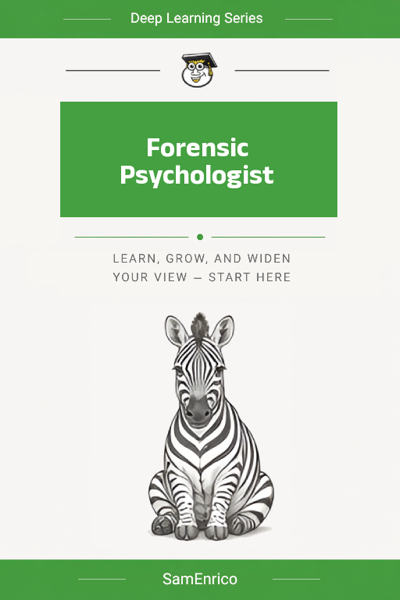
Non-FictionInformativeEducational
Forensic Psychologist Audiobook
A Coursebook on Forensic Psychologist
A Coursebook on Forensic Psychologist
Formats
Free sample
Chapter 1: The Double-Edged Gavel--– The first time I stepped into a maximum-security forensic hospital, the warden offered me a piece of advice that has haunted every evaluation I have conducted since: “Remember, Doctor, your job is not to heal them. Your job is to help us decide what to do with them.” Those words encapsulate the central tension of forensic psychology—the double-edged gavel that every practitioner must learn to wield. Unlike a clinical psychologist in a private practice, who holds the client’s well-being as the singular priority, the forensic psychologist serves two masters: the legal system and the principles of science. These masters often demand opposite allegiances. Therapy asks, “How can I help this person heal?” Forensics asks, “Is this person dangerous?
Responsible? Competent?” The two questions are not merely different; they are sometimes irreconcilable. This chapter establishes the foundational identity of the forensic psychologist, mapping the terrain where psychology and law intersect, conflict, and occasionally collaborate. We will explore the historical evolution of this hybrid discipline, the ethical fault lines that define its practice, and the critical distinctions between clinical and experimental forensic psychology. By the end, you will understand why the forensic psychologist must be part scholar, part detective, and part diplomat—and why the most dangerous mistake is confusing the role of healer with the role of judge.Defining the Uncomfortable Hybrid Forensic psychology is not a single profession but a spectrum of activities united by their relationship to the legal system.
At its broadest definition, forensic psychology includes any application of psychological knowledge, methods, or principles to questions arising in legal contexts. This encompasses everything from assessing a defendant’s competency to stand trial, to researching the reliability of eyewitness memory, to developing treatment programs for incarcerated sex offenders, to consulting on jury selection in civil litigation. However, within this broad church, two major traditions have emerged, and understanding their differences is essential for anyone who wishes to call themselves a forensic psychologist.The clinical tradition of forensic psychology focuses on the direct assessment, evaluation, and treatment of individuals involved in the legal system. Clinical forensic psychologists administer psychological tests, conduct structured interviews, review collateral records (police reports, medical histories, school records), and formulate opinions about mental states, risk factors, and competencies. They then communicate those opinions in written reports and oral testimony.
These practitioners work in forensic hospitals, prisons, jails, community mental health centers, court clinics, and private practice. Their day-to-day work…
This is the end of the free sample. Get the Audiobook to keep going. Buy now
About this book
Details
- Author
- Barrera Shonda
- Publisher
- SamEnrico
- Language
- English
- Genre
- Non-Fiction, Informative, Educational
- Released
- 2026-05-06
- Pages (approx.)
- 158
- Available as
- eBook, Audiobook

Listen in the VoxFlicks app
Audiobooks and audio dramas wherever you go. Sign in with your SamEnrico account and press play.
More by Barrera Shonda
 Phil Donahue Audience Mic StoryBarrera Shonda$11.99
 Nobel Physics GiantsBarrera Shonda$11.99
 Chasing Losses in GamblingBarrera Shonda$11.99
 Boss Criticism Anger Management CourseBarrera Shonda$11.99
 The Daily Time Blocking WorkbookBarrera Shonda$11.99
 The Last Gold Rush: How a 1933 Executive Order Crushed a NationBarrera Shonda$11.99
 Understanding PyaemiaBarrera Shonda$17.99
 Palantir GuideBarrera Shonda$12.99
 Paystack African Exporters GuideBarrera Shonda$12.99
 How to Start a Chestnut Growing Business (Beginners Guide)Barrera Shonda$11.99
You may also like
 Hong Kong Handover 1997Dunn Johnnie$11.99
 Zumba For Postnatal Recovery CourseNeal Christian$11.99
 Zumba for BeginnersLadner Nikia$11.99
 YouTube Comment Mining GuideHumes Pandora$12.99
 Worry Box MeditationCarlin Rudy$11.99
 Workplace Stress MeditationNguyen Lynn$11.99
 Workplace Stress and Sleep RepairHawley Ivory$11.99
 Workplace Perfectionism CureDelaney Jeffry$11.99
 Workplace Injustice Anger GuideWallen Isabelle$11.99
 Work Addiction and Burnout LinkGreenwood Ester$11.99
 Women in Yoga and WellnessBeattie Galina$11.99
 Women in Stand Up ComedyChun Evangeline$11.99