
Non-FictionSelf-HelpForeclosure
Foreclosure Stress Coping eBook
Manages home loss emotions and finds alternatives.
Manages home loss emotions and finds alternatives.
Formats
Free sample
Chapter 1: The Inventory of What the House Gave You--–- The letter arrived on a Tuesday. You remember exactly where you were standing—kitchen, probably, near the sink, because that’s where bad news always finds you. The envelope was thick. Certified mail. You already knew what it was because your stomach dropped before your fingers touched the paper.
For three days, it sat on the counter. You walked past it seventeen times. You made coffee next to it. You fed the kids dinner while it watched from the corner of your eye. On day four, you opened it.
And something inside you cracked.That crack is not a flaw. It is not a sign of weakness or failure or poor character. That crack is the sound of a deeply embedded cultural lie breaking apart under the weight of reality. The lie is this: that the house you live in is the same thing as the person you are. That a mortgage is a moral report card.
That losing your house means losing your worth.This chapter is not about saving your house. It is not about walking away from it. It is about something that must happen before either of those decisions can be made responsibly. This chapter is about separating your identity from your property. Because right now, those two things are tangled together like headphones in a pocket.
And until you untangle them, every decision you make will come from a place of shame, fear, or desperate hope—none of which are good advisors.We are going to do something unusual in a personal finance book. We are going to start with a funeral. Not a real one. A symbolic one. Because what you are losing—or may lose—is not just a structure with walls and a roof.
You are losing a story you told yourself about who you would become. And that story needs to be mourned before you can write a new one.The Cultural Weight of Homeownership Let us be honest about the pressure you have been under. It did not start the day you missed your first payment. It started decades ago, probably before you were born, when the idea of homeownership became tangled up with the idea of being a successful adult. Your parents believed it.
Their parents believed it. Television, movies, political speeches, and every real estate commercial ever made have reinforced the same message: renting is throwing money away. A house is an investment. Owning a home is the American dream.But here is what no one tells you. The American dream was designed in an era when homes cost three times the average annual income, not seven or eight or twelve times.
It was designed when a manufacturing job could support a family of four on a single income. It was designed before interest rates fluctuated wildly, before adjustable-rate mortgages existed, before the 2008 financial crisis revealed that banks were selling bundles of bad loans like snake oil. The dream was real once. Then the rules changed, but the cultural script did not.So here you are, holding a default notice, and the voice in your head is not saying "I have a cash flow problem." It is saying "I am a failure." That voice is not your friend. That voice is the echo of a thirty-year marketing campaign that convinced you that a mortgage is a virtue.Let me be very clear.
The bank does not think you are a bad person. The bank does not think anything about you at all. The bank has a spreadsheet. Your name is a row. That row has numbers.
When the numbers fall below a certain threshold, a letter is generated automatically. There is no judgment in that letter. There is no morality in that letter. There is only math. The bank does not hate you.
The bank does not know you exist as a person. You are a file.The reason this distinction matters is that shame is the single greatest obstacle to clear decision-making. Shame makes you hide. Shame makes you avoid the mail, ignore the phone calls, and pretend that if you just close your eyes hard enough, the problem will disappear. Shame makes you do nothing while the foreclosure clock ticks.
And shame is entirely based on a lie. You are not your house. Your house is an asset. Assets go up and down in value. Sometimes you sell them.
Sometimes you lose them. That is not a character assessment. That is capitalism.The Difference Between a House, an Emotional Home, and Homeownership Before we go any further, we need to agree on three definitions. Throughout this book, these terms will be used with precision. They are not interchangeable.A house is a physical structure with walls, a roof, plumbing, electrical wiring, and a mortgage attached to it.
A house is an asset. It can be bought and sold. It can be appraised. It can be foreclosed upon. It has no feelings about you.
You do not need to have feelings about it. A house is a thing.An emotional home is the feeling of safety, belonging, and identity that you carry with you wherever you go. Your emotional home lives in your routines, your relationships, your favorite coffee shop, the park where you walk your dog, the sound of your child laughing, the ritual of making tea before bed. Your emotional home cannot be foreclosed. No bank can take it.
You can lose your house and still have an emotional home. In fact, many people who have never owned a house have rich, secure emotional homes. And many people who own million-dollar properties are emotionally homeless.Homeownership is the financial and legal state of owning property. It comes with certain rights (equity, tax deductions, the ability to modify the property) and certain responsibilities (mortgage payments, maintenance, property taxes). Homeownership is a tool.
It is not a moral achievement. It is not a measure of your worth as a human being. It is a contractual arrangement between you and a lender. That is all.Right now, these three things are tangled in your mind. You believe that losing your house means losing your emotional home.
It does not. You believe that failing at homeownership means you are a failure as a person. It does not. The work of this chapter is to untangle them. Once they are separate, you will be able to look at your situation clearly.
Until they are separate, you are making decisions while wearing shame-colored glasses.The Inventory of What the House Gave You Earlier in this book's outline, there was mention of a "goodbye letter." That exercise has been moved to Chapter 7, where it belongs—for those who have decided to leave. This chapter uses a different exercise. It is called the Inventory of What the House Gave You. Unlike a goodbye letter, which is about closure and departure, this inventory is about gratitude without attachment. It is about acknowledging what the house provided without merging your identity with it.Take out a piece of paper.
Not a phone. Not a laptop. Paper. Pen. There is something about the physical act of writing that engages the…
This is the end of the free sample. Get the eBook to keep going. Buy now
About this book
Details
- Author
- Stock Cherrie
- Publisher
- SamEnrico
- Language
- English
- Genre
- Non-Fiction, Self-Help, Foreclosure
- Released
- 2026-06-06
- Pages (approx.)
- 132
- Available as
- eBook, Audiobook

Read better in the ZLOADR app
Your eBooks on your phone or tablet. Sign in with your SamEnrico account and start reading.
More by Stock Cherrie
 The Self Esteem Journal for WorkStock Cherrie$11.99
 Teamster Boss Hoffa Assassination Contract TheoryStock Cherrie$11.99
 Yoga Class AnxietyStock Cherrie$11.99
 Israeli Refusenik MemoirStock Cherrie$11.99
 KPI Setting GuideStock Cherrie$11.99
 Telegram Channel FOMO ControlStock Cherrie$11.99
 Job Loss and TherapyStock Cherrie$11.99
 Jack Nicklaus and the Green Jacket: The Master of Augusta's Golden AgeStock Cherrie$11.99
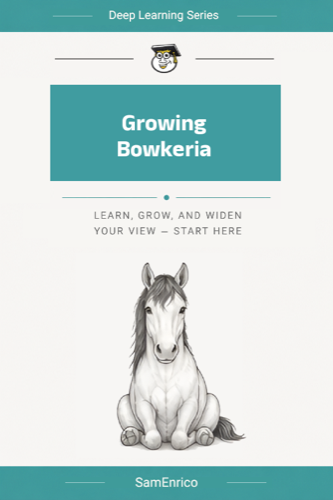 Growing BowkeriaStock Cherrie$11.99
 ACS Citation Chemistry GuideStock Cherrie$12.99
 UAE 5% VAT Rate ApplicationStock Cherrie$12.99
 A Collector's Handbook to the Rover 16Stock Cherrie$11.99
You may also like
 Hong Kong Handover 1997Dunn Johnnie$11.99
 Zumba For Postnatal Recovery CourseNeal Christian$11.99
 Zumba for BeginnersLadner Nikia$11.99
 YouTube Comment Mining GuideHumes Pandora$12.99
 Worry Box MeditationCarlin Rudy$11.99
 Workplace Stress MeditationNguyen Lynn$11.99
 Workplace Stress and Sleep RepairHawley Ivory$11.99
 Workplace Perfectionism CureDelaney Jeffry$11.99
 Workplace Injustice Anger GuideWallen Isabelle$11.99
 Work Addiction and Burnout LinkGreenwood Ester$11.99
 Women in Yoga and WellnessBeattie Galina$11.99
 Women in Stand Up ComedyChun Evangeline$11.99