
Non-FictionHealth & WellnessFood Challenges
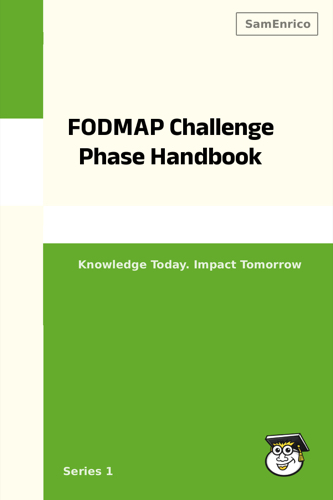
FODMAP Challenge Phase Handbook eBook
Reintroduce high FODMAP foods systematically using
Reintroduce high FODMAP foods systematically using this practical structured testing workbook.
Formats
Free sample
Chapter 1: The Elimination Trap--–- You have been told to eliminate. To restrict. To avoid. For weeks, maybe months, you have followed the low-FODMAP diet with discipline, and for the first time in years, your body feels quiet. The bloating has subsided.
The urgent dashes to the bathroom have stopped. The pain that once dictated your daily schedule has faded into a distant memory. You should feel victorious. Instead, you feel terrified.The terror is quiet but persistent. It whispers to you every time you consider adding back a high-FODMAP food.
What if the symptoms return? What if this one bite of garlic sends you back to square one? What if you have been wrong all along, and the only thing keeping you functional is this narrow, restrictive diet? So you stay. You stay in elimination for an extra week, then an extra month, then a year.
The low-FODMAP diet, which was designed as a temporary diagnostic tool, has become your permanent reality.This chapter is here to pull you out of that trap. Not with shame, but with understanding. The elimination comfort zone is real, and it is powerfully seductive. But staying there indefinitely is not just unnecessary—it is actively harmful to your long-term health, your relationship with food, and your quality of life. This chapter will reframe everything you think you know about the low-FODMAP journey, introduce the core scientific concepts that make reintroduction possible, and prepare your mind for the structured, empowering work ahead.The Hidden Danger of Staying Too Long The low-FODMAP diet was never designed to be a permanent lifestyle.
When researchers at Monash University first developed this dietary approach in the early 2000s, they created it as a three-phase protocol: elimination, reintroduction, and personalization. The elimination phase was intended to last only two to six weeks—just long enough to confirm that FODMAPs were contributing to your symptoms and to establish a clean baseline. That is it. Six weeks maximum in most clinical protocols.Yet clinical data and patient communities tell a different story. Surveys of low-FODMAP dieters consistently find that a significant percentage remain in the elimination phase for three months, six months, or even years.
Some never leave at all. Why? Because the elimination phase works so well that the fear of losing that relief overrides the rational understanding that the diet was meant to be temporary.This prolonged restriction comes with real costs that are rarely discussed in online forums or quick-start guides. Let me name them clearly.Nutritional deficiencies. The low-FODMAP diet eliminates or severely restricts several food groups that are rich in essential nutrients.
Legumes, eliminated during the challenge phase, are among the best dietary sources of fiber, iron, and folate. Many high-FODMAP fruits and vegetables—apples, cherries, cauliflower, mushrooms—contain antioxidants and phytonutrients that support immune function and reduce inflammation. Dairy products, restricted for those testing lactose, provide calcium and vitamin D. When you stay in elimination indefinitely, you risk deficiencies that can take months or years to manifest but have serious consequences for bone density, immune function, and overall health.Microbiome damage. Your gut is home to trillions of bacteria that collectively form your microbiome.
Many of these bacteria thrive on fermentable carbohydrates—precisely the FODMAPs you have been avoiding. FODMAPs act as prebiotics, feeding beneficial bacterial strains like Bifidobacteria and Lactobacilli. When you starve these bacteria for extended periods, their populations decline. This reduces microbial diversity, which is consistently associated with poorer health outcomes across dozens of studies. Some research suggests that prolonged low-FODMAP diets may reduce beneficial bacteria by up to forty percent.
The irony is profound: you are avoiding FODMAPs to reduce symptoms, but in doing so, you may be making your gut less resilient over time.Disordered eating patterns. This is the most psychologically dangerous consequence of prolonged elimination. When you spend months carefully scanning ingredient labels, declining restaurant invitations, and treating food as a potential threat, your relationship with eating can shift in unhealthy directions. The hypervigilance required for the elimination phase can morph into orthorexia—an obsessive fixation on "safe" versus "unsafe" foods. Many patients report that the low-FODMAP diet, which began as a medical intervention, gradually became a source of anxiety, social isolation, and guilt around eating.
The elimination phase is a tool, not an identity. Staying too long blurs that line.Reduced quality of life. Food is not just fuel. It is celebration, connection, comfort, and culture. When you remain in elimination, you are systematically excluded from birthday cakes, holiday meals, restaurant dinners, and spontaneous shared meals with friends.
Each invitation becomes a negotiation. Each menu becomes a minefield. The cumulative effect is a life that is symptom-free but also joy-free in one of its most fundamental domains. You did not pursue this diet to shrink your life. You pursued it to reclaim it.The elimination comfort zone is seductive because it offers relief.
But relief at the cost of malnutrition, microbiome damage, psychological distress, and social isolation is not a solution. It is a trade-off. And it is a trade-off you do not need to make.Food Sensitivity Is Not Food Allergy Part of the fear that keeps people trapped in elimination comes from a fundamental misunderstanding of how FODMAP sensitivities work. Many patients unconsciously treat high-FODMAP foods as if they were allergens—dangerous substances that must be avoided completely to prevent severe, immediate reactions. This is not accurate, and the distinction is liberating once you understand it.True food allergies involve the immune system, specifically immunoglobulin E (Ig E) antibodies.
When a person with a peanut allergy consumes even a trace amount of peanut protein, their immune system mounts a rapid, systemic response. Within minutes, they may experience hives, swelling, difficulty breathing, and in severe cases, anaphylactic shock, which can be fatal. This is an all-or-nothing reaction. There is no "safe dose" of peanut for someone with a true peanut allergy. The only treatment is complete, lifelong avoidance.FODMAP sensitivities are fundamentally different.
They involve no immune response. No Ig E antibodies. No risk of anaphylaxis. Instead, FODMAPs are small-chain carbohydrates that are poorly absorbed in the small intestine. When they reach the large intestine, gut bacteria ferment them, producing gas.
That gas stretches the intestinal wall, which can cause pain and bloating in people with visceral hypersensitivity (common in IBS). Additionally, the osmotic effect of unabsorbed FODMAPs pulls water into the intestine, which can cause diarrhea.This is a mechanical, dose-dependent process, not an immune reaction. The implications are profound. Because FODMAP sensitivity is dose-dependent, most people can tolerate some amount of any given FODMAP without symptoms. The goal of the challenge phase is not to identify foods you must avoid forever.
It is to identify your personal threshold for each FODMAP family—the specific gram amount that pushes you from symptom-free to symptomatic.For example, you might find that one garlic clove baked into a meal causes no symptoms, but two cloves cause moderate bloating. Or that half a cup of cooked pasta is fine, but a full cup causes urgency. Or that a small avocado is safe, but a large one triggers diarrhea. These are not allergies. They are tolerances.
And tolerances can be measured, managed, and sometimes even expanded over time.Understanding this distinction reduces fear. You are not walking…
This is the end of the free sample. Get the eBook to keep going. Buy now
About this book
Details
- Author
- Mcpherson Mora
- Publisher
- SamEnrico
- Language
- English
- Genre
- Non-Fiction, Health & Wellness, Food Challenges
- Released
- 2026-06-10
- Pages (approx.)
- 152
- Available as
- eBook, Audiobook

Read better in the ZLOADR app
Your eBooks on your phone or tablet. Sign in with your SamEnrico account and start reading.
More by Mcpherson Mora
 Solar Temple Secret Rituals WorkbookMcpherson Mora$11.99
 Hearing Loss Social IsolationMcpherson Mora$11.99
 IRR Calculation Methods GuideMcpherson Mora$11.99
 Free Thumbnail Creator StackMcpherson Mora$11.99
 Summit of Shadows: The Untold Battles of Everest’s First AscentMcpherson Mora$11.99
 Breaking Barriers: The Untold Story of the First Deaf Olympic Gold MedalistMcpherson Mora$11.99
 Understanding Ceramidase DeficiencyMcpherson Mora$17.99
 Dubai Internship OpportunitiesMcpherson Mora$12.99
 Retail ESG Performance HandbookMcpherson Mora$12.99
 How to Become a Automatic-pad-making-machine Operator HelperMcpherson Mora$11.99
You may also like
 Hong Kong Handover 1997Dunn Johnnie$11.99
 Zumba For Postnatal Recovery CourseNeal Christian$11.99
 Zumba for BeginnersLadner Nikia$11.99
 YouTube Comment Mining GuideHumes Pandora$12.99
 Worry Box MeditationCarlin Rudy$11.99
 Workplace Stress MeditationNguyen Lynn$11.99
 Workplace Stress and Sleep RepairHawley Ivory$11.99
 Workplace Perfectionism CureDelaney Jeffry$11.99
 Workplace Injustice Anger GuideWallen Isabelle$11.99
 Work Addiction and Burnout LinkGreenwood Ester$11.99
 Women in Yoga and WellnessBeattie Galina$11.99
 Women in Stand Up ComedyChun Evangeline$11.99