
Non-FictionBusiness BriefForecasting
Focalism Impact Guide eBook
Overestimates event emotional impact.
by Motley Carie
Overestimates event emotional impact.
Formats
Free sample
Chapter 1: The Morning After--–- The alarm clock reads 7:14 AM. You wake up in the same bedroom, under the same ceiling, with the same vague need for coffee. The sheets are the same temperature. The light through the curtains is the same color as yesterday. And yet, just twenty-four hours ago, you were certain that today would feel different.
That today would feel like something.You spent weeks—maybe months—anticipating this moment. The event came and went: a wedding, a promotion, a breakup, a move, a purchase, a conversation, a verdict. You told yourself that afterward, everything would shift. The world would look different. You would be different.
But here you are, at 7:14 AM, and the only thing you feel is ordinary. Maybe even a little flat. And somewhere beneath the surface of that ordinary morning, a quiet question begins to form: Why don't I feel the way I thought I would?This question is not a sign that you are broken, or ungrateful, or emotionally shallow. It is a sign that you are human. It is the first clue that your brain has been lying to you about the future—not out of malice, but out of design.
Your brain is not a truth-telling machine. It is a prediction engine, built by evolution to keep you alive, not to keep you accurate. And when it comes to predicting how you will feel, that engine has a systematic flaw. A consistent, measurable, and deeply consequential error that psychologists call the Impact Bias.This book is about that error. It is about why you overestimate the emotional impact of almost everything you look forward to and dread.
It is about the cognitive mechanism—Focalism—that traps you inside a single frame of a much longer movie. And it is about what happens when you learn to break that frame.The Prediction Machinery in Your Head Every day, you make dozens of forecasts about your future emotions. Should I take this job? You imagine the satisfaction of the salary and the status. Should I end this relationship?
You imagine the loneliness of the empty apartment. Should I buy this house? You imagine the pride of the keys in your hand. These forecasts are not optional. You cannot stop making them any more than you can stop breathing.
They are the fuel of decision-making. Without them, you would have no basis for choosing one path over another.Psychologists Daniel Gilbert and Timothy Wilson, whose work anchors much of this book, gave this process a name: Affective Forecasting. It is the human ability to predict how we will feel in the future. And it is astonishingly useful. Affective forecasting allows you to avoid pain, seek pleasure, delay gratification, and plan for a tomorrow you will never see coming.
It is one of the crown jewels of the human mind.But like any powerful tool, it has a blind spot. Gilbert and Wilson discovered that people systematically make the same mistake over and over again. They overestimate the intensity of future emotions (how strong the feeling will be) and the duration of future emotions (how long the feeling will last). They call this the Impact Bias.Consider a landmark study. Researchers asked college students to predict how they would feel three days after their favorite football team lost a big game.
The students predicted they would be "miserable," "devastated," "depressed for weeks." Then the team lost. And when the researchers followed up three days later? The students were fine. Not stoic. Not pretending.
Actually, genuinely fine. They were eating, studying, seeing friends, complaining about homework, laughing at jokes. Their emotional lives had returned to baseline so quickly that their own predictions looked absurd in retrospect.The same pattern holds for positive events. People who win the lottery predict eternal bliss. Within six months to a year, they return to their baseline happiness levels—often lower, because the money has complicated their relationships and introduced new stresses they never anticipated.
People who get married predict a permanent glow. Within two years, most married couples report the same level of happiness they had before the wedding, adjusted only for the quality of the underlying relationship. The glow fades. The mundane returns.This is not pessimism. It is the data.The Diagnostic Question You Have Never Been Asked Before we go any further, let me ask you something that no one has ever asked you in precisely this way.
Think back to the last major event in your life that you anticipated for weeks or months. A vacation. A job change. A breakup. A move.
A purchase over five hundred dollars. Now answer three questions.First: What did you predict you would feel immediately after the event? Be specific. "Excited" is not specific. "Excited for three weeks" is specific.
"Devastated for a month" is specific.Second: What did you actually feel? Again, be specific. How many days did the feeling last? What else was happening in your life at the same time?Third: What is the gap between what you predicted and what you felt?I have asked this question of thousands of people in workshops, lectures, and clinical settings. Ninety-four percent report a significant gap.
The most common answer is some version of: "I thought it would matter much more than it did." The second most common is: "I thought the feeling would last much longer than it actually lasted." The third most common is: "I don't know. I never actually checked."That third answer is the most important one. Most people never check. They make their predictions, they live through the events, and they never return to the prediction to see if it was accurate. The forecast expires.
The memory fades. And the brain learns nothing. The next prediction is just as inflated as the last one.This book is the check. It is the return to the forecast. It is the moment you start measuring the gap instead of just living inside it.Why the Gap Matters: The Cost of Overprediction You might be thinking: So what if I overestimate how I'll feel?
What's the harm in a little optimism about a vacation or a little dread about a difficult conversation? The harm is substantial, and it compounds over a lifetime.First, overprediction drives bad decisions. When you believe that a promotion will make you permanently happy, you tolerate misery to chase it. You stay in a job that drains you because you are convinced the title will fix everything. When you believe that a breakup will destroy you, you stay in a relationship that has already died.
The Impact Bias locks you into suboptimal choices because the costs and benefits you are weighing are fictional.Second, overprediction creates unnecessary suffering. The dread before an event is often worse than the event itself. People who catastrophize about a presentation, a medical test, or a difficult conversation suffer for days or weeks in anticipation of a pain that, when it arrives, is manageable. You are not saving yourself from pain by predicting it. You are experiencing it twice: once in imagination, once in reality.
And the imagined version is often worse.Third, overprediction blinds you to the actual sources of your well-being. When you are…
This is the end of the free sample. Get the eBook to keep going. Buy now
About this book
Details
- Author
- Motley Carie
- Publisher
- SamEnrico
- Language
- English
- Genre
- Non-Fiction, Business Brief, Forecasting
- Released
- 2026-06-05
- Pages (approx.)
- 112
- Available as
- eBook, Audiobook

Read better in the ZLOADR app
Your eBooks on your phone or tablet. Sign in with your SamEnrico account and start reading.
More by Motley Carie
 Metta For Animal KindnessMotley Carie$11.99
 Tea Plantation LaborMotley Carie$11.99
 Verbally Abusive Parent HealingMotley Carie$11.99
 Mindful Eating MBSR ProgramMotley Carie$11.99
 EU Cartel Fines RecordMotley Carie$11.99
 The Wholesaling Referral NetworkMotley Carie$11.99
 Golfer Elbow Recovery GuideMotley Carie$11.99
 House of Glass EarsMotley Carie$11.99
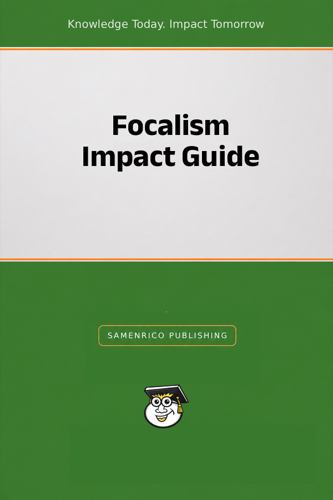 Focalism Impact GuideMotley Carie$11.99
 The Ghost of Flight 19: The Navy’s Lost SquadronMotley Carie$11.99
 The Stadium That Roared: Maracanã and the Birth of Football's Sacred GroundMotley Carie$11.99
 Prompt Engineering for Web3 Gaming EconomiesMotley Carie$11.99
You may also like
 Hong Kong Handover 1997Dunn Johnnie$11.99
 Zumba For Postnatal Recovery CourseNeal Christian$11.99
 Zumba for BeginnersLadner Nikia$11.99
 YouTube Comment Mining GuideHumes Pandora$12.99
 Worry Box MeditationCarlin Rudy$11.99
 Workplace Stress MeditationNguyen Lynn$11.99
 Workplace Stress and Sleep RepairHawley Ivory$11.99
 Workplace Perfectionism CureDelaney Jeffry$11.99
 Workplace Injustice Anger GuideWallen Isabelle$11.99
 Work Addiction and Burnout LinkGreenwood Ester$11.99
 Women in Yoga and WellnessBeattie Galina$11.99
 Women in Stand Up ComedyChun Evangeline$11.99