
Non-FictionHealth & WellnessEmergency Services
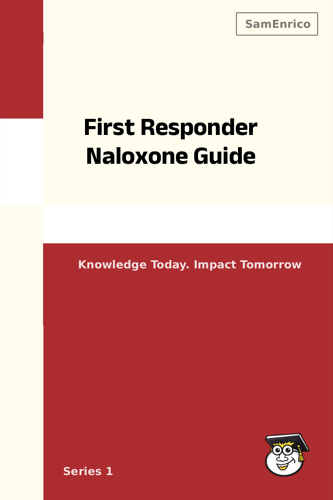
First Responder Naloxone Guide
Equip police and EMTs with intranasal spray for co
by Cohn Merissa
Equip police and EMTs with intranasal spray for community overdose response.
Formats
About this book
Free sample
Chapter 1: The Golden Minutes--The call comes in at 11:47 on a Tuesday night. "Male unresponsive, possible overdose, rear of the gas station on Maple Street." You are three minutes out. Dispatch adds that bystanders are performing CPR—or at least they think they are. What they are actually doing is pushing on the patient's abdomen while someone else slaps his face. No one has opened his airway.
No one has given a single rescue breath. By the time you arrive, the patient will have been without adequate oxygen for nearly eight minutes. If he survives, the question will not be whether he has brain damage, but how much.This is not a worst-case scenario. This is a Tuesday.The opioid epidemic has rewritten the rules of first response in ways that many training academies and standard operating procedures have yet to fully absorb. The old model—police secure the scene, EMS transports to the hospital, the emergency room handles the crisis—assumed something that is no longer true: that there was time.
Time to wait for backup. Time to complete a thorough scene assessment. Time to load the patient into an ambulance and drive ten minutes to a trauma center. That model was built for heart attacks, strokes, and gunshot wounds, all of which are emergencies, but none of which share the unique pharmacological clock of an opioid overdose.The clock for an opioid overdose is measured not in minutes but in the number of breaths remaining in the patient's lungs. A typical adult at rest takes twelve to twenty breaths per minute.
When fentanyl binds to the mu-opioid receptors in the brainstem, that rate drops to four to six breaths per minute—if the patient is lucky. More often, it drops to zero within two to three minutes of the last effective breath. The patient does not choke. He does not gasp dramatically as in movies. He simply stops moving air.
The chest becomes still. The lips turn blue. The pupils constrict to pinpoints. And unless someone intervenes in the next three to five minutes, the brain begins to die.This…
This is the end of the free sample. Get the eBook to keep going. Buy now
Contents
- Chapter 1
- Chapter 2
- Chapter 3
- Chapter 4
- Chapter 5
- Chapter 6
- Chapter 7
- Chapter 8
- Chapter 9
- Chapter 10
- Chapter 11
- Chapter 12
Details
- Author
- Cohn Merissa
- Publisher
- SamEnrico
- Language
- English
- Genre
- Non-Fiction, Health & Wellness, Emergency Services
- Released
- 2026-06-08
- Pages (approx.)
- 132
- Available as
- eBook, Audiobook

Read better in the ZLOADR app
Your eBooks on your phone or tablet. Sign in with your SamEnrico account and start reading.
More by Cohn Merissa
 TM Anxiety ManagementCohn Merissa$11.99
 Emotional Intelligence for BPDCohn Merissa$11.99
 Async Investor Update GuideCohn Merissa$11.99
 Workplace Imposter Syndrome GuideCohn Merissa$11.99
 The Sleepwalking Spy: How a Secret Agent’s Dreams Changed Cold War EspionageCohn Merissa$11.99
 Echoes of the Cosmic Pioneers: The Lost Transmissions of Pioneer 10Cohn Merissa$11.99
 Understanding Coxoauricular SyndromeCohn Merissa$17.99
 Director of Revenue Cycle ManagementCohn Merissa$11.99
 Shopify Blog Setup FreeCohn Merissa$12.99
 Security Deposit Reduction GuideCohn Merissa$12.99
 How to Start a Prepared Waxes Business (Beginners Guide)Cohn Merissa$11.99
You may also like
 Hong Kong Handover 1997Dunn Johnnie$11.99
 Zumba For Postnatal Recovery CourseNeal Christian$11.99
 Zumba for BeginnersLadner Nikia$11.99
 YouTube Comment Mining GuideHumes Pandora$12.99
 Worry Box MeditationCarlin Rudy$11.99
 Workplace Stress MeditationNguyen Lynn$11.99
 Workplace Stress and Sleep RepairHawley Ivory$11.99
 Workplace Perfectionism CureDelaney Jeffry$11.99
 Workplace Injustice Anger GuideWallen Isabelle$11.99
 Work Addiction and Burnout LinkGreenwood Ester$11.99
 Women in Yoga and WellnessBeattie Galina$11.99
 Women in Stand Up ComedyChun Evangeline$11.99